On this page8 sections
- A common 16 shringar list, item by item
- Why does every list of the sixteen look different?
- What does each of the sixteen stand for?
- Where does the idea of sixteen adornments come from?
- How is the shringar worn in Bengal and the South?
- Wearing the shringar for Karwa Chauth and other vrats
- Frequently asked questions
- Sources and further reading
- Sources and review
Shringar is the Hindi word for adornment and solah means sixteen, so solah shringar is the whole head-to-toe dressing of a bride, the same set of preparations and ornaments that married women put on again for festivals and vrats such as Karwa Chauth, Spiritual Calendar on Tirth . Nobody agrees on the exact sixteen.
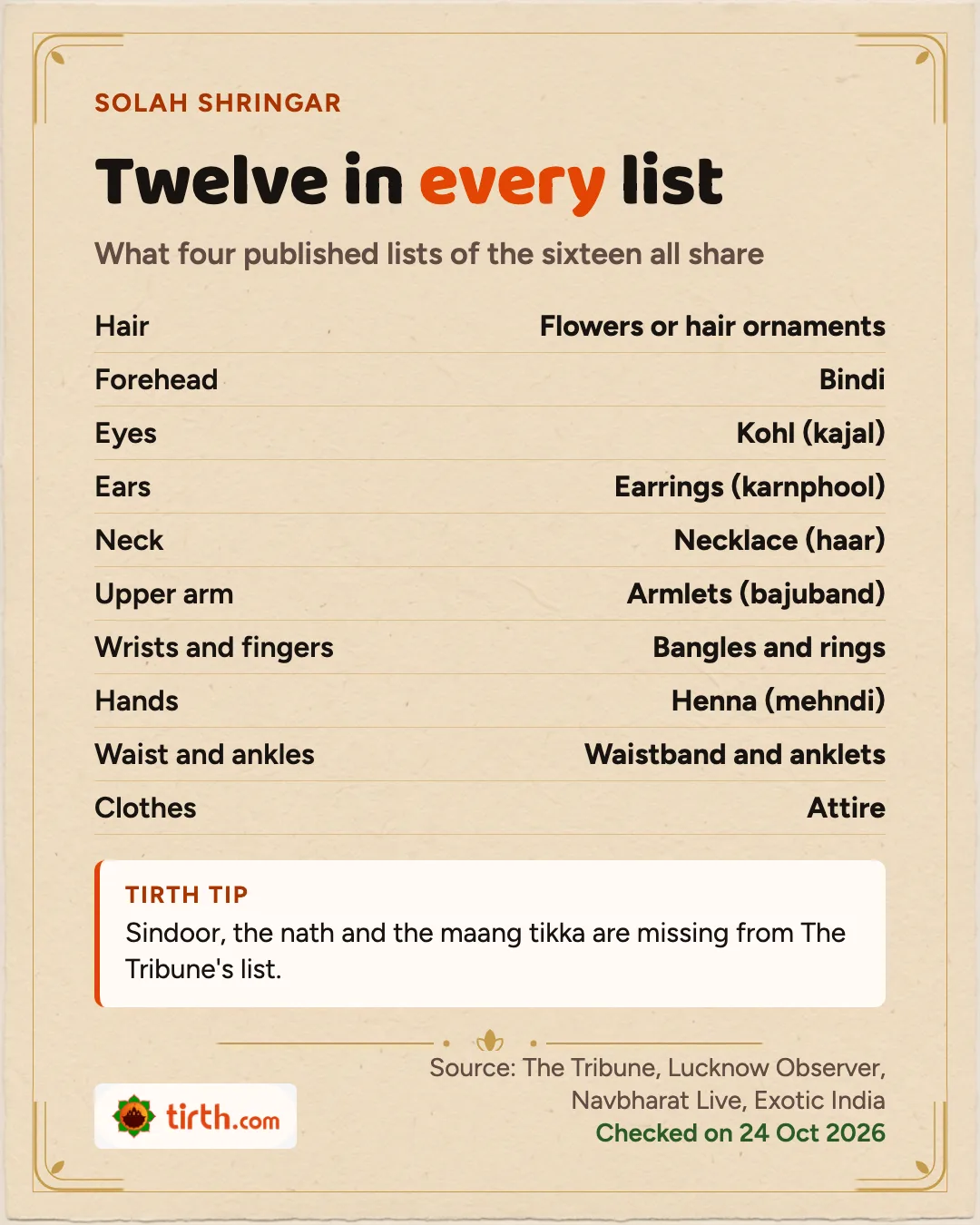
Ask a newspaper, a jeweller and your own family elders and you will get three slightly different sets. About twelve items survive in every list we compared. Earrings and bangles, henna and kohl, and the rest of that steady core.
In short
Nobody agrees on the exact sixteen. Ask a newspaper, a jeweller and your own family elders and you will get three slightly different sets. About twelve items survive in every list we compared. Earrings and bangles, henna and kohl, and the rest of that steady core.
A common 16 shringar list, item by item
The Hindi press printed this married-woman version in August 2026, and it is widely used across North India. Take it as one version among several (the table further down sets it beside three others), never as an official sixteen.
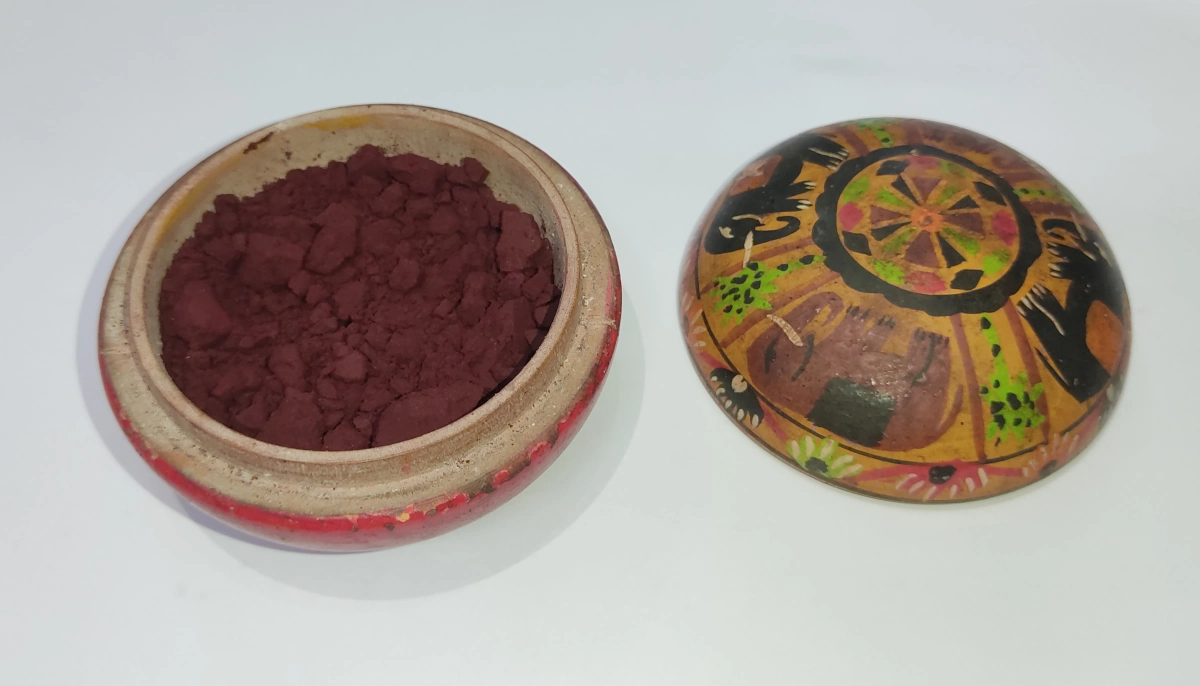
- Sindoor, red powder for the parting.
- Bindi, a forehead dot.
- Kajal, kohl for the eyes.
- Mehndi, henna for the hands.
- Attire, the day’s clothes.
- Gajra, flowers strung for the hair.
- Maang tikka, an ornament worn right at the point where the hair is parted.
- Nath, the nose ring.
- Karnphool, earrings.
- Haar or mangalsutra, the necklace.
- Bajuband, an upper-arm armlet.
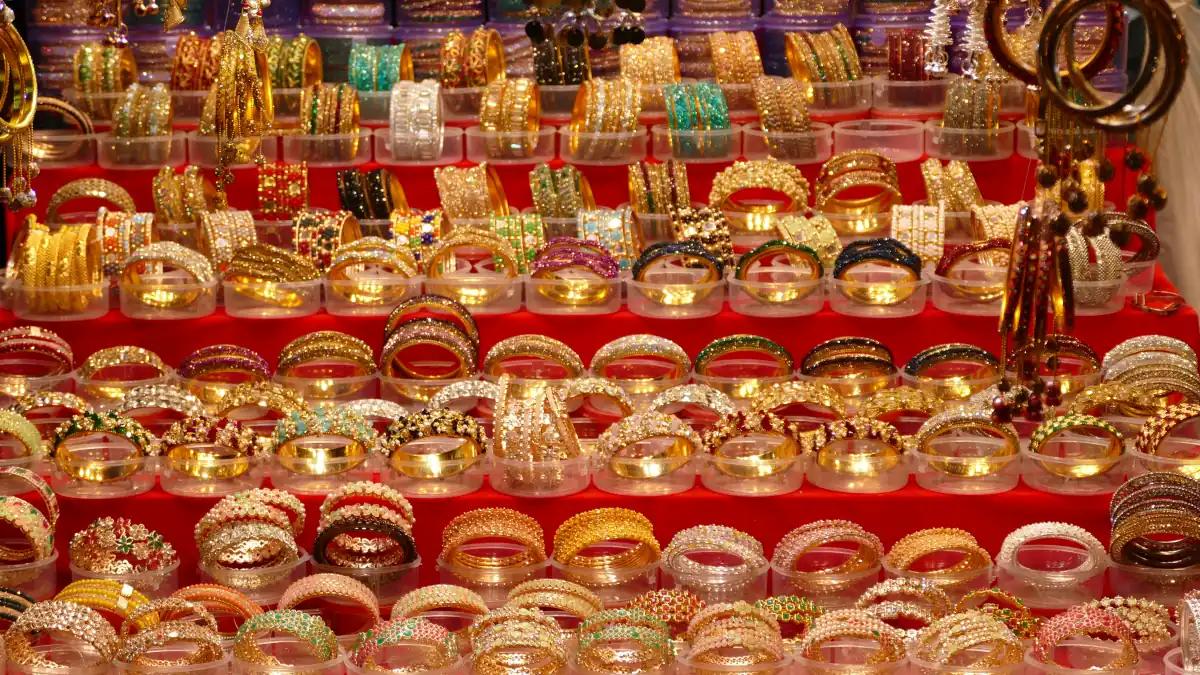
- Chudiyan and kangan, glass bangles with bracelets.
- Angoothi, a finger ring.
- Kamarband, the waistband.
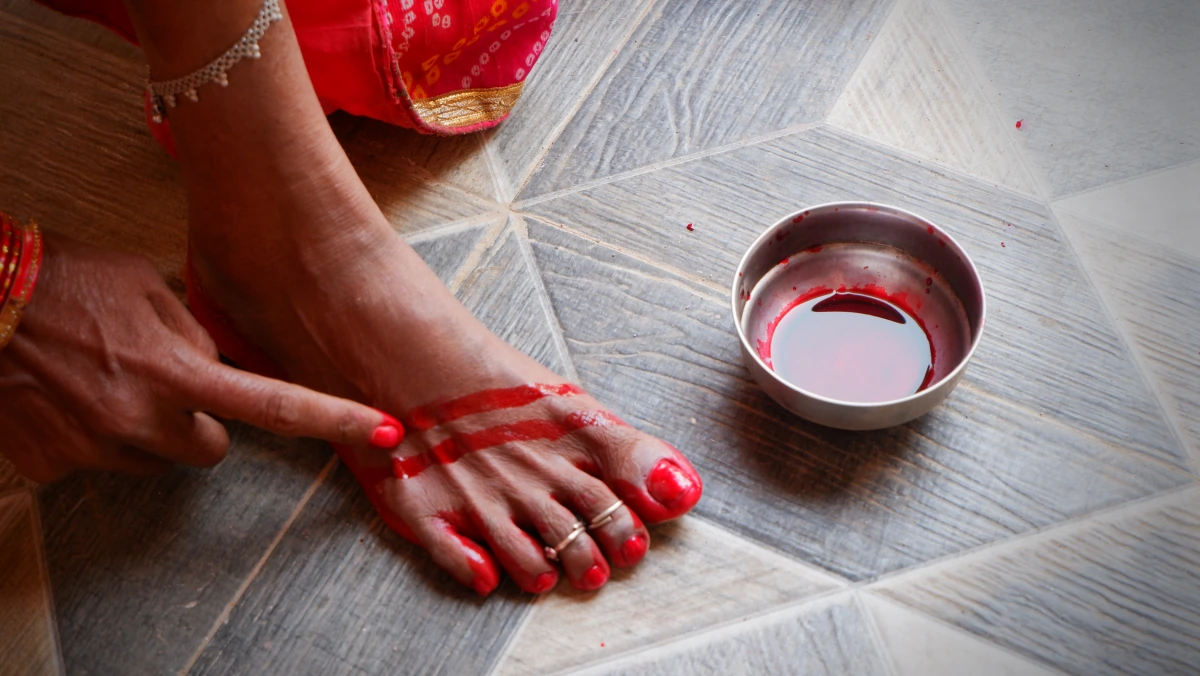
- Bichhiya, toe rings.
- Payal, anklets.
Even the report that printed it says the list shifts from region to region. Which is how a Lucknow bride and a Kolkata bride can each say they wore all sixteen, stand side by side, and still be dressed quite differently.
Why does every list of the sixteen look different?
Lay four published lists next to each other and they part company within a few rows. The Tribune printed list A in 2005 and said it came from “Sanskrit texts”. Or rather from Sanskrit texts in general. Not one is named. B comes from Awadh, where a Lucknow account sets the sixteen out as steps, beginning with a bath and finishing with a look in the mirror. C is the married-woman list given above. D is the bridal version you will find on jewellery sites.
| Item | A: The Tribune | B: Awadh steps | C: North Indian married woman | D: Bridal jewellery list |
|---|---|---|---|---|
| Bath and cleansing | Not listed | Bath | Not listed | Not listed |
| Hair | Flowers in the hair | Hair styling and hair ornaments | Gajra | Hair styling |
| Colour in the parting | Not listed | Colour in the parting and forehead | Sindoor | Sindoor |
| Forehead | Bindi | Bindi, within the parting and forehead step | Bindi | Bindi |
| Head ornament | Not listed | Head ornaments | Maang tikka | Maang tikka |
| Eyes | Kohl | Eye make-up | Kajal | Kajal |
| Nose | Not listed | Nose jewel | Nath | Nath |
| Lips | Not listed | Lip colour | Not listed | Not listed |
| Ears | Earrings | Ear jewellery | Karnphool | Karnphool |
| Neck | Necklace | Neckwear | Haar or mangalsutra | Haar |
| Upper arm | Armlets | Arm and hand jewels | Bajuband | Bajuband |
| Wrists | Bangles | Arm and hand jewels | Chudiyan and kangan | Bangles |
| Hands and fingers | Rings | Finger rings and haathphool, within arm and hand jewels | Angoothi | Haathphool |
| Henna | Henna | Mehndi | Mehndi | Mehndi |
| Waist | Waistband | Waist jewels | Kamarband | Kamarband |
| Ankles | Anklets | Feet ornaments | Payal | Payal |
| Toes | Toe rings | Bichhua, within feet ornaments | Bichhiya | In some versions |
| Fragrance | Perfume, sandalwood paste | Perfume | Not listed | Itar |
| Clothes | Upper garment, lower garment | Attire | Attire | Bridal attire |
| Mirror | Not listed | Looking at one’s reflection | Not listed | Aarsi, in some versions |
| Found in every list | Hair adornment, bindi, eye kohl, earrings, necklace, armlets, bangles, rings, henna, waistband, anklets and attire (the Awadh list folds the bindi and rings into broader steps) | |||
Count the Awadh list’s combined steps properly and twelve items appear in all four. The rest moves about. Sindoor, which is the item most people would name first if you asked them, does not appear in The Tribune’s list at all, and the Awadh list gives the bath and the mirror a place of their own as shringar. Faith changes the set too. So do marital and social status, and the occasion, says the Lucknow Observer piece the Awadh steps come from.
If you are putting the shringar together for a vrat or a wedding, we would simply follow the list your own family uses.
None of these lists has scriptural standing over the others, for reasons the section on the scriptures further down goes into.
What does each of the sixteen stand for?
Some of the sixteen are read as signs that a woman is married. Sindoor in the parting is one, and so are toe rings and the mangalsutra or thali at the neck. The rest is just dressing well for a sacred day.
Sindoor, bindi and the face
Across much of India, Hindu families take sindoor in the parting to mean that a woman is married. The bindi sits just below it. Then the maang tikka, on that same line. Kajal and the nath finish the face, and only the Awadh list goes on to lip colour, which the other three do not mention.
Mangalsutra, bangles and mehndi
Regions disagree most over what goes at the neck. Across much of the North it means the mangalsutra, but women in eastern India traditionally do not wear one, and in the South the thali does that work instead (among Tamils, a cord yellowed with turmeric). Bangles turn up nearly everywhere, and many women pick red or green glass. Every list we compared has mehndi on the hands.
Kamarband, payal and toe rings
All four lists have the kamarband and the payal. Toe rings are another matter. Bichhiya are put on after marriage, on the second toe. Many families therefore count them with the suhag marks and not as ordinary jewellery. You will see websites claiming health effects for toe rings, bangles or the maang tikka, and we found no source that backs a single one of those claims.
Clothes, scent and the mirror
Clothes are one adornment, or two if you go by The Tribune, which splits them into an upper and a lower garment. The scent might be itar, plain perfume or sandalwood paste. Last of all in the Awadh sequence, the bride gazes at her reflection. Some bridal lists add an aarsi as well. A thumb ring set with a small mirror.
Where does the idea of sixteen adornments come from?
As far as we could trace, no scripture gives a fixed list of sixteen. A researcher put exactly this question to the INDOLOGY mailing list, where scholars of Indian texts gather, in March 2014. She had found the Hindi phrase. A Sanskrit equivalent (shodasha shringara) she had not. Only one reply came. It named the Tamil epic Silappatikaram as an earlier text that lists a woman’s ornaments, and nothing else.
A popular account in the Lucknow Observer goes further. It puts the idea of sixteen adornments somewhere between the 11th and 15th centuries and names Vallabhadeva’s Subhashitavali and Rupa Goswami’s Ujjvala Nilamani as early texts that describe it, though it quotes no verse from either. We could not confirm that attribution against the texts themselves, so it stays one account.
Adornment as such is there in the epics. Anasuya’s gift to Sita ji, Deity page on Tirth in the Valmiki Ramayana (Ayodhya Kanda, sarga 118, verses 18 to 21) is a divine garland with garments, ornaments, angaraga (a scented cosmetic) and anulepana (a body unguent), all to adorn her. Sita ji takes them as gifts of love. Sugriva speaks of her ornaments later, in the Kishkindha Kanda (sarga 6, verses 11 and 12). Sita ji let her upper cloth fall with her ornaments, he says, and his companions picked them up and kept them.
That sarga also has a verse (4.6.22 in the translation cited below) where Lakshmana says he cannot place the armlets or the earrings. Only the anklets. He knew those because he bowed at Sita ji’s feet each and every day, and the translator adds a note that this verse is missing from the older manuscripts and from the Baroda critical edition.
Then there is the story of Lakshmi ji giving Rati the sixteen adornments. Jewellery and lifestyle sites tell it. Not one of them names a text, which puts it with the stories people tell today and not with scripture.
How is the shringar worn in Bengal and the South?
In Bengal the marks of marriage sit on the wrists more than at the neck. A married Hindu woman there wears a white conch-shell bangle called the shankha and a red one called the pola, usually with an iron bangle, the loha. For the wedding, her feet are traditionally edged with a red line of alta. Brides in other regions often have mehndi on the feet instead.
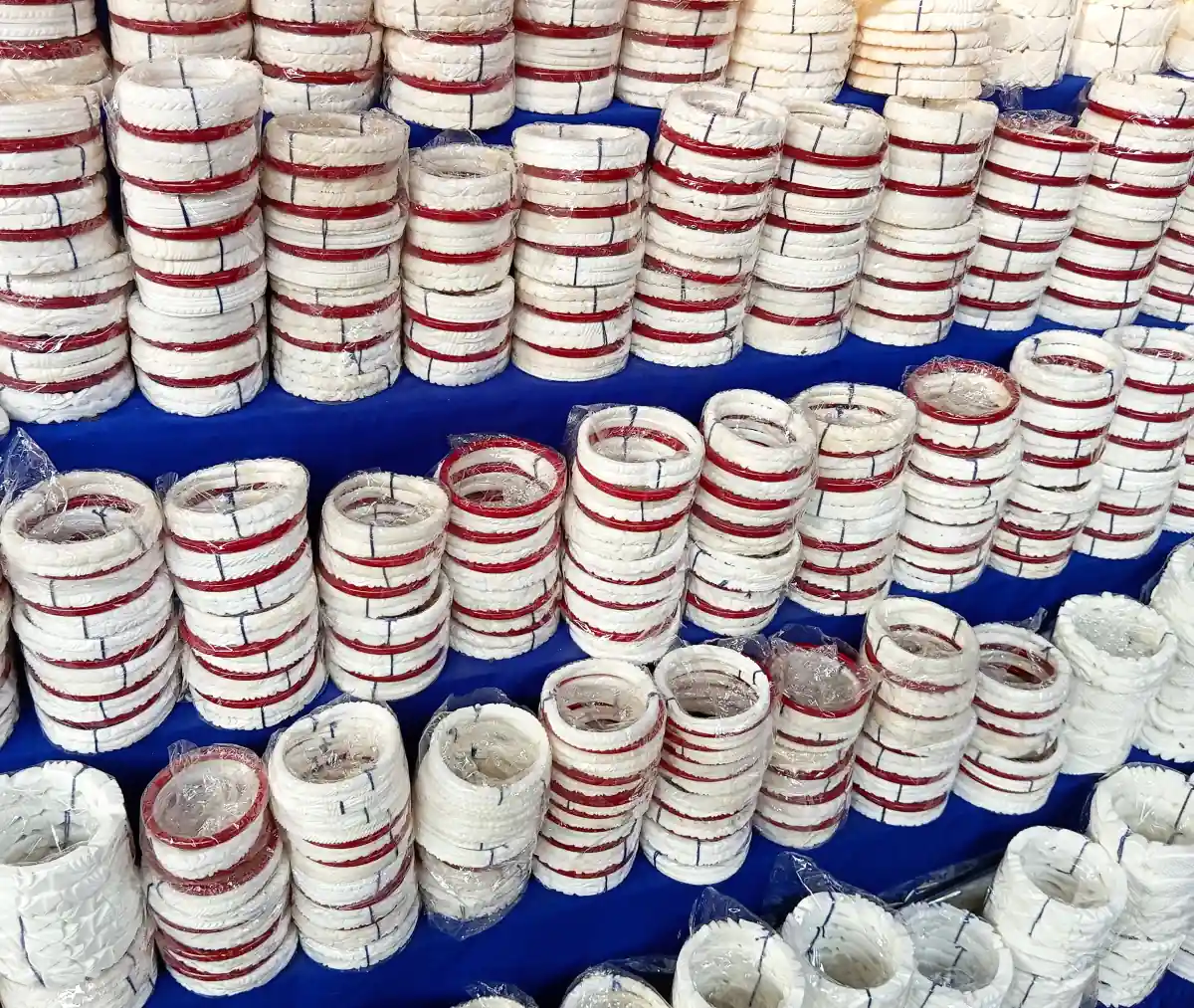
Down South the thali stands in for the mangalsutra. Tamil women call their toe rings metti. Awadh holds on to its long sixteen-step sequence, which opens with the bath and the hair and moves through parting colour and eye make-up to perfume before it ends at the mirror.
If you are marrying into a Bengali family, or any family from another region, ask the elders first which marks they expect to see on you (the shankha and pola, say). Shop after that, not before.
Wearing the shringar for Karwa Chauth and other vrats
Married women keep the Karwa Chauth fast until the moon is seen, and they keep it in their finery, with mehndi, bangles and often red clothes. Have the bangles and clothes sorted before the day (hunting for the right bangle size on an empty stomach is no fun at all). The guide to the Karwa Chauth vrat and puja has the fast and the puja step by step. The Karwa Chauth katha has the story behind it. Look up your own city on the Karwa Chauth date and moonrise on the Spiritual Calendar page well before the evening.
Karwa Chauth is not the only vrat that brings it out. For many married women Teej and Vat Savitri are shringar days too. On the Mangala Gauri vrat the sixteen items go further and become part of the puja itself, offered to Gauri Mata, Deity page on Tirth.
Frequently asked questions
Sindoor, bindi, kajal, mehndi, attire, gajra, maang tikka, nath, karnphool, haar or mangalsutra, bajuband, bangles, angoothi, kamarband, bichhiya and payal make up one common North Indian list. Other lists in print drop a few of these.
In their place come a bath, lip colour, perfume, sandalwood paste or a mirror.
It means “sixteen adornments”, from solah (sixteen) and shringar (adornment). The phrase covers a bride’s whole dressing from head to toe, and married women wear the same set again on festivals and vrats.
It is a married woman’s fast. Women stay in their adornments through the day, often in red, until the moon is seen. Sindoor, bangles, toe rings and several others among the sixteen are read as marks of marriage. Which suits a vrat kept for married life.
No text we could trace lists exactly sixteen. In 2014 a researcher put the question to the INDOLOGY scholars’ list, and the only answer named the Tamil Silappatikaram, not a Sanskrit text. Adornment does come up in the Valmiki Ramayana (Ayodhya Kanda 118.18 to 21), where Sita ji receives garments, ornaments and a garland from Anasuya.
No. A Bengali woman has the shankha, pola and loha on her wrists and alta at the edge of her feet, a Tamil woman wears the thali and metti, and in eastern India the mangalsutra is traditionally not worn. The four lists in the table share about twelve items, and no more.
Each marks a woman as married. Bichhiya are the toe rings put on the second toe after the wedding. The mangalsutra is the marriage necklace across much of the North, and in the South the thali does the same work.
Sources and further reading
- The Tribune, Bridal special (list A and the Bengal alta custom).
- Hindu Press International, The 16 Signs of the Hindu Bride.
- Hindu Press International, Symbols Of Marriage In Hinduism (regional marks of marriage).
- INDOLOGY mailing list, the question on solah shringar and the reply naming the Silappatikaram.
- Lucknow Observer, the Awadh sequence of the sixteen.
- Banglapedia, Ornaments (shankha, pola and the iron bangle).
- Navbharat Live, 16 shringar of women (list C).
- Prabhat Khabar, Vat Savitri puja report and Mangala Gauri vrat vidhi (Hindi).
- Exotic India, Types of Indian bridal jewelry, and Utsavpedia, Solah Shringar: the grand makeover (list D).
- Valmiki Ramayana, Ayodhya Kanda, sarga 118 and Kishkindha Kanda, sarga 6, verse-by-verse translation.
- Sanskrit Wikisource, Valmiki Ramayana, Ayodhya Kanda, sarga 118 and Kishkindha Kanda, sarga 6 (Sanskrit text, used to confirm the verse numbers).