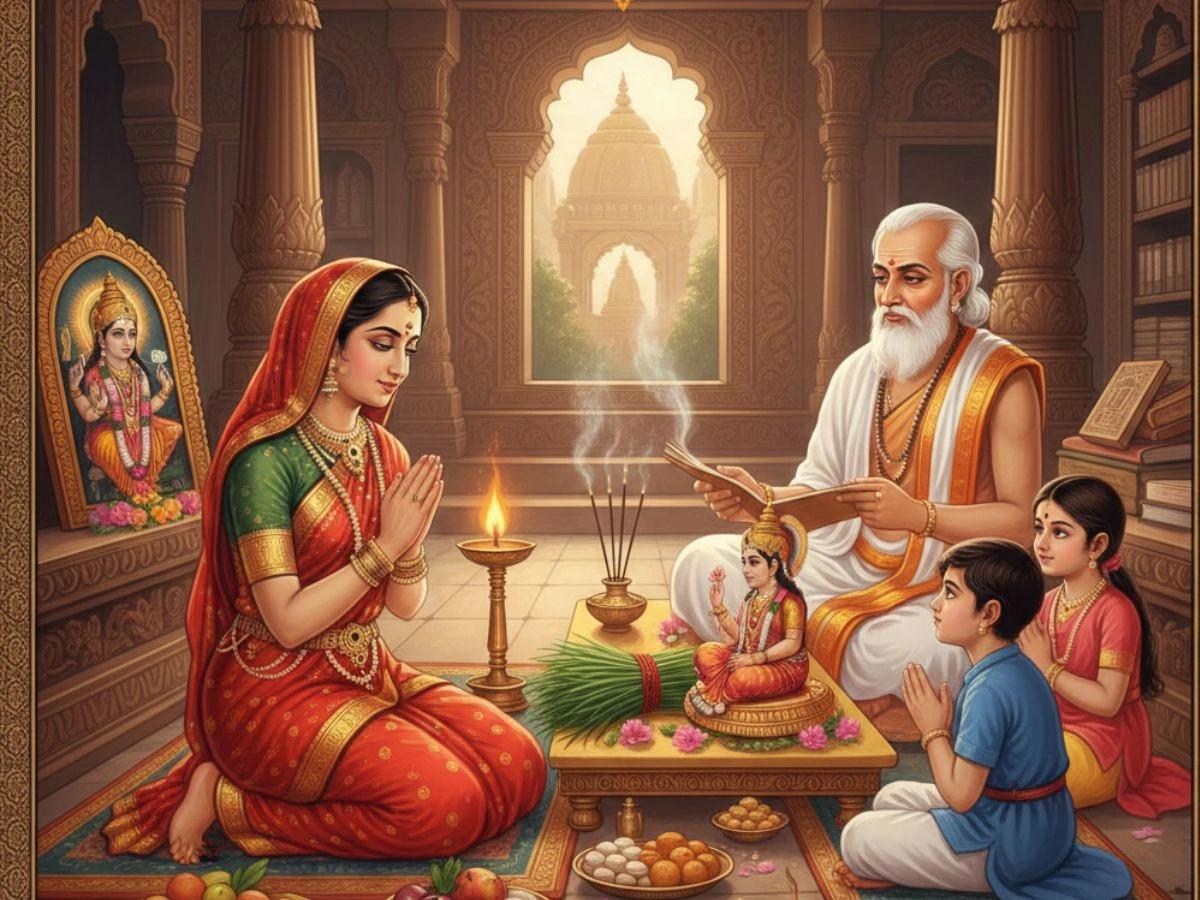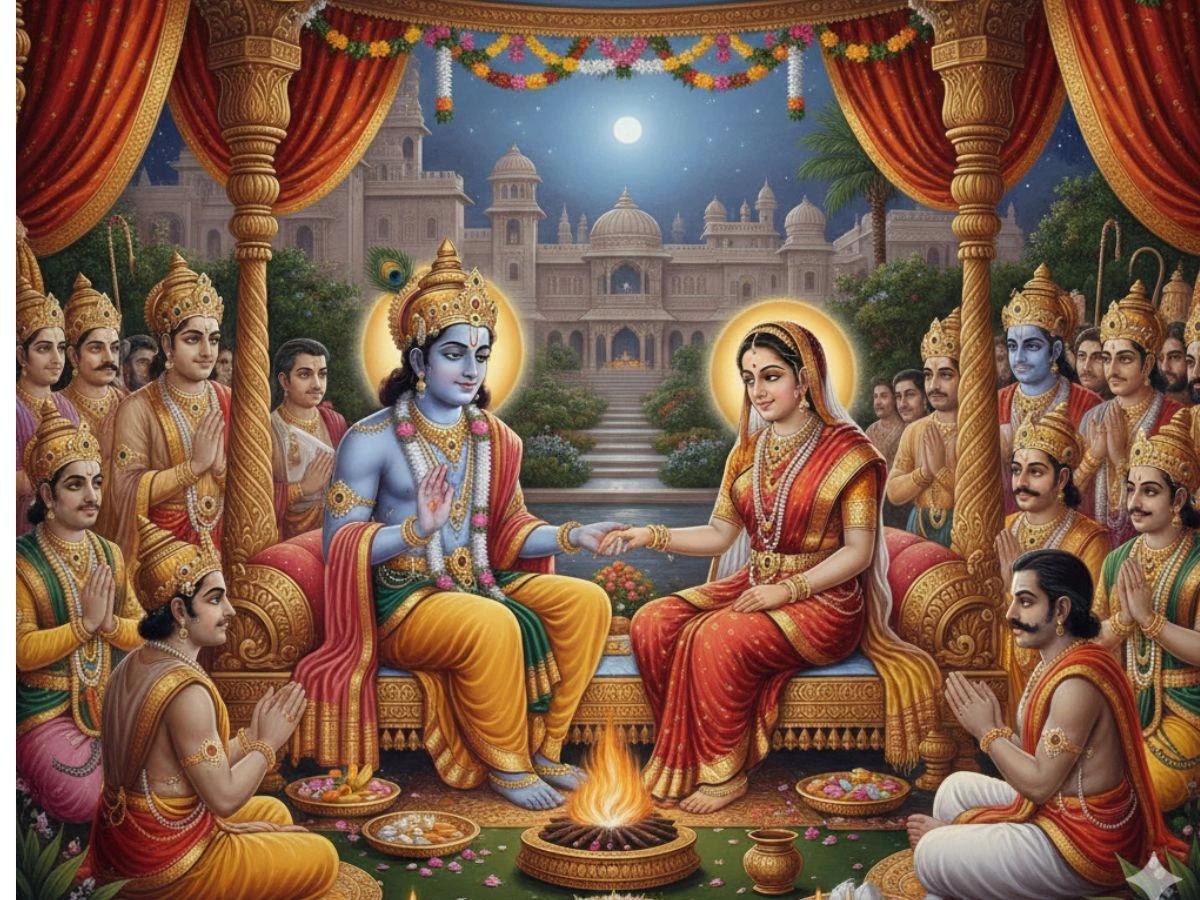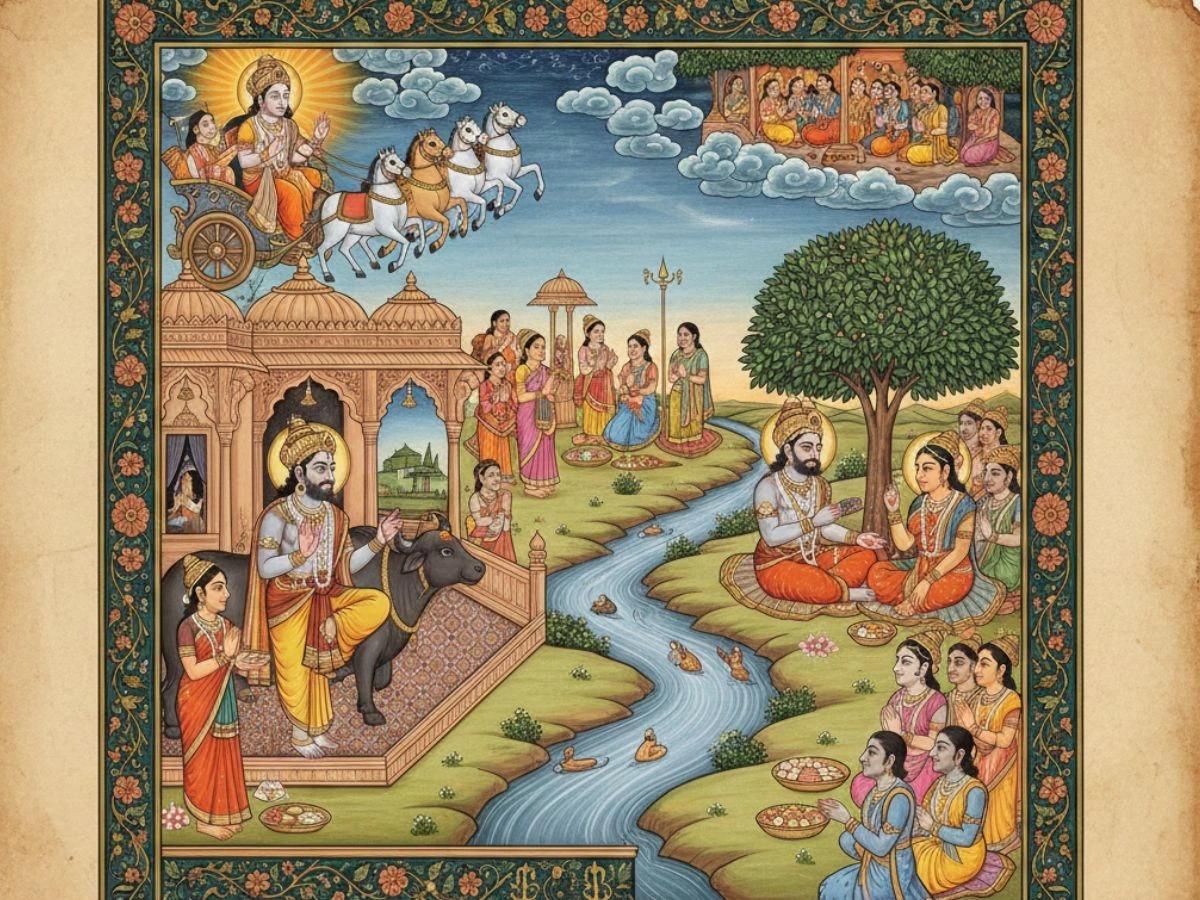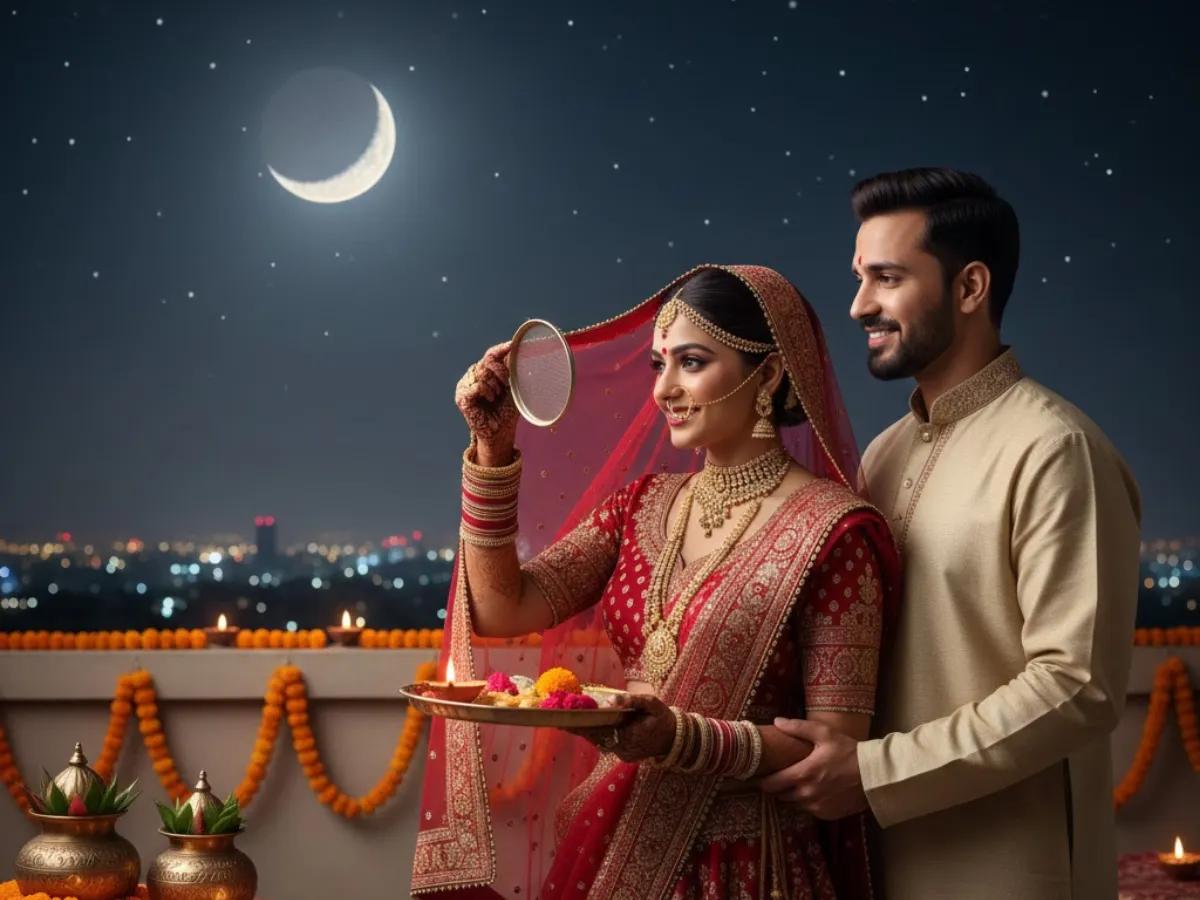
You know how some stories don’t really begin at the beginning? They sort of drift toward you. Like when you’re sitting on a terrace in October, the air a little cooler than it was last week, and somewhere below a group of women are laughing, bangles clinking, someone calling out, “Chaand nikla kya?”Karwa Chauth isn’t loud like Holi or expansive like Diwali. It’s quieter. More inward. A single day that feels long, especially if you’re keeping the fast, especially if it’s your first time.Traditionally, married women observe a nirjala fast no food, no water from before sunrise until the moon rises. Why? For the well being and long life of their husbands, yes. But if you ask women who’ve been doing this for decades, they’ll shrug and say, “Bas. Parampara hai.”
करवा चौथ व्रत कथा (Karwa Chauth Story in Hindi)
बहुत समय पहले की बात है। एक नगर में एक साहूकार रहता था। उसके सात बेटे और एक इकलौती बेटी थी, जिसका नाम वीरवती था। वीरवती अपने माता-पिता की बहुत लाड़ली थी और सातों भाई उसे अपनी जान से भी ज़्यादा प्यार करते थे।
वीरवती का विवाह एक अच्छे और संस्कारी घर में हुआ। विवाह के बाद जब उसका पहला करवा चौथ आया, तो वह अपने मायके में ही थी। परंपरा के अनुसार उसने निर्जला व्रत रखा। दिन भर बिना अन्न-जल के रहने के कारण शाम होते-होते वीरवती की हालत खराब होने लगी। उसे तेज़ प्यास लगी और वह मूर्छित-सी हो गई।
अपनी बहन की यह हालत देखकर सातों भाई परेशान हो गए। उनसे बहन की तकलीफ़ देखी नहीं जा रही थी। उन्होंने एक उपाय सोचा। भाइयों ने पीपल के पेड़ पर एक दीपक जलाया और छलनी में दीपक की रोशनी दिखाकर बहन से कहा,
“देखो बहन, चाँद निकल आया है। अब तुम अर्घ्य देकर व्रत खोल लो।”
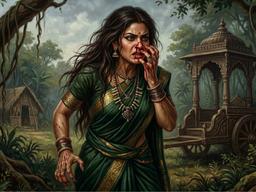
अपनी भाइयों की बात पर विश्वास करके वीरवती ने चंद्रमा को अर्घ्य दिया और व्रत तोड़ दिया। लेकिन जैसे ही उसने पहला निवाला मुँह में रखा, उसी समय उसे समाचार मिला कि उसका पति बहुत बीमार हो गया है।
यह सुनकर वीरवती घबरा गई और तुरंत ससुराल के लिए चल पड़ी। रास्ते में उसे माता पार्वती मिलीं। माता ने वीरवती से सारी बात पूछी। वीरवती ने रोते-रोते अपनी पूरी कथा सुना दी।
माता पार्वती ने कहा,
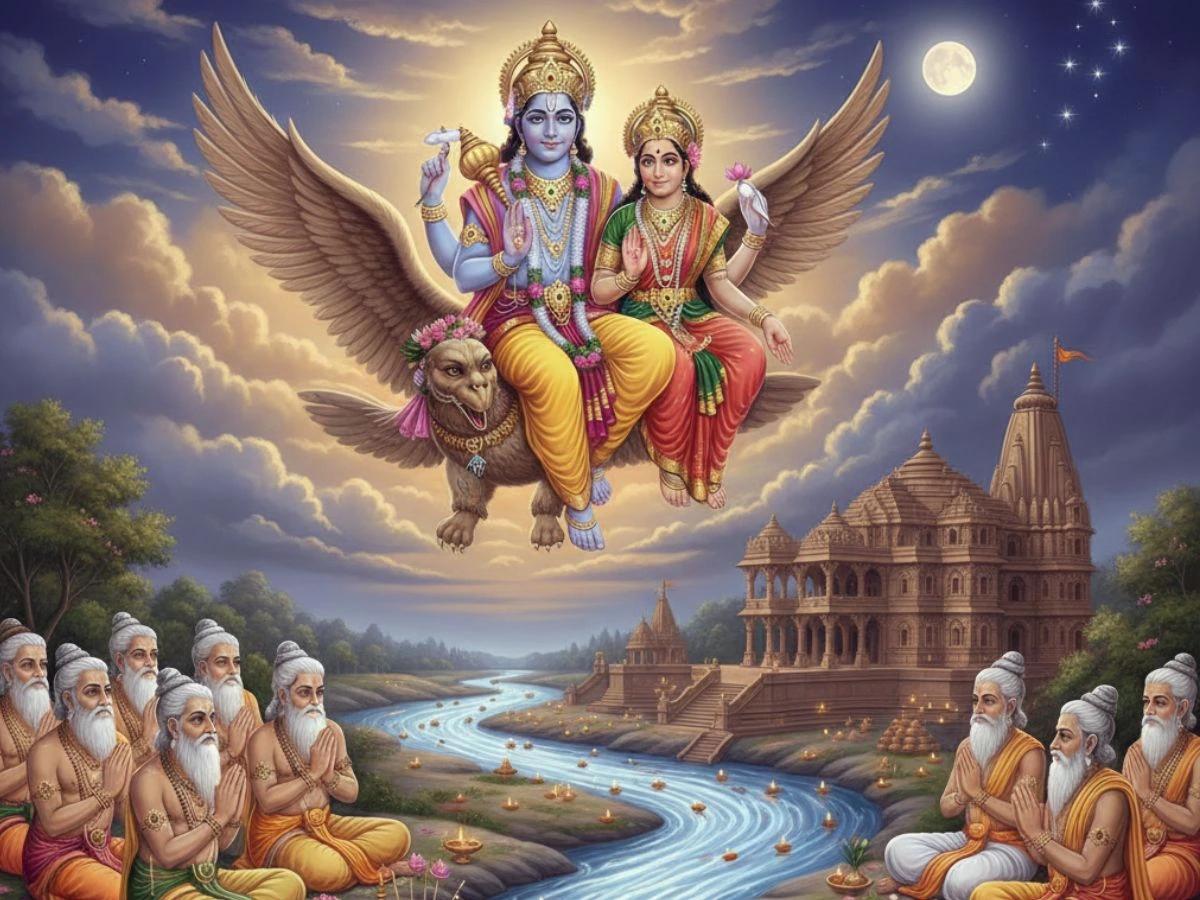
“पुत्री, तुम्हारे भाइयों ने चंद्रमा के दर्शन में तुम्हें धोखा दिया है। इसी कारण यह संकट आया है। अब तुम पूरे विधि-विधान से फिर से करवा चौथ का व्रत करो और सच्चे मन से अपने पति की लंबी आयु की कामना करो।”
वीरवती ने माता पार्वती के कहे अनुसार श्रद्धा और विश्वास के साथ फिर से व्रत रखा। उसकी सच्ची भक्ति और तपस्या से प्रसन्न होकर भगवान ने उसके पति को पुनः जीवनदान दिया।
इस प्रकार वीरवती का सुहाग सुरक्षित रहा और तभी से करवा चौथ का व्रत पति की लंबी उम्र, सुख-समृद्धि और वैवाहिक प्रेम का प्रतीक माना जाने लगा।
Historical Origins of Karwa Chauth
The word karwa refers to a small earthen pot plain, unassuming, filled with water or milk. It represents life, continuity, and protection. Chauth simply means the fourth day of the lunar cycle. Nothing mystical in the words themselves. The meaning came from how people lived them.
In older times, men often traveled far from home for trade, farming, or war. Women stayed behind. Fasting and prayer became acts of emotional survival. Over time, those prayers shaped customs, and customs shaped stories. The belief settled quietly: devotion, when sincere, carries weight.
The Most Popular Karwa Chauth Story
Most households tell the same story, though details shift slightly with region and memory.
Veeravati, a young newlywed, observes her first Karwa Chauth with complete dedication. She is the only sister among seven brothers who love her fiercely. By afternoon, hunger overwhelms her. Her brothers, unable to see her suffer, create a false moon using a lamp and reflection, convincing her that moonrise has occurred.
She breaks her fast.
Almost immediately, disaster follows. Her husband falls gravely ill some versions say he dies. Realizing her mistake, Veeravati prays with desperate sincerity. Goddess Parvati, moved by her devotion, guides her to observe the fast again with complete faith. Yama, the god of death, grants mercy. Her husband is restored.
The story doesn’t punish error. It honors intention.
Spiritual Symbolism Behind Karwa Chauth
Karwa Chauth is not about suffering. It’s about focus. About choosing love as a form of prayer.
The fast teaches patience better than sermons ever could. Waiting for the moon, thirst dry in the throat, time stretching endlessly it all builds inner discipline. The story reminds devotees that faith doesn’t need perfection. It needs honesty.
Regional Variations of the Karwa Chauth Legend
In Rajasthan and Uttar Pradesh, women sit together during evening puja, passing decorated karwas while the story moves from one voice to another. There’s no script. Just memory.
In Punjab, the festival carries more sound songs, laughter, teasing. The story blends into celebration. The devotion is the same. Only the expression changes.
Rituals Connected to the Story
The day begins with sargi, prepared by the mother in law before sunrise. It’s nourishment, yes but also blessing.
The fast continues all day. Work goes on. Life goes on. Hunger hums quietly in the background.
When the moon finally appears, women look at it through a sieve, then at their husbands. Water is offered. Food follows. Relief spreads through tired bodies. The story completes itself once more.
Modern Relevance of Karwa Chauth
Today, many husbands choose to fast alongside their wives. Some help prepare sargi. Some wait with equal impatience for the moon.
The Karwa Chauth story remains unchanged, but its practice has softened, widened, adapted. Devotion no longer belongs to one person alone it’s shared.
FAQs About Karwa Chauth Story
Why is the Karwa Chauth story told every year?
Because rituals need memory. The story reminds people why the fast matters.
Is Karwa Chauth only for married women?
Traditionally yes, but faith often travels beyond rules.
What if someone breaks the fast accidentally?
Sincere prayer matters more than perfection.
Is the story symbolic or literal?
For some, literal. For others, symbolic. Both coexist.
Do men observe Karwa Chauth today?
Many do out of companionship, not obligation.
Where can one learn more about Karwa Chauth customs?
Cultural and heritage archives across India document these traditions in depth.
Conclusion
The Karwa Chauth story survives because it speaks softly and honestly. About devotion that falters, tries again, and still believes.
Every year, when the moon finally appears and the fast breaks, the story breathes again not as myth, but as lived memory.
Readers interested in further clarification may visit Tirth.com.