
On this page7 sections
In the Rigveda that is the word for a cow that gives milk, and old Sanskrit tradition explains it as “not to be slain”. That word is where the cow meaning in Hinduism starts, and Hindus came to hold the cow sacred in layers, each text adding one more.
Along the way she becomes a mother, and in the Bhagavata she bathes Bhagwan Krishna, Deity page on Tirth in her milk.
In short
That word is where the cow meaning in Hinduism starts, and Hindus came to hold the cow sacred in layers, each text adding one more. Along the way she becomes a mother, and in the Bhagavata she bathes Bhagwan Krishna, Deity page on Tirth in her milk.
The cow in the Vedas: a herd to guard, then a whole world
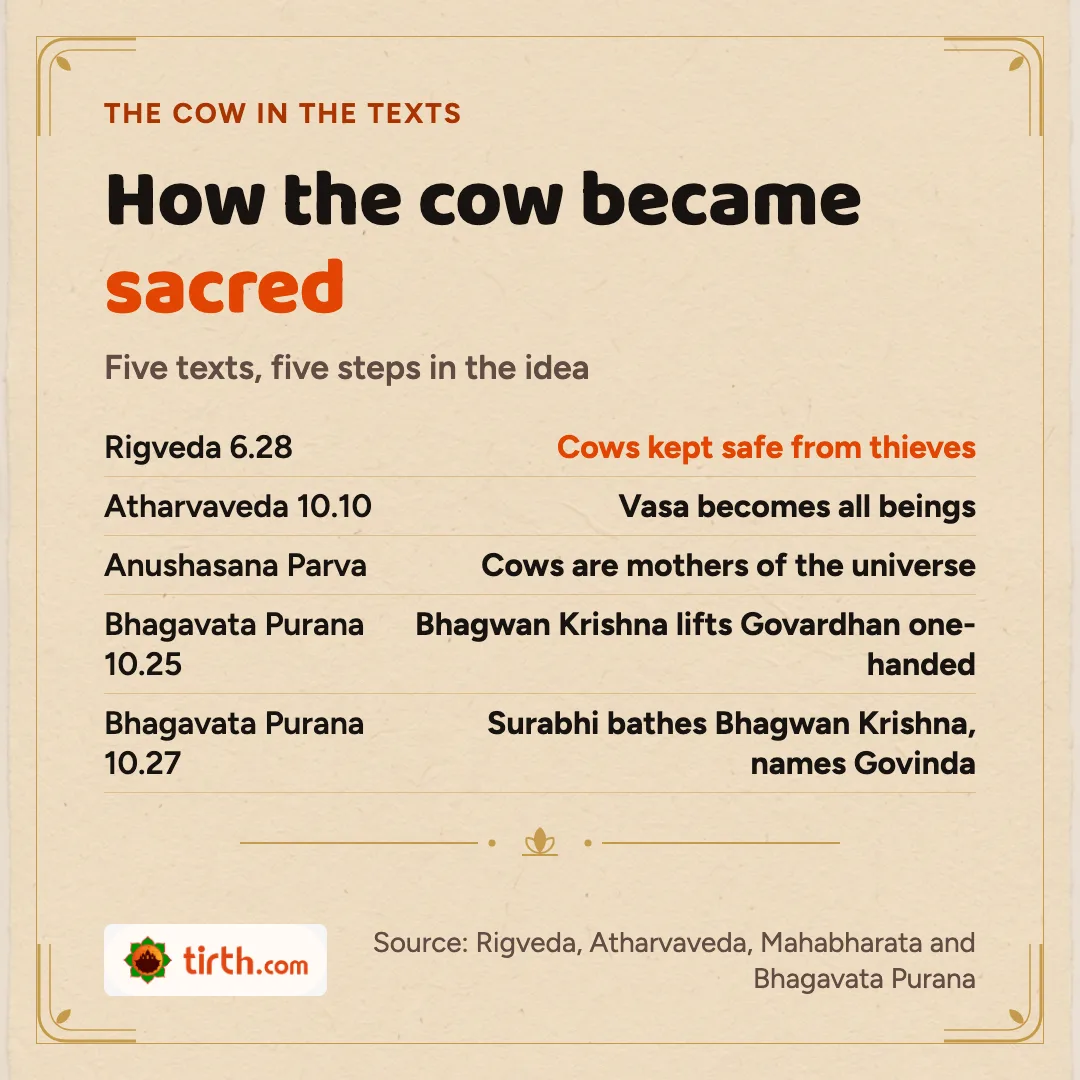
Rigveda 6.28 is a hymn addressed to the cows themselves. The singers speak to the herd, not about it. Verse 3 asks that they not be lost and that no thief carry them away, a prayer any herder could have made. The cow is what a household lives on, and the singers want her safe.
Yaska, the old Sanskrit word-scholar, lists aghnya first among nine names for the cow. The idea packed into that one word is “unslayable”, so the first name on his list already tells you what the cow must not suffer.
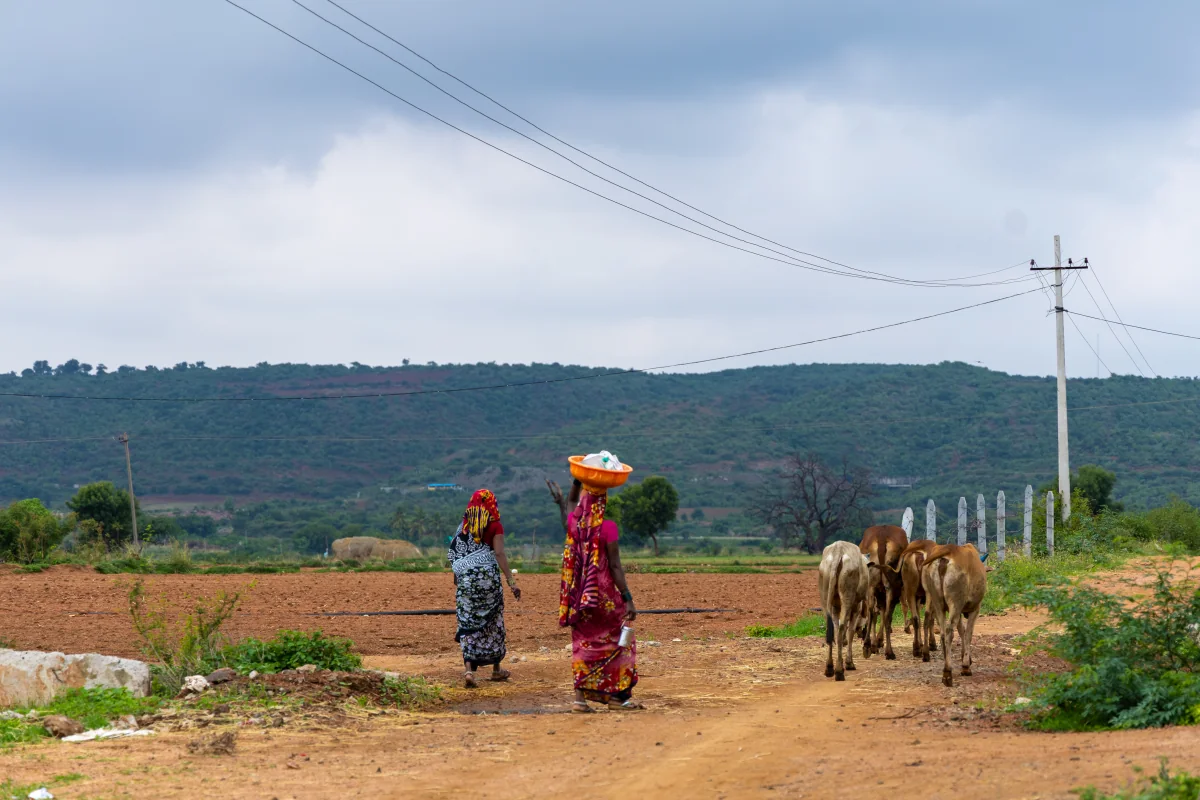
Then the Atharvaveda widens the picture. Hymn 10.10 names the cow vasa. Verse 26 calls her immortality and says she becomes all beings, the gods and men, the Asuras, the Fathers and the seers. Verse 30 goes further and calls her sky and earth, Bhagwan Vishnu and Prajapati Dev the creator. A herd to guard has become a presence that holds the world.
Atharvaveda 10.10 is the hymn to read first.
Gau Mata and Kamadhenu: when the cow became a mother
The Mahabharata gives the idea behind Gau Mata. Bhishma, in the Anushasana Parva, calls cows the mothers of the deities and of the universe, and the name follows: gau is the cow and mata the mother.
Surabhi enters in the same Parva, born from the belch of Daksha after he drank amrita, the nectar of immortality, and her daughters are named as mothers of the world.
Vasishtha has a hymn there in praise of the cows.
Kamadhenu is also called Surabhi. Ask where she came from and the texts do not agree. The Anushasana Parva gives her to Daksha. In the Shatapatha Brahmana a cow comes out of Prajapati Dev’s breath, and in the Ramayana Surabhi is Kashyapa’s daughter. It helps to hold these apart. Vasishtha’s cow Sabala has a scene of her own in the Ramayana, where she routs the army of Vishvamitra.
How a cow gave Bhagwan Krishna the name Govinda
Bhagwan Krishna’s birth has its own story in the Janmashtami post. He is Gopala, the cowherd, and that is where the cow’s tie to devotion to him begins.
The Bhagavata Purana holds two scenes worth knowing. Verse 10.25.19 shows him holding up Govardhan Hill in a single hand, with the ease of a child carrying a mushroom. Both the story of Govardhan Hill and Annakut and the 56 offerings of Chappan Bhog have their own posts.
Chapter 10.27 brings the cow to him. Surabhi bathes Bhagwan Krishna in her own milk. Indra Dev pours Ganga water over him, and together they call him Govinda; her words to him run through texts 19 to 21, and the naming falls in texts 22 and 23 of that chapter. Other editions may number these texts 22 and 23 differently, so check the chapter against the edition in your hands. The step from calves to cows has its own post, How Bhagwan Krishna moved from calves to cows, so it is not told again here.
Panchagavya and go-daan: the cow in ritual
Panchagavya is five things from the cow: milk, curd, ghee, dung and urine. They go into purification rites. Butter appears instead of ghee in some older lists. Panchagavya belongs to ritual alone and is no medicine.
Go-daan means giving a cow away, and the Anushasana Parva sets its rules. The receiver must be worthy, and the cow is never given for slaughter or to a killer of animals. The same Parva says that giving a Kapila cow secures a safe way into the realm of Yama Dev.
Did the cow always carry this weight?
Scholars part ways on how early and how widely she was revered, and the question is not settled. Writing that honours the cow became common in the first millennium CE.
The Chandogya Upanishad, among the earliest Upanishads, already names ahimsa, the ideal of non-harm, and scholars place that text roughly between the 8th and 6th century BCE, and the cow is often linked with that gentle ideal. The post on what the texts mean by dharma takes up dharma itself.
Frequently asked questions
Kamadhenu is the cow of the texts, and Surabhi is her other name. Accounts of her birth vary: she comes from Daksha, from the breath of Prajapati Dev, or as a daughter of Kashyapa. Sabala, the cow of Vasishtha, appears in the Ramayana and routs the army of Vishvamitra.
Gau means a cow, mata a mother. In the Anushasana Parva of the Mahabharata, cows are the mothers of the deities and of the universe, and the daughters of Surabhi are mothers of the world.
Gopala is the cowherd, which is how the Bhagavata Purana shows Bhagwan Krishna growing up. Govinda comes from chapter 10.27, where Surabhi bathes him in her milk and she and Indra Dev give him the name.
Five products of the cow go into purification rites under this name: milk, curd, ghee, dung and urine, with butter standing in for ghee in some older lists. Treat it as a ritual substance, never as medicine.
A cow given away as a gift is go-daan. Under the Anushasana Parva the receiver must be worthy, and the cow must not go to slaughter or to anyone who kills animals.
Yes. Rigveda 6.28 addresses the cows in a hymn, and aghnya, the Rigveda’s word for the milch cow, is explained as “not to be slain”. Hymn 10.10 of the Atharvaveda names her vasa and says she turns into every being.
Continue on Tirth
- Tirth’s temple pages, Temple page on Tirth are where to find a temple of Bhagwan Krishna to visit.
- Pujas on Tirth, Pujas on Tirth can be booked with a Pandit.
- Tirth’s destination pages help you plan a visit to the sacred places that these stories come from, whether the plan is a day trip or a longer yatra.