On this page10 sections
- What does Valmiki’s own Ramayana say about who he was?
- So where did the Ratnakar robber story start?
- What did Valmiki ask Narad Muni?
- Two krauncha birds by the Tamasa, and the first shloka
- Why did Bhagwan Brahma come to see Valmiki?
- Maa Sita weeping on the riverbank near his ashram
- How did Kush and Luv get their names?
- Tenth son of Prachetas, standing up for Maa Sita
- Frequently asked questions
- Continue on Tirth
- Sources and review
It’s how most of us heard it growing up. His own epic says something else.
When the Valmiki Ramayana first shows him, he is a tapasvi already. One question put to Narad Muni. Grief for a dying bird by the Tamasa river. Then an order from Bhagwan Brahma to compose the story of Bhagwan Ram, and much later the same sage taking Maa Sita into his ashram and raising her twin sons. Put together, that’s the Valmiki life story his epic tells. Tradition calls him the Adi Kavi, which means “the first poet”. In the printed text the chapter endings name his Ramayana the Adi Kavya, the first poem.
So where does the robber fit? His story is real enough as a story, but it comes from later texts.
In short
His own epic says something else. When the Valmiki Ramayana first shows him, he is a tapasvi already. One question put to Narad Muni. Grief for a dying bird by the Tamasa river.
What does Valmiki’s own Ramayana say about who he was?
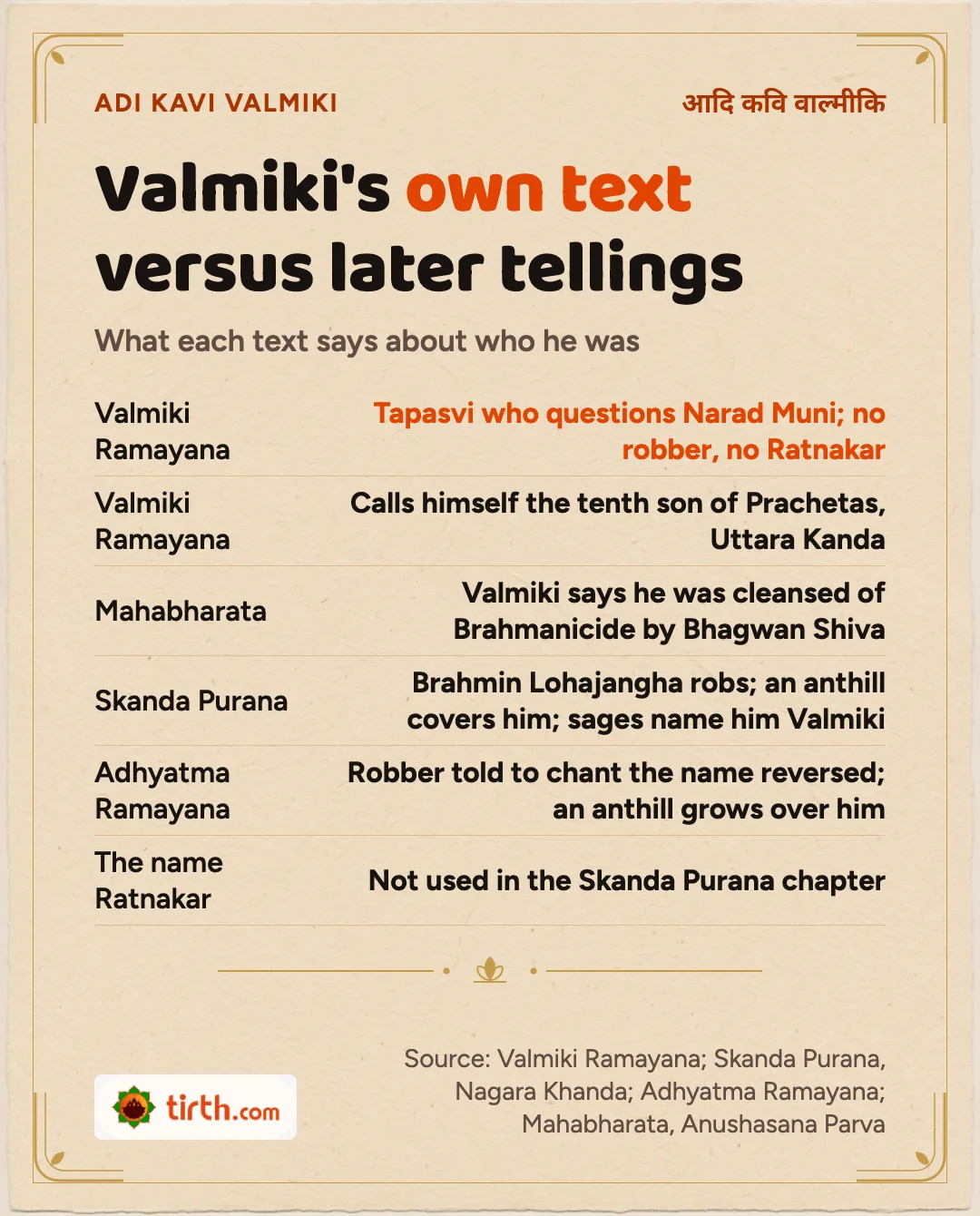
Not much. And it comes late. In the verses where he vouches for Maa Sita in Bhagwan Ram’s assembly, he names his parentage in a single line: he is the tenth son of Prachetas.
Where Valmiki appears in these passages, or talks about himself, nobody calls him a robber. No Ratnakar either.
These passages alone can’t rule out a darker past hinted at in some other verse. Still, in his own verses Valmiki is a sage from the first line he gets.
A quick word on the numbers here. Printed editions number the Uttara Kanda’s sargas differently, so the ones in this post follow the commonly printed Sanskrit text.
So where did the Ratnakar robber story start?
Look in the Puranas and the later Ramayanas. And they tell it differently from one another.
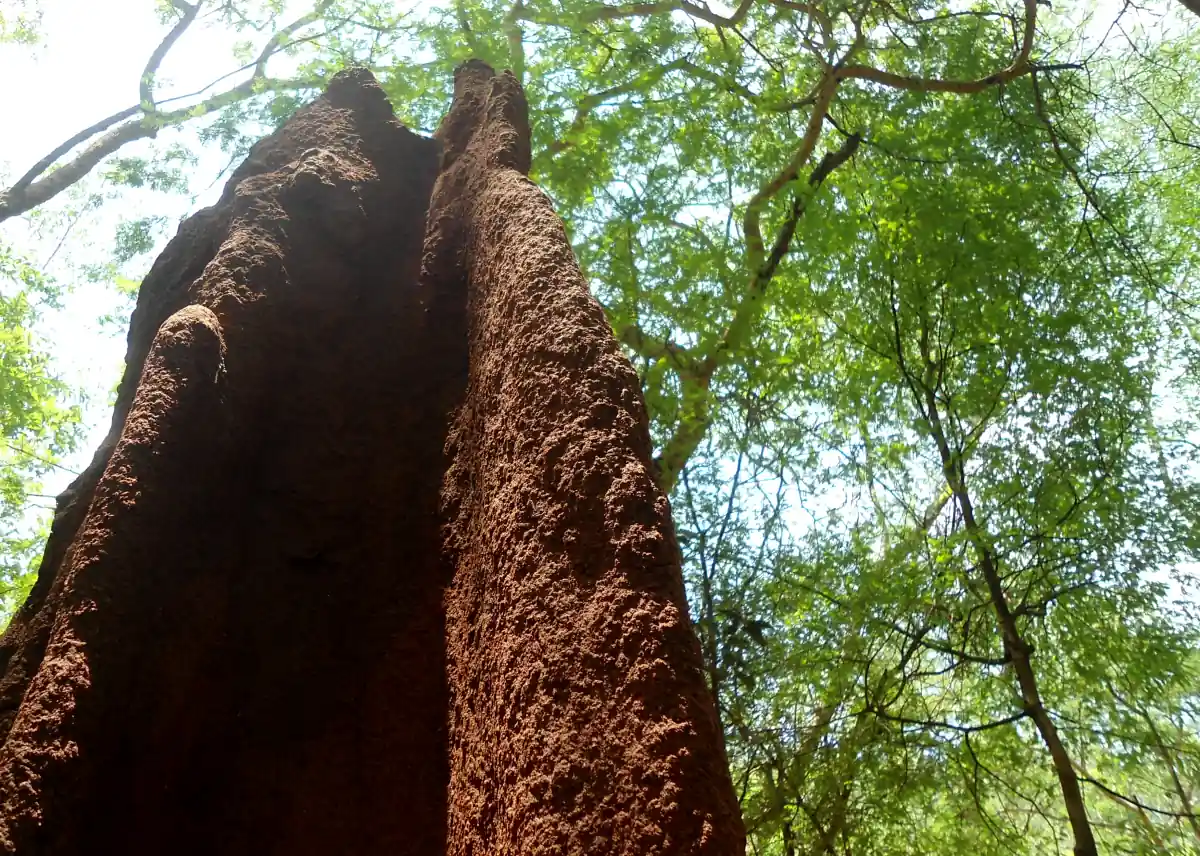
One telling is in chapter 124 of the Skanda Purana’s Nagara Khanda. A twelve-year drought and famine drive a Brahmin, Lohajangha, to rob. Seven sages on pilgrimage cross his path. His own parents and wife tell him none of them will share his sin. A mantra comes to him from the sage Pulaha, and he sits in japa (repeating the mantra) until he is covered by an anthill.
Valmika is the Sanskrit word for an anthill. Which in this telling is where the name Valmiki comes from.
Notice his name, though. Lohajangha. That version has no Ratnakar in it at all.
The other one we heard as kids is in the Adhyatma Ramayana, in its Ayodhya Kanda. Sages give a sinful robber Rama, Deity page on Tirth ’s name to repeat with the syllables reversed, “mara”. Over and over, it sounds like “Rama Rama”. An anthill grows over him.
Then a third, in the Anushasana Parva of the Mahabharata. There it is Valmiki’s own voice saying brahmahatya (killing a Brahmin) was a sin that fell on him, until Bhagwan Shiva cleansed him.
One agreed origin story never existed.
I think the robber version won out because it is the easiest to tell a child, a man who did wrong sitting so still for so long that ants build their hill over him. Telling it is fine. As long as we say which text it comes from.
What did Valmiki ask Narad Muni?
The epic itself starts with a question, in Bala Kanda Sarga 1. Valmiki is a tapasvi there, given to austerity and study, and he asks Narad Muni who in the world today is truly virtuous.
Then he spells out what he wants in such a man. Valour & knowledge of dharma. Gratitude, truthfulness, firmness in vows. If Narad knows of anyone like that, he says, he is eager to hear.
Narad Muni, who knows the three worlds, agrees that qualities like these are rare. Then he gives a name. Bhagwan Ram. Born in the Ikshvaku line, self-controlled, a man of great strength, and the one we call Maryada Purushottam Ram.
After that Narad runs through the whole story in short. The sarga ends on a phala-shruti (the stated fruit of hearing it), which says reading this story frees a person from sins. You can read the full telling of Narad’s outline in who Bhagwan Ram was, as Valmiki tells it.
So the first thing Valmiki does in the Ramayana is listen.
Two krauncha birds by the Tamasa, and the first shloka
Narad Muni is honoured by Valmiki and his disciple, then takes leave and rises into the sky. Some time later Valmiki goes down to the Tamasa, a river not far from the Ganga, his disciple Bharadvaja carrying his bark garment.
Clear water at the ford. No mud. Like the mind of a good person, Valmiki says.
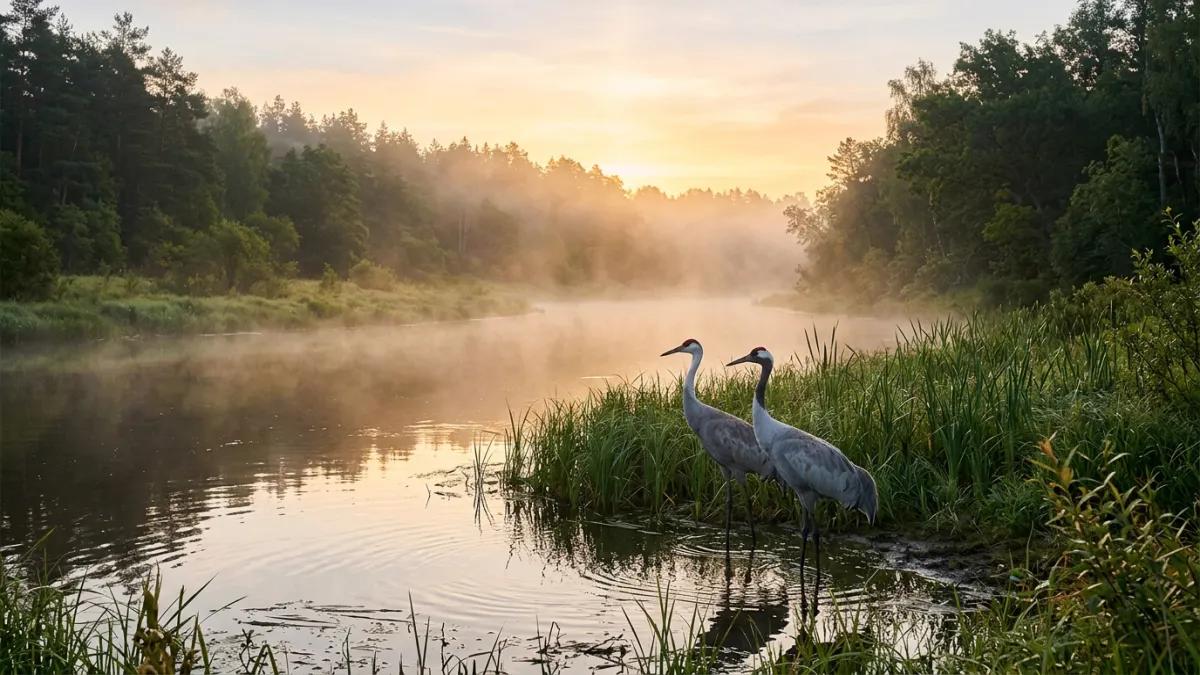
He spots two krauncha birds, sweet-voiced, moving about as a pair. Right in front of his eyes a nishada (hunter) of cruel intent kills the male. Piteous cries from the female, for her mate.
The rishi is moved to pity, and seeing the killing as adharma he speaks these words (Bala Kanda 1.2.15).
ma nishada pratishtham tvam agamah shashvatih samah, yat krauncha-mithunad ekam avadhih kama-mohitam
Hunter, may you find no rest for endless years, since you killed one of this krauncha pair, lost in desire.
What he has just said startles him. Turning to his disciple he works it through out loud, four equal feet with every syllable counted, fit to be sung to a stringed instrument and born of his shoka, his grief, and so, he says, it shall be called a shloka.
Shoka into shloka. The text itself makes the pun later in that sarga, while his disciples go on repeating the verse.
Why did Bhagwan Brahma come to see Valmiki?
He comes to explain what the verse is for.
Bhagwan Brahma comes in person, the four-faced creator of the worlds. Valmiki gets up, folds his hands and offers water for the feet, arghya and a seat. Once Bhagwan Brahma has sat, he gives Valmiki leave to sit too.
Still the bird won’t leave his mind. Out comes the shloka a second time, there and then.
At this Bhagwan Brahma smiles. This is a shloka, he tells Valmiki, no doubt about it, and the speech came by Bhagwan Brahma’s own will. He asks him to compose the whole story of Bhagwan Ram as he heard it from Narad. Not one word of the poem will be false, he adds.
For as long as mountains and rivers stand, he says, the story will be told in the world. With that he is gone.
So the whole Ramayana, Valmiki decides, will be in verses like this one. Hundreds of shlokas. Each with equal syllables. The epic got its metre from one cry by a river.
Maa Sita weeping on the riverbank near his ashram
We meet Valmiki again in the Uttara Kanda, after Maa Sita has been left near his ashram. Maa Sita’s agnipariksha in Lanka came earlier, and that is a separate story.
Sarga 49. The sages’ young sons find her in tears on the riverbank, and off they run to tell Valmiki. By his tapas he sees all of it. He goes to her carrying arghya and addresses her as the daughter-in-law of Dasharatha and the daughter of Janaka.
His tapas tells him she is without fault, he says. She should be at ease. Near his ashram live women ascetics, and they will look after her like their own child.
A very gentle scene, this one.
Other characters get the same treatment in the Ramayana characters through one Valmiki scene each.
How did Kush and Luv get their names?
Maa Sita gives birth to two sons in Sarga 66, on the very night Shatrughna is staying at the ashram.
To protect the newborns Valmiki uses kusha grass and lava. The elder is named Kusha and the younger Lava, which are the names we say as Kush and Luv. Together, Kushalavau.
Now look at the order the text gives. We say Luv-Kush. In Valmiki’s telling, though, the elder of the two boys is Kush.
Much later, at Bhagwan Ram’s ashvamedha, Valmiki tells his two disciples to go and sing the whole Ramayana, in the hermitages, in the streets and at Bhagwan Ram’s own gate. And the twins do sing it, set to strings (Sargas 93 and 94).
Which makes Bhagwan Ram’s own sons the ones who carry Valmiki’s poem into the city, right at their father’s door.
Tenth son of Prachetas, standing up for Maa Sita
Sarga 96. Valmiki enters Bhagwan Ram’s assembly with Maa Sita following.
Pure as she was, he says, she had been abandoned near his ashram, and the two boys are Bhagwan Ram’s sons, which he vouches for himself. And then, finally, he speaks of himself.
He is the tenth son of Prachetas, he says, and has never once spoken a false word.
Narad Muni’s listener at the start, a witness at the end. He stakes his own truthfulness for Maa Sita and her sons, and does it in front of the whole court. This is the Valmiki I would want a child to hear about first. The robber can come later. With his source named.
Frequently asked questions
Not in the parts of his own Ramayana where he shows up, where he gives himself as the tenth son of Prachetas. The robber story is from later texts. The Skanda Purana is one.
It is about a hunter who, by the Tamasa, killed one bird of a krauncha pair. In the verse, Bala Kanda 1.2.15, Valmiki wishes the hunter no rest for endless years for killing the bird while it was lost in desire.
Narad Muni told him, in the first sarga of the Bala Kanda. Composing it in shlokas was Bhagwan Brahma’s request, which came after.
Valmika means anthill. According to some, the name comes from the anthill that covered him while he sat lost in japa, as in the Skanda Purana story.
Kush. In the Uttara Kanda, Sarga 66, the elder twin is named Kusha and the younger Lava, even though we usually say Luv-Kush.
As the epic presents it, yes, and Valmiki speaks in its final scenes. Many scholars who study how the text grew treat the Uttara Kanda, and parts of the Bala Kanda too, as later additions.
Continue on Tirth
- The prince of Ayodhya in Valmiki’s words follows Narad Muni’s outline at full length.
- Who is who in the Ramayana meets the rest of the cast, and the Mahabharata’s own authorship puzzle is told in Vyasa and the scribe’s deal.
- Valmiki Ashram, Ayodhya has its own page on Tirth, and Sage Valmiki has one too.
- Ayodhya, Bhagwan Ram’s own city, Destination on Tirth, has its own page, and Tirth lists its yatra packages, Yatra on Tirth and pujas, Pujas on Tirth on theirs.