On this page22 sections
- The Full Story of Sita Agnipariksha
- Sita’s Abduction by Ravana
- The War Between Rama and Ravana
- Why Did Sita AgniPariksha?
- The Sita AgniPariksha: The Trial by Fire
- Did Sita Really Enter the Fire?
- Literal Interpretation
- The Maya Sita Theory
- Symbolic Interpretation
- Why Did Rama Ask Sita for Agni Pariksha Proof?
- What Does Agni Pariksha Symbolize for Sita?
- Symbol of Truth
- Strength and Courage
- Faith in Divine Justice
- Scientific Explanation of the Sita Agni Pariksha Miracle
- Ritualistic Fire Ceremonies
- Cultural Symbolism
- Mythological Narrative
- Sita Agnipariksha from a Modern Feminist Perspective
- Lessons from the Story of Sita Agnipariksha
- Frequently Asked Questions (FAQs)
- Conclusion
- Sources and review
This powerful event occurs after the great war between Rama and Ravana, when Sita, Deity page on Tirth is asked to prove her purity by undergoing a trial by fire.
For centuries, this story has been interpreted in many ways religious, philosophical, symbolic, and even from modern social perspectives. Some see it as a demonstration of truth and faith, while others analyze it from feminist or historical viewpoints. Today, the story of Sita’s Agni Pariksha continues to spark discussion among scholars, spiritual teachers, and readers around the world.
In this article, we will explore the full story of Sita Agnipariksha, why Sita gave the fire test, whether she truly entered the fire, what it symbolizes, and how modern thinkers interpret this famous episode.
In short
For centuries, this story has been interpreted in many ways religious, philosophical, symbolic, and even from modern social perspectives. Some see it as a demonstration of truth and faith, while others analyze it from feminist or historical viewpoints. Today, the story of Sita’s Agni Pariksha continues to spark discussion among scholars, spiritual teachers, and readers around the world.
The Full Story of Sita Agnipariksha
To understand the context of the Agni Pariksha, we need to look at the events that happened before it.
Sita’s Abduction by Ravana
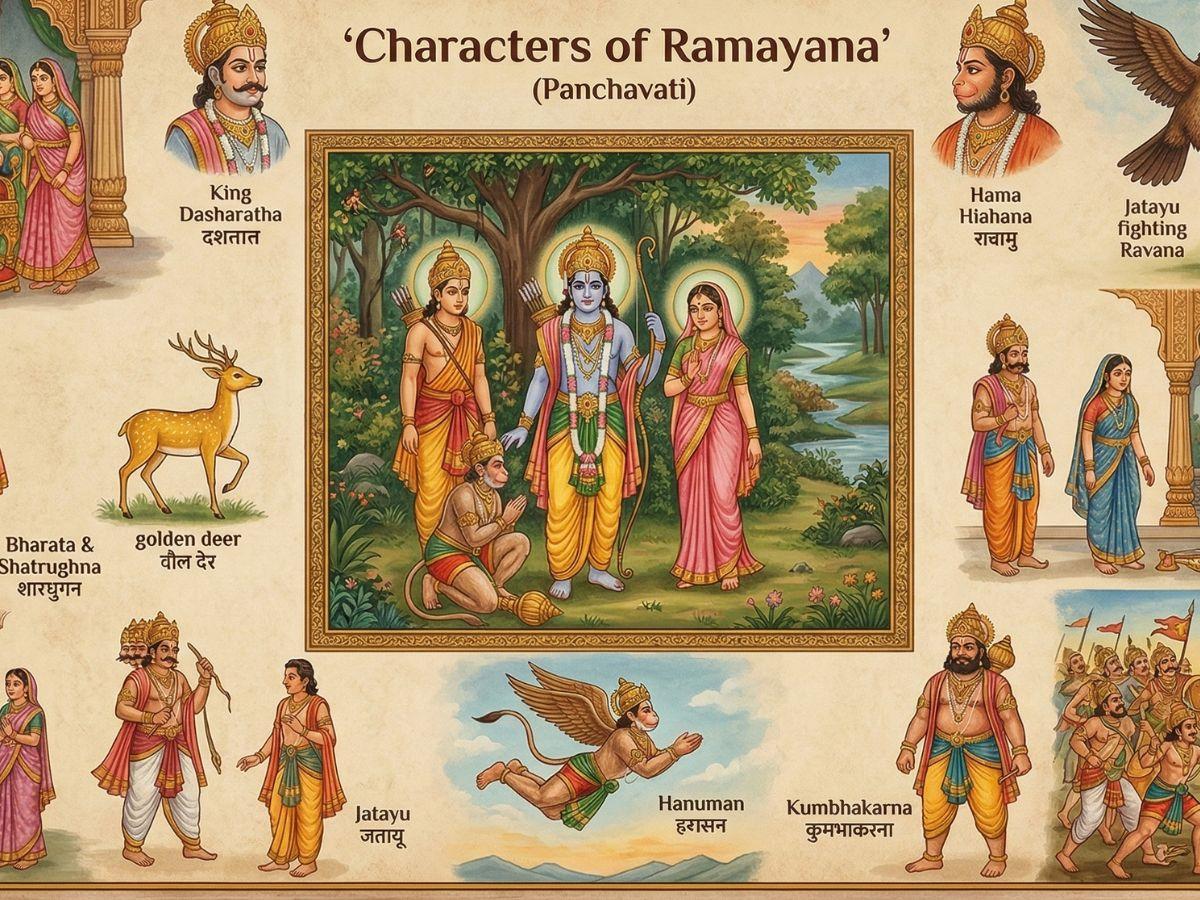
The story begins during the exile of Rama, Sita, and Lakshmana in the forest. One day, the demon king Ravana devises a plan to kidnap Sita. Using a magical golden deer as a distraction, he lures Rama and Lakshmana away from their hut.
When Sita is left alone, Ravana arrives disguised as a sage. After revealing his true identity, he abducts Sita and takes her to Lanka, where she is kept in the Ashoka Vatika garden.
Despite Ravana’s repeated attempts to persuade her to become his queen, Sita remains loyal to Rama and firmly rejects his advances.
The War Between Rama and Ravana
When Rama discovers that Sita has been kidnapped, he begins a long journey to rescue her. With the help of allies like Hanuman and the army of monkeys led by Sugriva, Rama eventually reaches Lanka.
This leads to the famous Battle of Lanka, a massive conflict between Rama’s army and Ravana’s forces.
After a fierce battle, Rama ultimately defeats Ravana and rescues Sita. However, the story does not end there. A significant and controversial moment follows the Agni Pariksha.
Why Did Sita AgniPariksha?
After Ravana is defeated, Rama asks Sita to prove her purity before returning with him to Ayodhya. This request may appear surprising because Rama had fought an entire war to rescue her.
According to traditional interpretations, Rama’s request was not due to personal doubt but because of his duty as a king. In ancient times, rulers were expected to maintain a spotless reputation and ensure that no suspicion remained regarding their family.
Since Sita had lived in Ravana’s palace for many months, Rama believed that society might question her purity. Therefore, he asked her to demonstrate her innocence publicly.
Sita, deeply hurt by the suspicion, agrees to undergo a test to prove her purity.
The Sita AgniPariksha: The Trial by Fire
To prove her innocence, Sita declares that if she has remained faithful to Rama in both thought and action, the fire will not harm her.
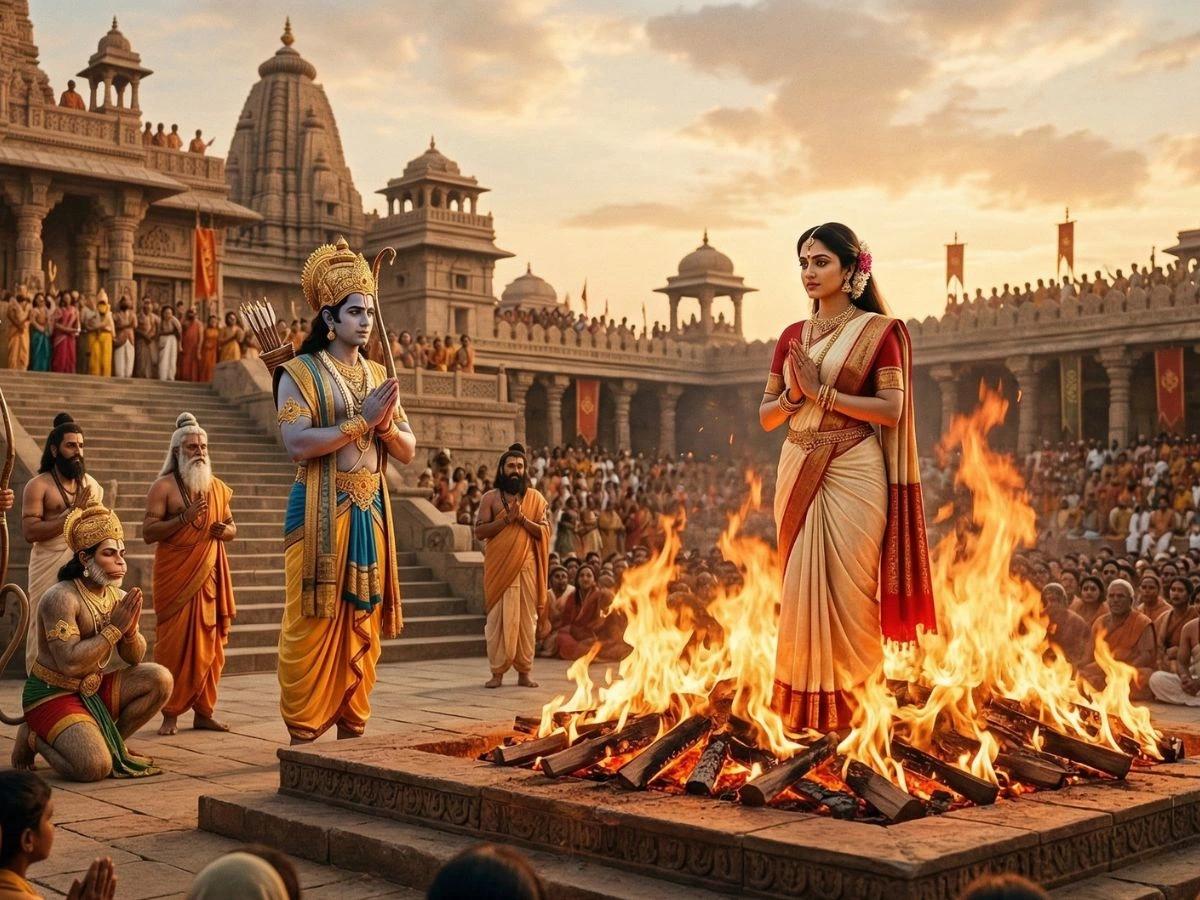
A sacred fire is prepared, and Sita walks into the flames with complete faith and courage. According to the epic, the fire does not burn her. Instead, Agni himself appears and presents Sita unharmed.
Agni declares that Sita is pure and untouched by Ravana. With this divine confirmation, Rama accepts Sita and acknowledges her purity before everyone present.
This event is known as Sita Agnipariksha, meaning “the trial of Sita by fire.”
Did Sita Really Enter the Fire?
One of the most common questions people ask about this story is whether Sita literally entered a fire.
Different interpretations exist depending on the version of the Ramayana being studied.
Literal Interpretation
In the original Valmiki Ramayana, the story is described in a way that suggests Sita truly entered the fire. However, she was protected by divine power, which prevented the flames from harming her.
The Maya Sita Theory
Another popular interpretation is known as the “Maya Sita” theory. According to this belief, the real Sita was never kidnapped by Ravana.
Before Ravana’s abduction, the real Sita was secretly placed under the protection of Agni, and a magical duplicate called “Maya Sita” took her place.
When the Agni Pariksha , Deity page on Tirthoccurred, the real Sita emerged from the fire while the Maya Sita disappeared. This explanation helps resolve the idea that Ravana never actually touched the true Sita.
Symbolic Interpretation
Some scholars believe the event is symbolic rather than literal. In this view, the fire represents divine truth and purification. Sita’s willingness to face the flames demonstrates her unwavering faith and moral strength.
Why Did Rama Ask Sita for Agni Pariksha Proof?
The decision of Rama to ask Sita for proof of purity is one of the most debated aspects of the story.
From a traditional perspective, Rama was acting as a king rather than just a husband. His duty was to maintain public trust and uphold social norms.
In ancient societies, the moral conduct of the royal family was considered extremely important. If the people doubted the queen’s purity, it could damage the king’s reputation and authority.
By asking for Agni Pariksha, Rama ensured that Sita’s innocence would be confirmed in front of everyone. Once the fire god himself verified her purity, no one could question her honor again.
What Does Agni Pariksha Symbolize for Sita?
Beyond the literal story, Agni Pariksha carries deep symbolic meaning.
Symbol of Truth
Fire is often associated with truth and purification in many cultures. The idea is that fire destroys falsehood but protects what is pure.
In this sense, Sita’s Agni Pariksha symbolizes the victory of truth over suspicion.
Strength and Courage
Sita’s decision to enter the fire demonstrates her immense courage. She does not run away from accusations but confronts them directly with confidence in her own purity.
This moment highlights Sita’s inner strength and dignity.
Faith in Divine Justice
Sita’s actions also represent faith in divine justice. She trusts that the truth will ultimately prevail and that the gods will protect her.
Scientific Explanation of the Sita Agni Pariksha Miracle
Some modern thinkers attempt to explain the story using scientific or historical perspectives.
While it is difficult to provide a literal scientific explanation for the miracle described in the epic, several interpretations exist.
Ritualistic Fire Ceremonies
In ancient India, fire rituals were common in religious ceremonies. Some scholars believe the Agni Pariksha might have been a symbolic ritual rather than a literal act of walking through intense flames.
Cultural Symbolism
Another explanation is that the story was written to convey moral and spiritual messages rather than historical events. The fire may represent the concept of purification and divine judgment.
Mythological Narrative
Many historians and scholars view the Ramayana as a sacred narrative designed to teach ethical values. From this perspective, the Agni Pariksha serves as a powerful storytelling element rather than a physical miracle.
Sita Agnipariksha from a Modern Feminist Perspective
In modern times, the story has also been examined through feminist analysis.
Some critics argue that Sita was unfairly forced to prove her purity despite being a victim of kidnapping. They believe the story reflects the patriarchal values of ancient societies where women were expected to maintain strict standards of honor.
However, other scholars present a different interpretation.
They argue that Sita’s Agni Pariksha actually demonstrates her strength and independence. Instead of silently accepting doubt, she boldly confronts the accusations and proves her truth.
From this viewpoint, Sita becomes a symbol of resilience, dignity, and moral courage.
Lessons from the Story of Sita Agnipariksha
The story of Sita’s Agni Pariksha offers several important lessons that continue to inspire people today.
First, it highlights the power of truth and integrity. Sita’s faith in her own purity ultimately protects her.
Second, it demonstrates the complex balance between personal relationships and social responsibilities. Rama’s actions reflect the difficult decisions leaders sometimes face.
Finally, the story encourages readers to reflect on themes such as honor, justice, courage, and faith.
Frequently Asked Questions (FAQs)
According to the Ramayana, Rama asked Sita, Deity page on Tirth for Agni Pariksha to publicly prove her purity after she was rescued from Ravana.
Rama’s decision is often interpreted as a reflection of his duty as a king. In ancient times, rulers were expected to maintain a flawless reputation and remove any doubts among the people. By undergoing Agni Pariksha, Sita demonstrated her innocence before the entire kingdom.
After Sita entered the fire, Agni appeared and declared that she was completely pure and untouched by Ravana.
Following this divine confirmation, Rama accepted Sita and reunited with her. Later, they returned to Ayodhya where Rama was crowned king in the famous celebration known as Diwali.
In the Valmiki Ramayana, the Agni Pariksha is described as a divine event where Sita enters the fire and emerges unharmed with the blessings of the fire god.
However, many TV adaptations and modern retellings often interpret the event differently. Some shows present it as a symbolic test or include the “Maya Sita” concept, where the real Sita was protected by Agni and only a divine illusion was kidnapped by Ravana.
These adaptations attempt to make the story more understandable for modern audiences.
From a modern feminist perspective, some scholars view the Agni Pariksha as a reflection of patriarchal values in ancient societies, where women were often expected to prove their purity.
However, other interpretations highlight Sita’s strength and dignity. Instead of seeing her as powerless, many scholars view Sita as a symbol of courage who stood firm in her truth and faced the trial with confidence and self-respect.
Some traditional accounts state that Sita literally entered the fire and was protected by divine power. According to another belief known as the “Maya Sita” theory, the real Sita was never abducted by Ravana and was already under the protection of Agni.
Many modern scholars also interpret the story symbolically, suggesting that the fire represents truth, purification, and divine justice rather than a physical trial.
Conclusion
The episode of Sita Agnipariksha remains one of the most powerful and debated moments in the Ramayana. Whether viewed as a literal event, a symbolic story, or a philosophical lesson, it continues to captivate readers across generations.
Through the character of Sita, the story explores themes of truth, dignity, faith, and resilience. Meanwhile, the actions of Rama reflect the challenges of leadership and social responsibility.
Even today, the story invites readers to think deeply about morality, justice, and the role of women in society. That is why the story of Sita Agnipariksha continues to hold a timeless place in spiritual and cultural discussions around the world.
For more information you may visit tirth.com
Want to know about Why Kaikayi Exiled Rama