On this page7 sections
- Why did the Pandavas chase Bhagwan Shiva after the war?
- Where did the buffalo go into the ground?
- And how does the Shiva Purana end the chase?
- What did Nara and Narayana ask Bhagwan Shiva for?
- Where can you still see the Pandavas at Kedarnath?
- Frequently asked questions
- Continue on Tirth
- Sources and review
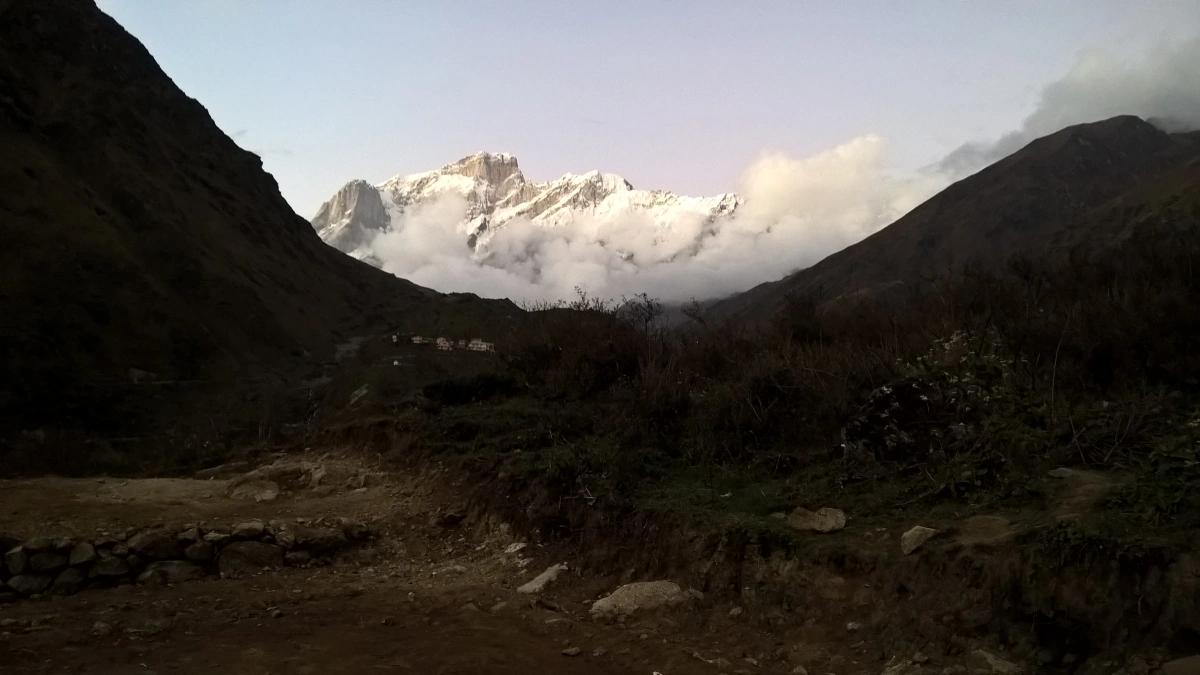
The one blessing they still wanted was Bhagwan Shiva’s, and he kept slipping out of their reach.
The Kedarnath, Destination on Tirth story, in short, is that chase: the five Pandavas wanted his blessing after killing their own kin, and he hid at Kedarnath as a buffalo.
How it ends depends on who is telling it. One ending comes from the temple committee. The Shiva Purana has another, and the two only part ways right at the close.
The practical side, darshan timings, opening dates and puja details, sits on Tirth’s Kedarnath Temple page, Temple page on Tirth. Here it’s just the story.
In short
The Kedarnath story, in short, is that chase: the five Pandavas wanted his blessing after killing their own kin, and he hid at Kedarnath as a buffalo. How it ends depends on who is telling it. One ending comes from the temple committee.
Why did the Pandavas chase Bhagwan Shiva after the war?
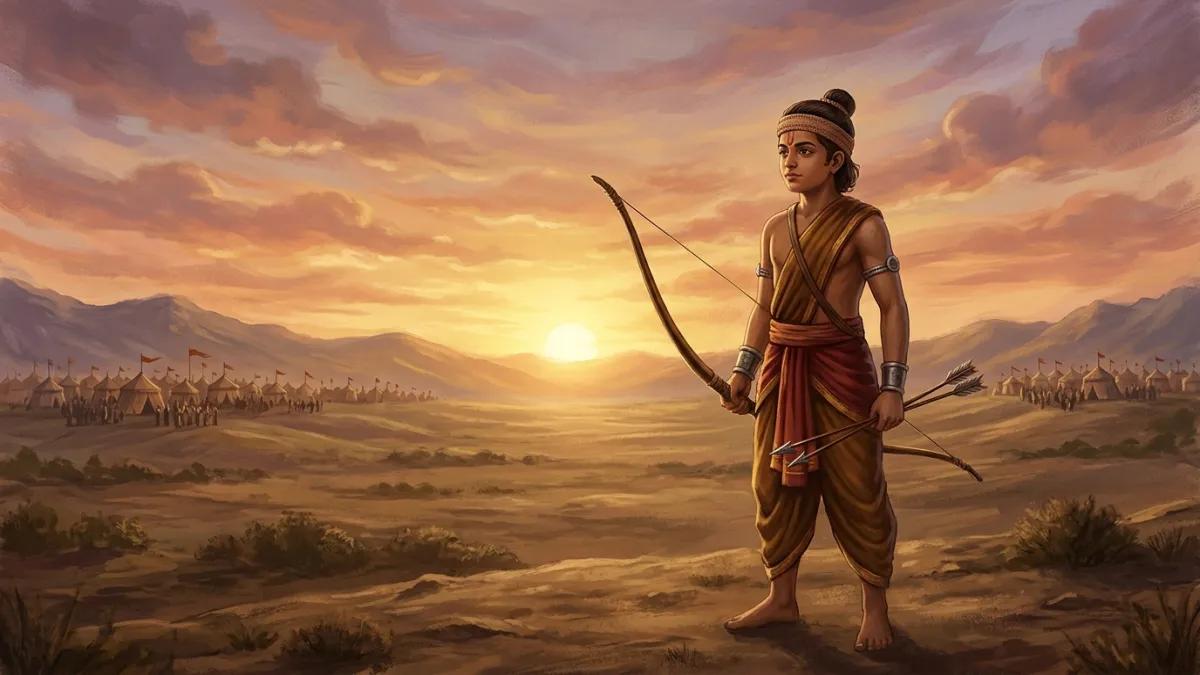
The war was won, but what it had cost stayed with them.
They had killed their own kin on that field. They felt guilty. And the way the committee tells it, they sought Bhagwan Shiva’s blessing for redemption.
I think people rush through this bit, and they shouldn’t. Five of them, the war won, and still the one thing they wanted most kept running away, until he took refuge at Kedarnath. As a buffalo.
The committee’s own page says buffalo. So does the Shiva Purana, in chapter 19 of the Kotirudra Samhita, and I’d rather tell a shrine’s story the way the shrine itself does.
Where did the buffalo go into the ground?
The committee ends the chase at the sanctum.
The brothers came after him. Right where the temple’s sanctum stands now, at that exact place, Bhagwan Shiva dived into the ground. Up on the surface, his hump stayed behind.
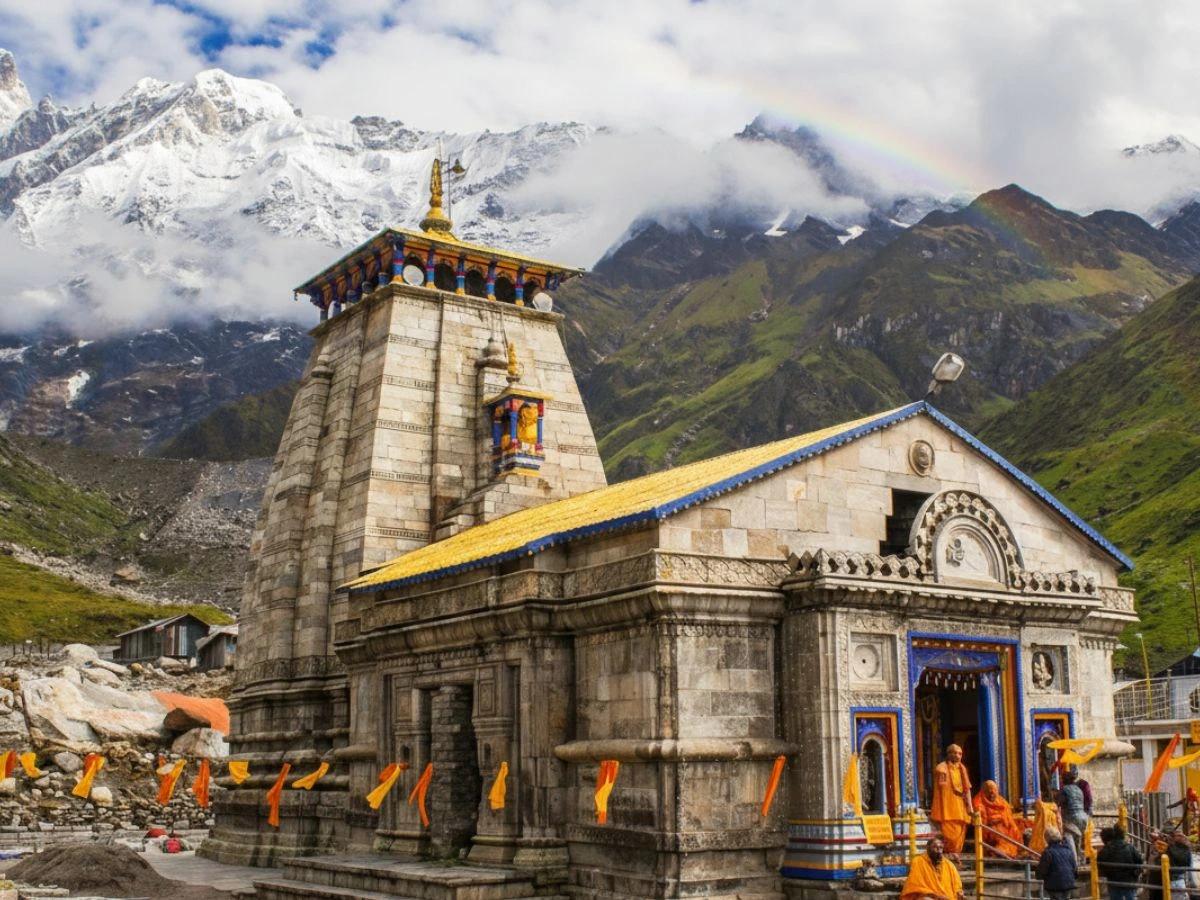
You can still see it. The committee says it’s the conical rock in the sanctum, worshipped as Bhagwan Shiva in his Sadashiva form.
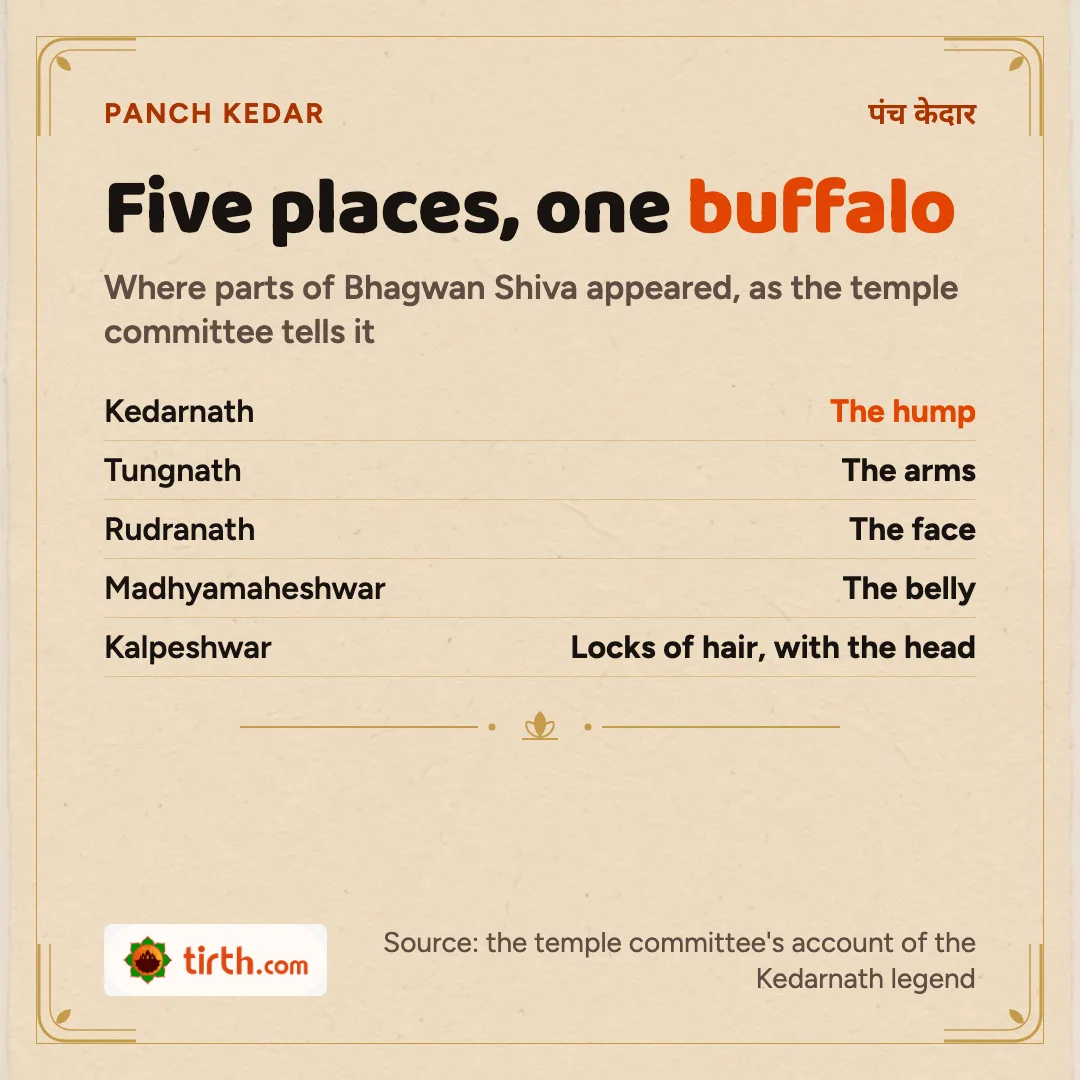
It also says the other portions of Bhagwan Shiva came up at four more places. Which is where Panch Kedar comes from.
Four places, per the committee. His arms appeared at Tungnath and his face at Rudranath, while the belly came up at Madhyamaheshwar, and at Kalpeshwar it was his locks of hair, together with the head.
Add Kedarnath and you get five. That’s the Panch Kedar.
And how does the Shiva Purana end the chase?
Verses 13 to 17 of chapter 19 go another way. In this telling he spots the Pandavas first, turns into a buffalo by his magic and starts to run.
But they do catch him. Head bent down, he stands still, and the brothers have hold of his tail as they plead.
As Bhaktavatsala (the one who loves his devotees), he remains in that form. The head portion leaves and stays on in “the city of Nayapala”. The translation doesn’t say which city that is.
He asks to be worshipped like that, in the trunkless form. They do. Then they go away, freed of their misery.
So the Purana has the tail and Nayapala, with no hump and no Panch Kedar. The hump and the five places are what the committee and Garhwal tradition tell. One ending leaves a hump in the Kedarnath sanctum, and the other sends the head off to Nayapala.
What did Nara and Narayana ask Bhagwan Shiva for?
Go back to chapter 19, though. Its verses 1 to 12 start somewhere else, before the Pandavas turn up at all.
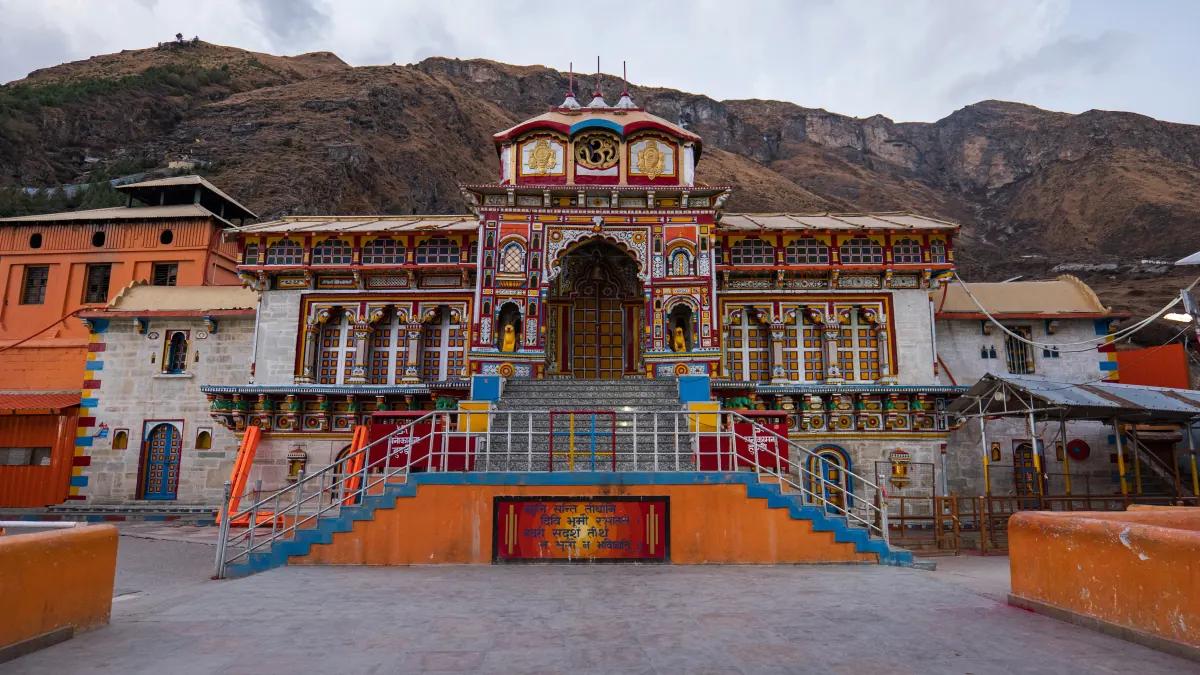
At Badarikashrama, two sages called Nara and Narayana were doing penance and worshipping Bhagwan Shiva, the same pair you meet in The Story Behind Badrinath. He was pleased, and a boon was theirs to ask. Their ask was that he stay right there in his own form.
So he stayed, at Kedara on the Himavat, as a Jyotirlinga, and the name he took there was Kedareshwar. The committee counts Kedarnath among the twelve Jyotirlingas too. New to the word? Here’s what a Jyotirlinga means.
Nobody runs from anybody in this one, just two sages asking and Bhagwan Shiva staying.
The committee reaches back further still. It quotes the Skanda Purana, where Bhagwan Shankar tells Maa Parvati that the Kedar region is as old as he is, and that Kedarkhand is his favourite abode, like heaven on earth. Kedar Khand, the committee adds, is the historical name of the region.
Now look at the chase again. He didn’t run to some strange place; he ran to his favourite abode.
Where can you still see the Pandavas at Kedarnath?
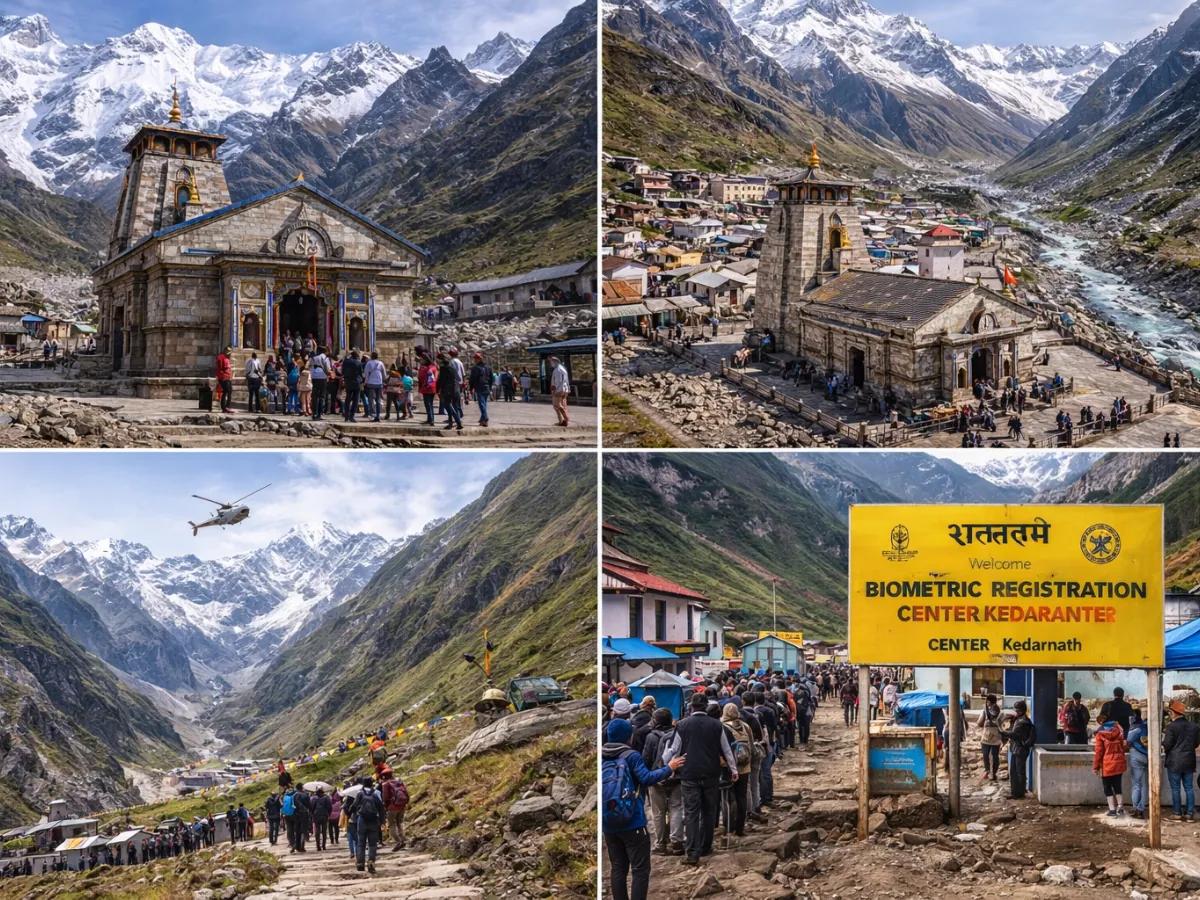
Inside the temple itself. The Sabhamandap holds murtis of all five Pandavas, with Shri Krishna and Maa Kunti.
They may have raised the first temple here, too. The committee’s page credits the Pandavas with one built after the Mahabharata, and says Adi Shankaracharya built his in the 8th century beside that earlier site.
In the sanctum, the conical rock is the hump, worshipped as Sadashiva, and a large Nandi stands outside the door as guard. In winter the utsavar, a portable statue of Bhagwan Shiva, is carried down to Ukhimath and worshipped there. This year’s dates and darshan timings are on the Kedarnath Temple page on Tirth, Temple page on Tirth.
Frequently asked questions
They had won the Kurukshetra war, but the Pandavas felt guilty for killing their kin and sought Bhagwan Shiva’s blessing. He kept eluding them, and at Kedarnath he hid in the form of a buffalo. The temple committee’s version has him dive into the ground where the sanctum now is, with his hump left on the surface.
According to the committee, it’s the conical rock inside the sanctum, left behind by the buffalo. What is worshipped there is Bhagwan Shiva’s Sadashiva form.
As the committee lists them, it’s the five places where parts of Bhagwan Shiva appeared. Kedarnath has the hump, Tungnath the arms, Rudranath the face, Madhyamaheshwar the belly, and Kalpeshwar the hair with the head.
Yes, according to the temple committee, which dates his temple to the 8th century and places it beside the site of an earlier one built by the Pandavas. Its own page also says the Pandavas built it after the Mahabharata, so you’ll find both there.
Down to Ukhimath. The shrine is shut for winter, so the utsavar (the portable statue) is worshipped there until Kedarnath reopens.
Continue on Tirth
- Plan your darshan with Kedarnath timings and darshan details, Temple page on Tirth.
- See how Kedarnath sits among the Char Dham shrines.
- Read the neighbouring legend: how Badrinath tells the story of Nara and Narayana.