On this page9 sections
- Who was Barbarik, the son of Ghatotkacha?
- What happens to Barbarik in the Skanda Purana?
- Where do the leaf, the promise and the gift come from?
- What did the head see of the war?
- How did Barbarik’s head reach Khatu?
- What do Shish ke Daani and Haare ka Sahara mean?
- Purana or folk telling: which detail is which?
- Frequently asked questions
- Continue on Tirth
- Sources and review
 Both tellings agree on that, then part over his head.
In the Skanda Purana, Bhagwan Krishna, Deity page on Tirth beheads him with the discus just before the war. In Rajasthan’s folk telling, Bhagwan Krishna comes as a Brahmin and Barbarik hands his head over as a gift, and the leaf test and the promise to his mother belong to that version. This page keeps the two apart and says at each step which one it is following.
According to reference works, Barbarik is not a figure of the Mahabharata. The Skanda Purana is the text we can name.
In short
In the Skanda Purana, Bhagwan Krishna, Deity page on Tirth beheads him with the discus just before the war. In Rajasthan’s folk telling, Bhagwan Krishna comes as a Brahmin and Barbarik hands his head over as a gift, and the leaf test and the promise to his mother belong to that version.
Who was Barbarik, the son of Ghatotkacha?
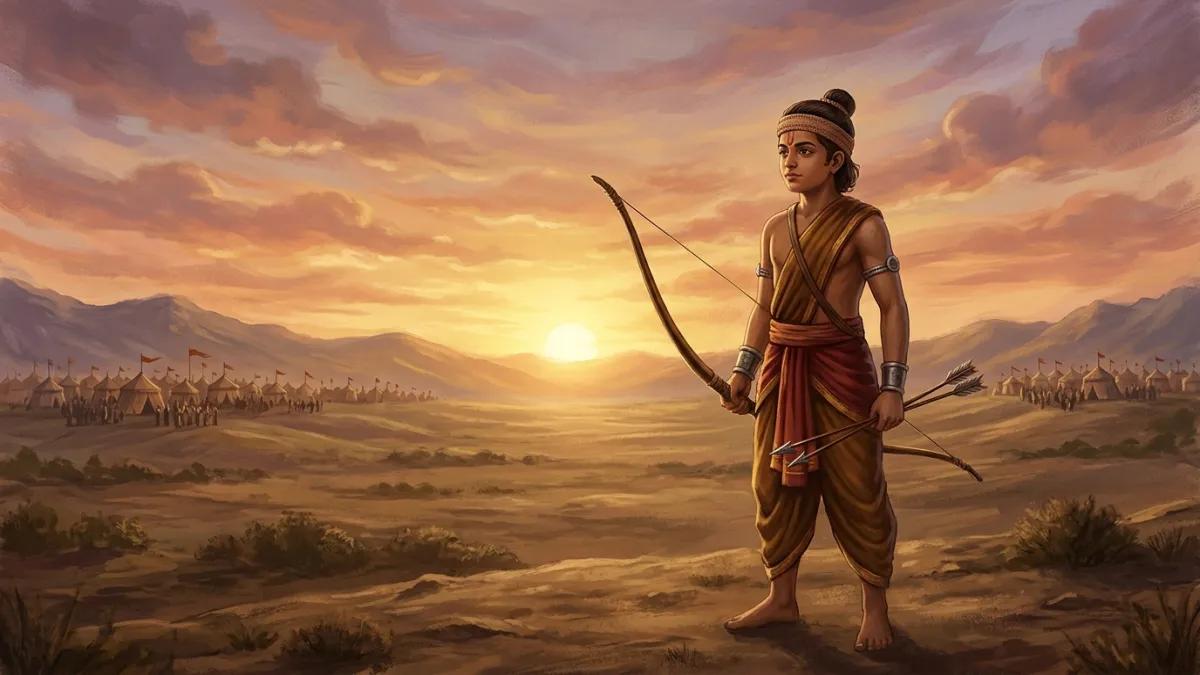
Ghatotkacha, Bhima’s son, was his father. The Purana gives his mother as Kamakatankata, daughter of Muru. Ghatotkacha won her near Pragjyotisha. The wedding took place at Indraprastha, with Bhagwan Krishna and the Pandavas blessing it. As for the name, the Purana spells it Barbarika, because the boy’s hair looked like that of the Barbaras. Popular tellings call the mother Maurvi, daughter of Daitya Moor. The Purana translation never uses that name.
Dwarka, Destination on Tirth came next. Ghatotkacha took the boy there, and Bhagwan Krishna named him Suhridaya before sending him to Guptakshetra, where the Mahi river meets the sea, to worship the Devis. After three years they appeared and gave him a power nobody could match.
What happens to Barbarik in the Skanda Purana?
The Kaumarika Khanda holds the whole story, over chapters 60 to 66 in the Tagare translation. Barbarik is born in chapter 60, spends his years at Guptakshetra from chapter 61, and reaches the war scene in chapter 66.
Arjuna had boasted before the war that he alone could destroy the Kaurava army in a day. Barbarik said one muhurta was enough for him. His proof was an arrow filled with ash, which marks the weak spots of warriors on both sides and spares only the Pandavas, Kripa and Ashvatthama.
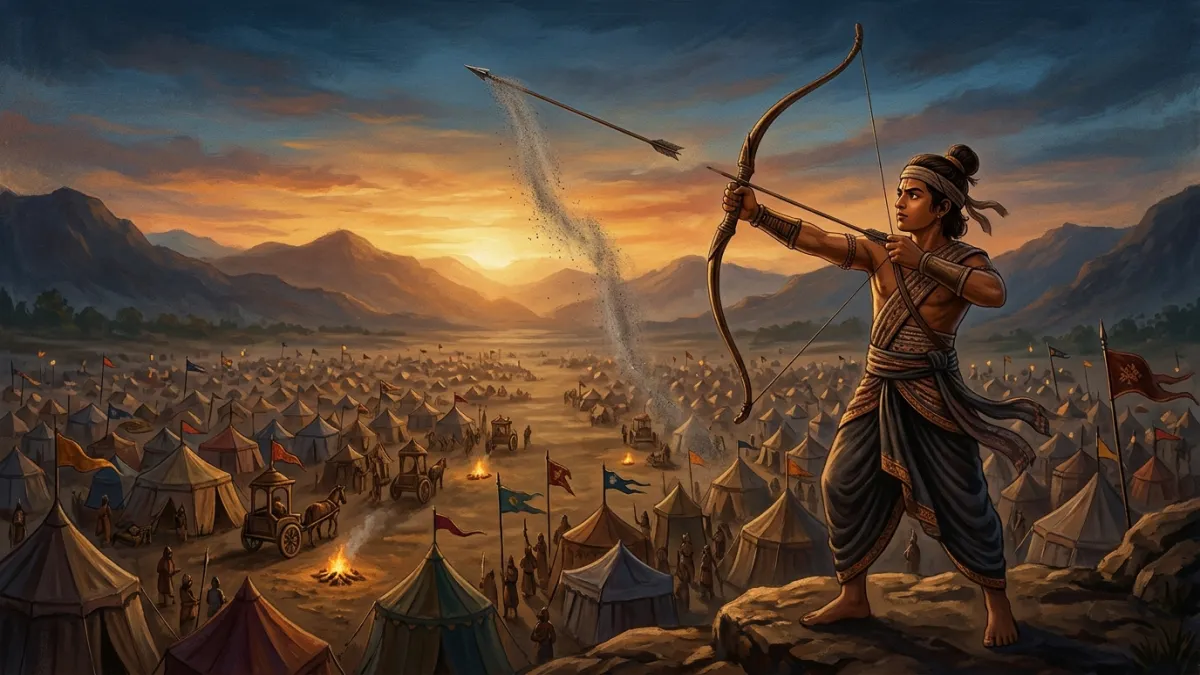
Barbarik never got to loose the real arrows. Bhagwan Krishna cut off his head with the discus before a single one of them left the bow, and in that chapter it is no gift of charity.
Fourteen Devis arrive next, among them Maa Siddhambika and Maa Chandika, and it is Maa Chandika who explains who the boy was: a yaksha named Suryavarcas, whom Bhagwan Brahma had condemned for offering to take the Earth’s burden on himself.
Bhagwan Krishna says he did it to make Bhagwan Brahma’s words come true. Maa Chandika sprinkles nectar over the head, which makes it immortal, and Bhagwan Krishna then grants it worship in all the worlds, with a seat on a mountain peak to watch the war from.
Where do the leaf, the promise and the gift come from?
None of these details is in the Purana chapters we read, and devotional writers today retell them from Rajasthan’s folk and temple telling.
Here he carries a divine bow and three arrows that never miss. The tellings do not agree on who gave them, and some name Maa Durga, Deity page on Tirth, so the giver is not settled.
He has also promised his mother to join whichever side is losing. Bhagwan Krishna, dressed as a Brahmin, tests him with a peepal leaf under his foot. Next the Brahmin asks for a gift. The gift he names is Barbarik’s head.
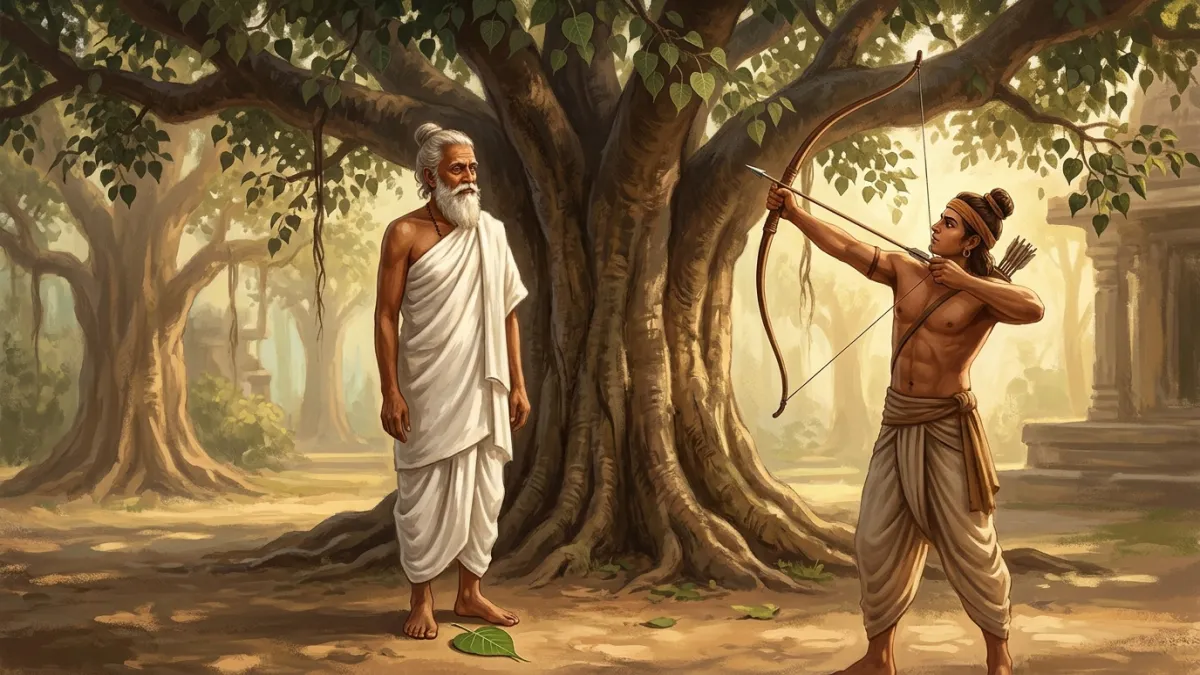
Barbarik agrees. The day, in this telling, was Phalgun Shukla Dwadashi. The fair kept in the month of Phalgun is the Falgun Mela at Khatu Shyam.
Bhagwan Krishna also grants, in this telling, that Barbarik will be worshipped in Kali Yuga under the name Shyam, and that is where the folk telling ends, while the Purana closes on a head on a mountain peak.
What did the head see of the war?
In the Purana the head watches the war from its mountain peak, and afterwards it tells Bhima that it saw one fighter with Vaishnava and Shaiva features, a union of Bhagwan Vishnu and Bhagwan Shiva, Hari and Hara.
The folk telling has the head credit Bhagwan Krishna’s Sudarshan Chakra and name Draupadi as Maa Mahakali.
How did Barbarik’s head reach Khatu?
Scripture stops here and local memory takes over. By tradition the head was found at Khatu, near Shyam Kund, the first temple was built there in 1027, and it was rebuilt in 1720. No inscription for these dates has turned up, so read them as tradition. The full history sits on the Khatu Shyam temple page.
What do Shish ke Daani and Haare ka Sahara mean?
Both names are from the folk telling. Shish ke Daani is the one who gave his head. Haare ka Sahara is the support of the one who is losing, which sits close to the promise he made his mother. The Shri Shyam Mandir Committee, which runs the temple at Khatu, uses Shish ke Daani as well.
Devotees hold that he stands by the one who is losing.
If you want words to sing, the Khatu Shyam aarti is addressed to him, and the Krishna aarti to Bhagwan Krishna.
Purana or folk telling: which detail is which?
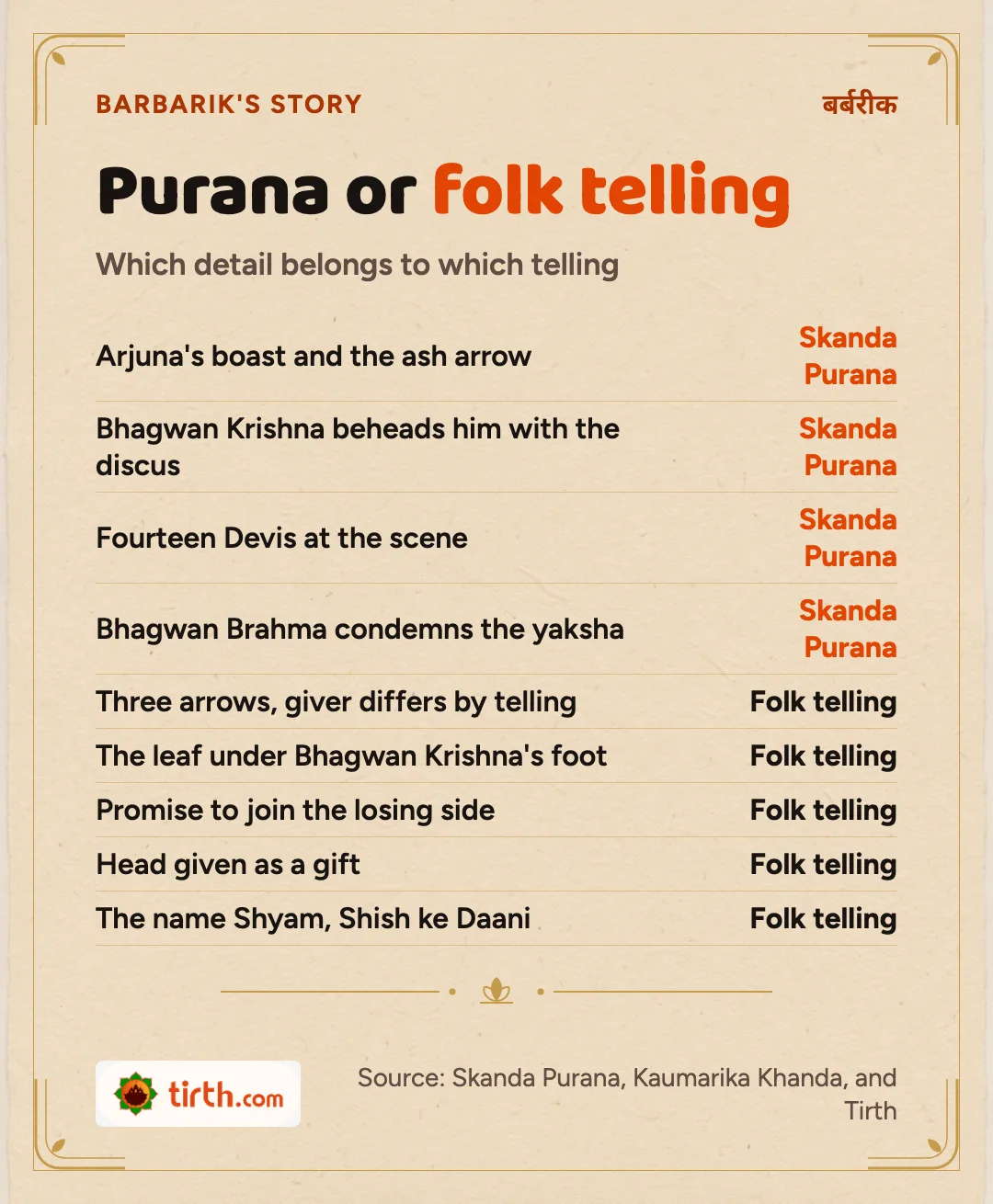
The boast, the discus, the Devis and the war belong to the Purana, while the leaf, the promise, the gift and the name Shyam belong to Khatu’s folk telling. The table below sorts them side by side.
Frequently asked questions
Yes. Barbarik is worshipped as Khatu Shyam at the temple in Khatu, in Sikar district, Rajasthan, which the Shri Shyam Mandir Committee runs.
In Rajasthan’s folk telling Bhagwan Krishna arrives as a Brahmin, asks for the head as a gift, and gets it. The Skanda Purana says otherwise. Bhagwan Krishna beheads him with the discus there, saying he did it to make Bhagwan Brahma’s words on Suryavarcas come true.
Reference works describe him as a figure the Mahabharata does not carry. The Skanda Purana is where he appears.
It is the Skanda Purana, in the Kaumarika Khanda. The story runs over chapters 60 to 66 of the Tagare translation. His birth is chapter 60, and chapter 66 covers his death at Bhagwan Krishna’s hand and the greatness of Guptakshetra.
Ghatotkacha, Bhima’s son, was his father. The Purana names his mother Kamakatankata, daughter of Muru, whereas popular tellings call her Maurvi.
The folk telling gives him three arrows that never miss, and the tellings differ on the giver, with some naming Maa Durga. The Purana says only that the Devis gave him power at Guptakshetra.
Continue on Tirth
- Tirth temple pages, Temple page on Tirth for darshan details and the route to Khatu.
- Khatu Shyam aarti with meaning to read the words people sing to Baba Shyam.
- Falgun Mela at Khatu Shyam for the fair kept in the month of Phalgun.
- Spiritual Calendar festivals, Spiritual Calendar on Tirth for the dates of the year’s festivals.