On this page9 sections
- How did Bhagwan Ram die? The Uttara Kanda in four rows
- Why was Kala waiting at the palace gate?
- Durvasa at the door, and why Lakshmana went first
- Who stayed behind? Kusha & Lava, Vibhishana and Hanuman ji
- The morning Ayodhya walked out behind him
- What happened at the Goprataraka ghat?
- Was it death or jal samadhi? Valmiki vs the Bhagavata Purana
- Frequently asked questions
- Continue on Tirth
- Sources and review
He was not killed. In the Valmiki Ramayana he walks into the river Sarayu and enters the abode of Bhagwan Vishnu with his brothers, seven chapters after a visitor named Kala comes to the palace gate in Uttara Kanda 103 to tell him his work on earth is done.
That is the first thing to clear up.
Kala means Time. The Hari Prasad Shastri translation puts Death where Valmiki’s Sanskrit has Kala. I keep the Sanskrit word in this piece, since Time is who the visitor is, and the text gives him a messenger’s standing: he comes to the palace gate in an ascetic’s form and asks for a talk alone.
The story here runs across eight chapters, Uttara Kanda 103 to 110. For everything that came before, there is who Bhagwan Ram was in the Valmiki Ramayana.
In short
In the Valmiki Ramayana he walks into the river Sarayu and enters the abode of Bhagwan Vishnu with his brothers, seven chapters after a visitor named Kala comes to the palace gate in Uttara Kanda 103 to tell him his work on earth is done.
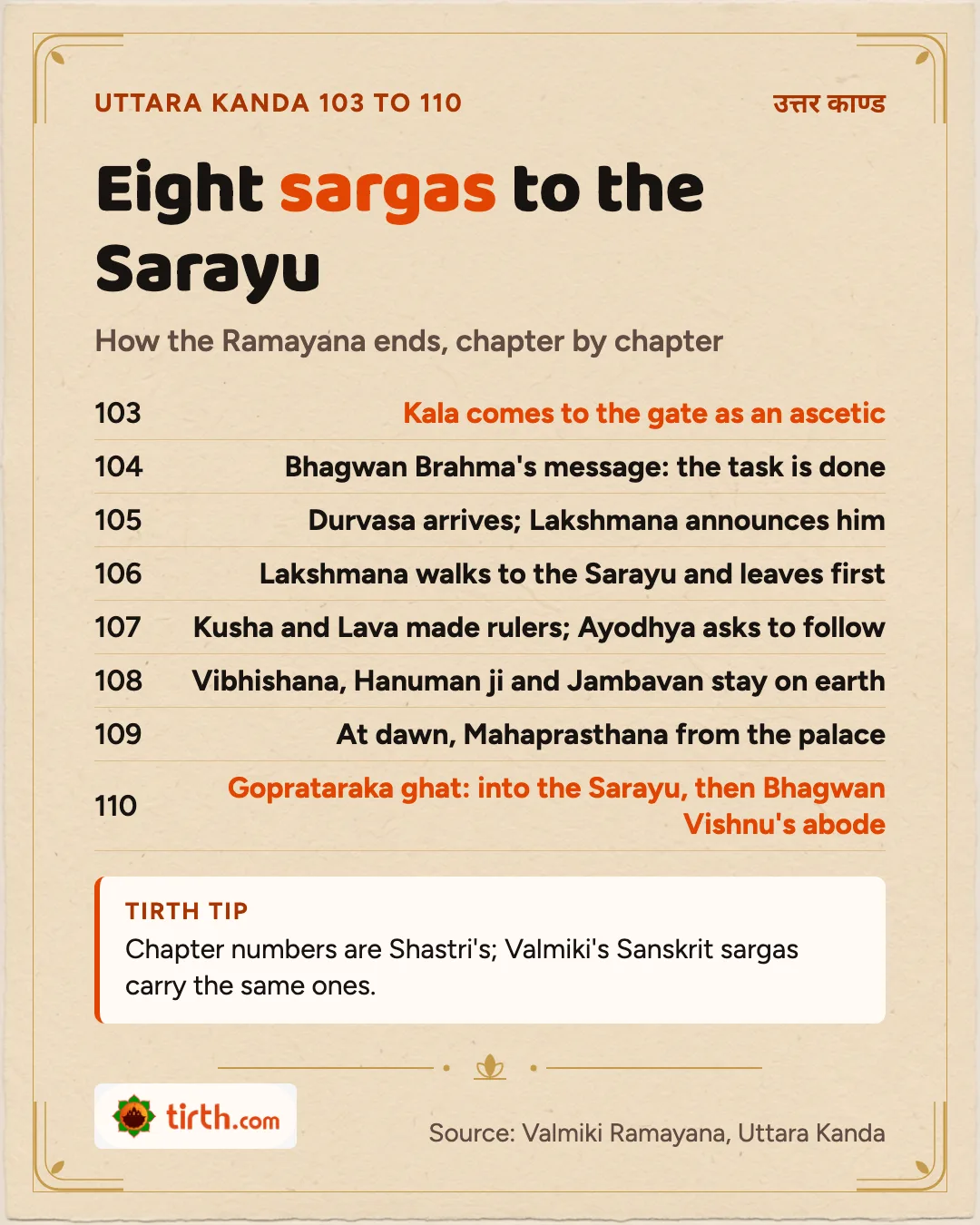
How did Bhagwan Ram die? The Uttara Kanda in four rows
| Question | What the Uttara Kanda says |
|---|---|
| Who came for Bhagwan Ram? | Kala (Time), dressed as an ascetic, sent by Bhagwan Brahma (sargas 103 and 104) |
| What did Bhagwan Ram promise? | Whoever overheard their talk would be put to death by him (sarga 103) |
| Who left first? | Lakshmana, from the bank of the Sarayu, carried to heaven by Indra Dev (sarga 106) |
| Where did Bhagwan Ram go? | Into the Sarayu at the Goprataraka ghat, and into Vishnu’s abode with his brothers (sarga 110) |
Chapter numbers in this piece are Shastri’s. Valmiki’s Sanskrit sargas carry the same ones, if you want to read along.
Why was Kala waiting at the palace gate?
By the time Kala arrives, Maa Sita, Deity page on Tirth has already left. That was sarga 97, where she called on the Earth, Madhavi, to take her in if Bhagwan Ram was the only one she had ever thought of.
Up from the ground came a throne carried by Nagas, and Dharani received her.
After that there was no second consort. What he set up at each sacrifice instead was a golden image of Maa Sita, as sarga 99 tells it.
Into this Ayodhya comes Kala, dressed as an ascetic. He stands at the gate and gives himself out as a great sage’s messenger, with business for Bhagwan Ram’s ears only.
And he sets a condition first. If anyone overhears them, Bhagwan Ram must put that person to death with his own hand. Bhagwan Ram agrees. The door-keeper is sent off, and Lakshmana takes the door.
Sarga 104 is the talk itself. The ascetic gives his name, Kala, and says Bhagwan Brahma, the Grandsire, has sent him to Ayodhya. The message does not take long. Eleven thousand years among men was what Bhagwan Ram had resolved on before going back to the gods, and that task is finished now, though he may stay longer if he wishes.
Bhagwan Ram smiles at this, and his answer is that he will go without delay.
Durvasa at the door, and why Lakshmana went first
The two of them are mid-conversation when Durvasa, the sage, reaches the gate in sarga 105 and demands Bhagwan Ram at once. His threat is a shaap (a sage’s word of ruin) on their whole House, on the kingdom and the city, and on Lakshmana, Bhagwan Ram and Bharata.
Lakshmana weighs it, and decides it is better that he alone should die than that everyone be ruined.
He walks in and announces Durvasa.
What the sage asks for is food, since he has just ended a fast of a thousand years. Bhagwan Ram takes leave of Kala, feeds him, and Durvasa goes on his way.
The shaap had been a real threat to the whole House, and to keep it away Lakshmana had already broken Kala’s condition.
Only afterwards does Kala’s condition come back to Bhagwan Ram. Silent, grieving, thinking all is lost, he keeps it to himself for a while. It is Lakshmana who raises it, in sarga 106, asking to be slain so his brother’s word holds.
Bhagwan Ram sends for Vasishtha and the ministers. Vasishtha counsels him to abandon Lakshmana so the vow stays unbroken, and Bhagwan Ram banishes his brother. To men of honour, he tells him, being banished and being put to death come to the same thing.
Lakshmana makes his way to the bank of the Sarayu and bathes there. He shuts the doors of his senses, meditates, holds his breath. As the gods rain flowers, Indra Dev carries him to heaven in his body, which the text calls the fourth part of Vishnu entering heaven.
Why Bhagwan Ram is called Maryada Purushottam has its own piece on Tirth. For more of Lakshmana there is the Ramayana characters told through one scene each.
Who stayed behind? Kusha & Lava, Vibhishana and Hanuman ji
Lakshmana’s going makes up Bhagwan Ram’s mind. He will follow.
Before he goes, Ayodhya needs a king. In sarga 107 he offers Bharata the crown, and Bharata will not hear of it. He asks that Kusha and Lava rule instead, so Southern Kosala goes to Kusha and the north to Lava, and Bhagwan Ram takes both boys on his lap in Ayodhya.
Shatrughna settles his own two sons as kings and comes to Ayodhya, ready to go with his brother. Ayodhya’s people ask to be taken along as well.
Three are told otherwise. Vibhishana is to remain in Lanka for as long as people tell Bhagwan Ram’s story. Jambavan’s span on earth runs until the start of the Kali Yuga.
Then there is Hanuman ji. His instruction is to go on living, and be happy, for as long as the story is told. He agrees to remain on earth until then.
If you have ever wondered why Hanuman ji did not walk into the Sarayu with the rest, sarga 108 is where that answer sits, and it ties his staying on to the story itself, to it still being told.
Sugriva is the opposite case. He crowns Angada and asks to come too.
The morning Ayodhya walked out behind him
At dawn in sarga 109, Vasishtha performs the Mahaprasthana rites (the great departure).
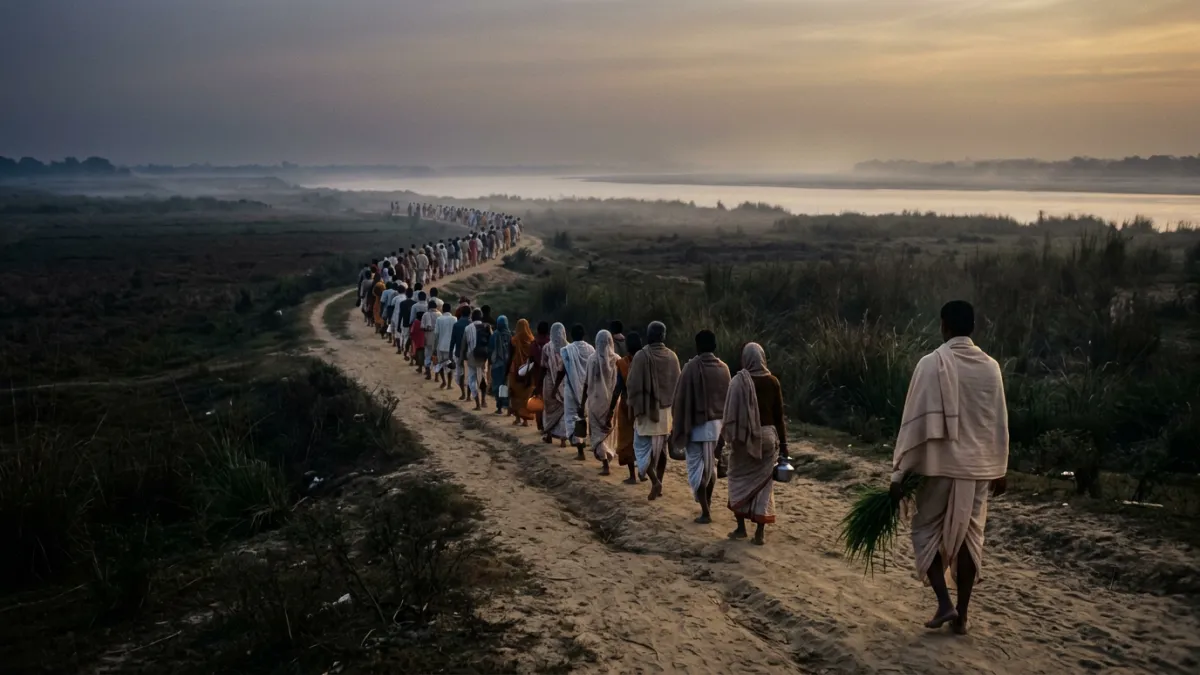
Bhagwan Ram comes out of the palace barefoot, in fine silk, holding kusha grass and reciting Vedic mantras, with Shri Lakshmi on his right. He walks towards the Sarayu. Behind him come Bharata and Shatrughna, the women of the palace, the ministers and the citizens, and then the monkeys, the bears and the animals, all of them following the one man who is not coming back.
Not one being is left in Ayodhya, according to Valmiki.
What happened at the Goprataraka ghat?
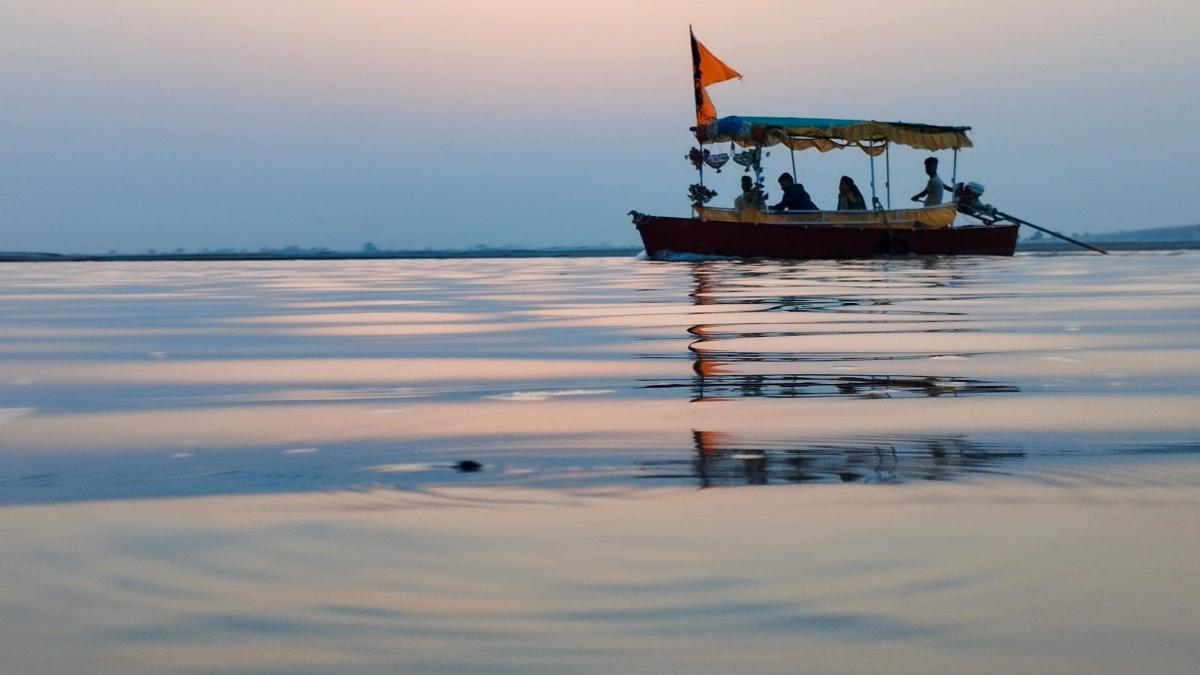
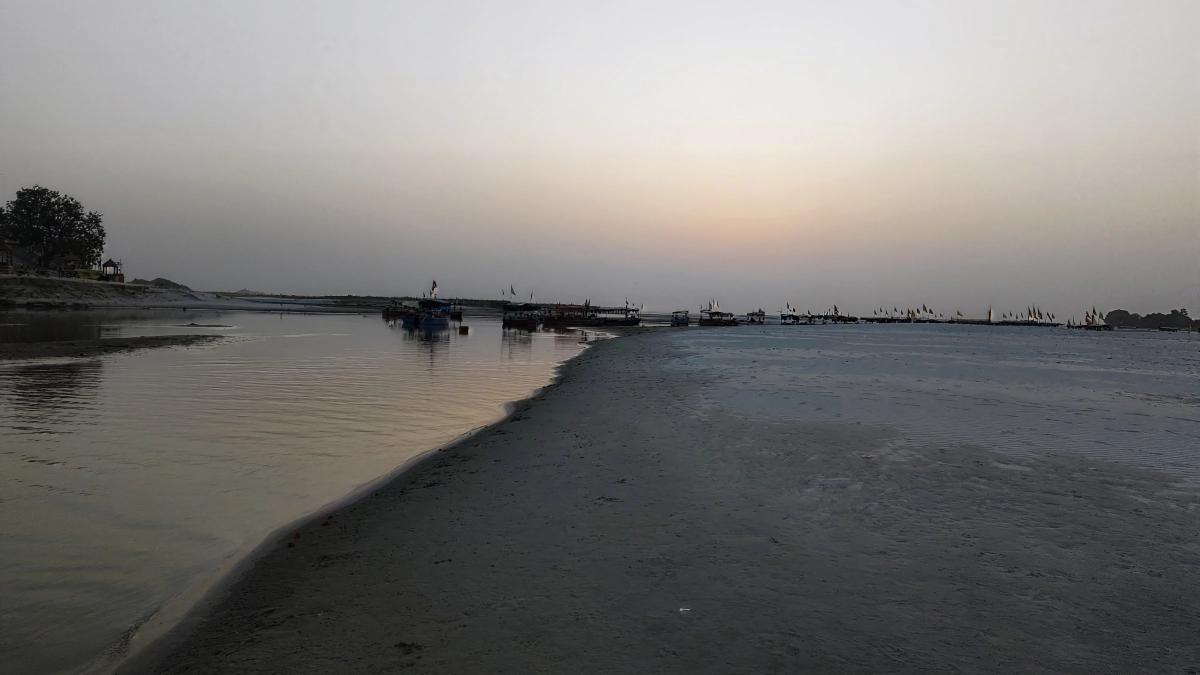
Sarga 110 opens with a distance. After one and a half yojanas, as the Sanskrit measures it, Bhagwan Ram sees the Sarayu flowing west and carries on to the Goprataraka ghat.
Up in their aerial chariots, Bhagwan Brahma and the gods look on while he steps into the water.
It is as Vishnu that Bhagwan Brahma hails him. He tells him to enter his eternal abode with his brothers in whichever body he wishes. In his own body, then, with his younger brothers, Bhagwan Ram enters Vishnu’s abode. The immortals worship him there in his Vishnu form.
His people are his next thought. As Vishnu he asks Bhagwan Brahma for a fitting place for them, and Santanaka is what they get, a region near Brahmaloka. Gladly, those who entered the Sarayu there gave up their lives. The monkeys and bears took on celestial form, while Sugriva entered the disc of the sun. And Bhagwan Brahma returns to heaven.
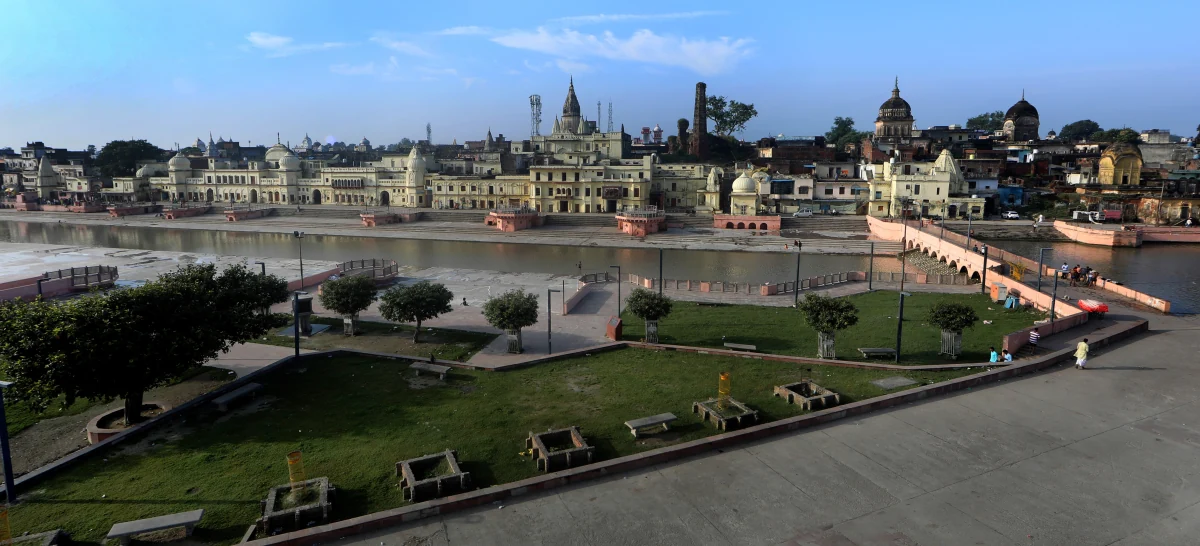
That ghat, Goprataraka, is named in the text. Where it sits in today’s Ayodhya, as families place it, is a separate matter, and why the Sarayu is sacred and where the ghat stands covers that properly.
Was it death or jal samadhi? Valmiki vs the Bhagavata Purana
Jal samadhi is what most of us call it. The name comes from tradition. The word samadhi is not in Shastri’s sarga 110, and neither is any meditation at that point.
What the sarga has is plainer. Into the water he goes, and into Vishnu’s abode in his body, while the gods look on.
I would not call what happens at the river a death, because he goes in his own body while the gods watch, even if Death is what the translation calls the visitor at the gate.
A different ending turns up in the Bhagavata Purana, Canto 9, chapter 11. Maa Sita had entered the earth, and after that Bhagwan Ram kept an unbroken agnihotra (the daily fire offering) going for thirteen thousand years. Then he went to his own abode, and the people of Ayodhya also went there.
That chapter has nothing at the Sarayu. Kala and Lakshmana’s exit are missing from it as well.
The Uttara Kanda itself is treated by many scholars as a later addition to the Valmiki Ramayana. Others argue it is integral to the story. For most of us, sargas 103 to 110 are still where we first heard how Bhagwan Ram left.
Tirth’s Ayodhya yatras, Yatra on Tirth can help you plan the trip if you want to stand by the Sarayu in Ayodhya yourself.
Frequently asked questions
He was not killed. The Valmiki Ramayana, Uttara Kanda 110, says he stepped into the Sarayu and, with his younger brothers, entered Vishnu’s abode in his own body, Bhagwan Brahma and the gods watching.
The text’s answer is the Goprataraka ghat on the Sarayu, in sarga 110. Tirth’s piece on the Sarayu deals with where that ghat is placed in Ayodhya today.
He had given Kala his word that anyone overhearing their talk would be put to death, and Lakshmana broke in to save Ayodhya from Durvasa. Vasishtha advised banishment instead, since for men of honour banishment and death are the same.
Bhagwan Ram’s instruction to him in sarga 108 is to go on living and be happy for as long as his story is told. That long, Hanuman ji agrees, he will remain on earth.
They followed him to the Sarayu, with no being left behind in the city. Santanaka, a region near Brahmaloka, was where Bhagwan Brahma placed them, and those who entered the river there gave up their lives gladly.
He had resolved on eleven thousand years among men, as Kala reminds him in sarga 104. In the Bhagavata Purana, Canto 9, chapter 11, he keeps the fire offering for thirteen thousand years once Maa Sita has entered the earth.
Continue on Tirth
- The Sarayu at Ayodhya covers the river’s source and where its ghats stand.
- Who was Bhagwan Ram tells his life in Valmiki, from birth to the river.
- How Bhagwan Ram broke the bow goes back to the day he won Maa Sita in Mithila.
- Ayodhya yatras on Tirth, Yatra on Tirth are there if you want to see the city where the story ends, Destination on Tirth.