The year 2026 begins with a significant astronomical event the Annular Solar Eclipse on 17 February 2026. Popularly known as the “Ring of Fire” eclipse, this celestial phenomenon attracts astronomers, skywatchers, astrologers, and spiritual believers across the world.
Although this eclipse will not be visible in India, it still holds scientific and astrological importance. In this complete guide, we will cover:
एन्युलर सूर्य ग्रहण संक्षिप्त जानकारी
तिथि: 17 फरवरी 2026
प्रकार: एन्युलर सूर्य ग्रहण
भारत में दृश्यता: नहीं
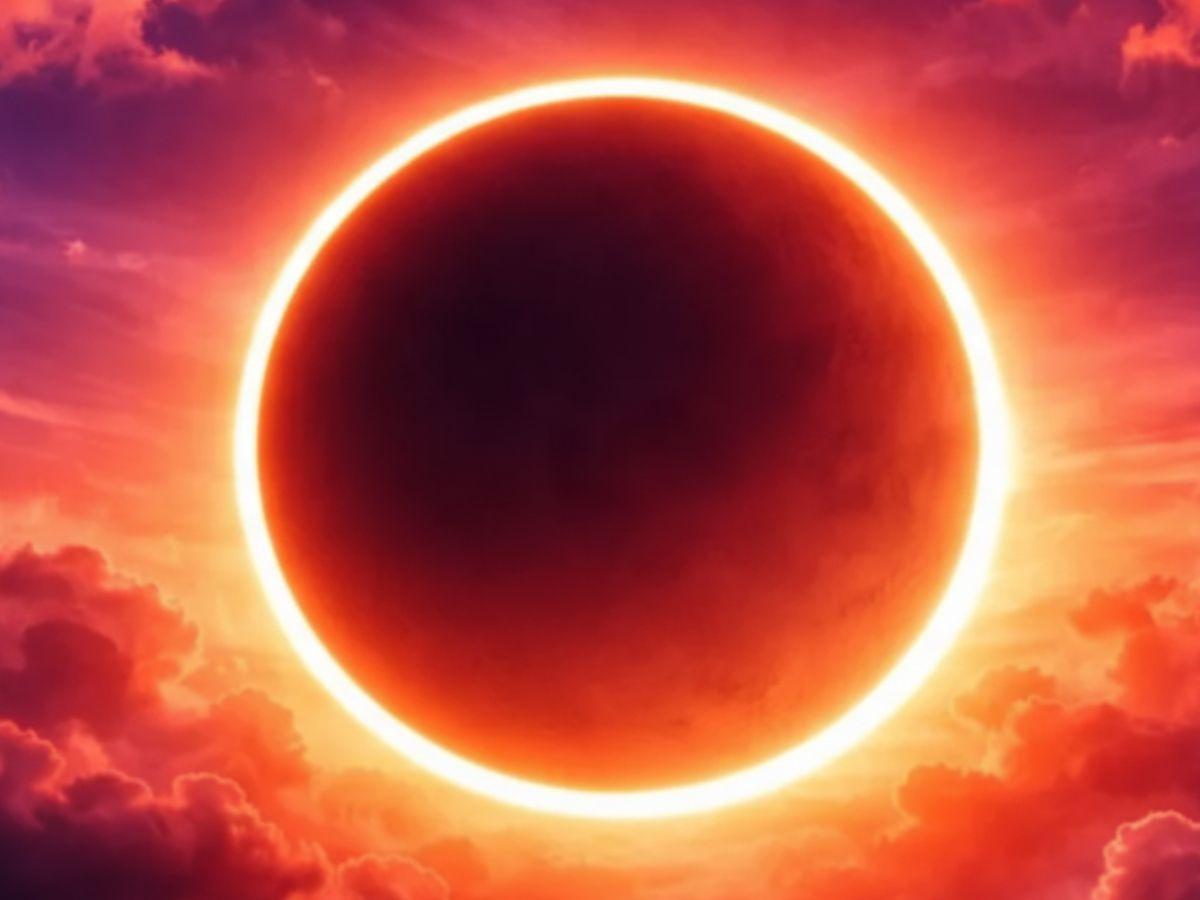
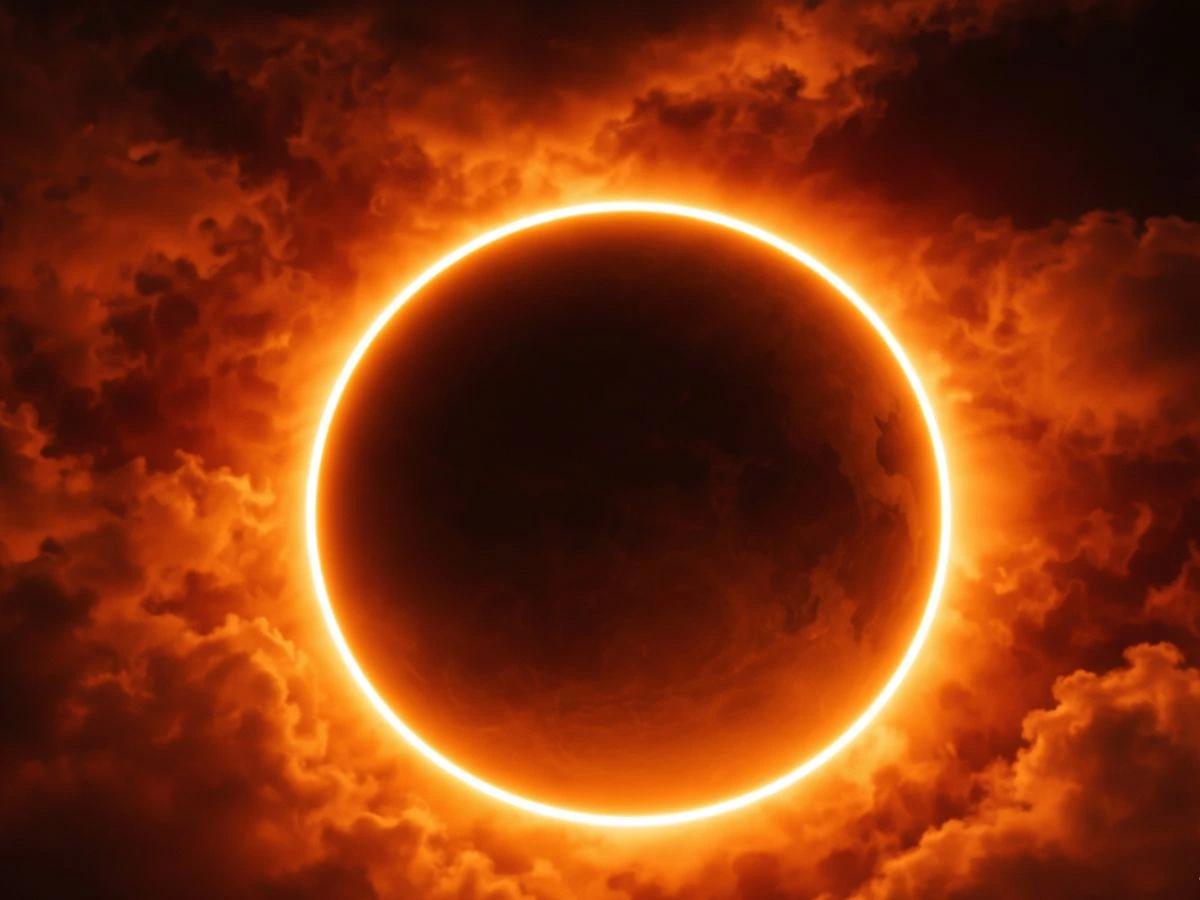
17 फरवरी 2026 को लगने वाला एन्युलर सूर्य ग्रहण “रिंग ऑफ फायर” के नाम से जाना जाता है। इस प्रकार के ग्रहण में चंद्रमा सूर्य को पूरी तरह नहीं ढक पाता और सूर्य के चारों ओर एक चमकदार वलय दिखाई देता है।
क्या यह भारत में दिखाई देगा?
नहीं, यह ग्रहण भारत में दिखाई नहीं देगा। इसलिए अधिकांश धार्मिक नियम और सूतक भारत में लागू नहीं माने जाते।
सूतक कब लगेगा?
सूर्य ग्रहण के लिए सामान्यतः 12 घंटे पहले सूतक लगता है, लेकिन चूंकि यह भारत में दृश्य नहीं है, इसलिए सूतक मान्य नहीं माना जाता।
भारतीय संस्कृति के अनुसार
- मंत्र जाप किया जा सकता है
- विशेष प्रतिबंध आवश्यक नहीं
- मंदिर सामान्य रूप से खुले रह सकते हैं
किन राशियों पर प्रभाव?
ज्योतिष अनुसार यह ग्रहण कुम्भ, सिंह, वृषभ और वृश्चिक राशि पर प्रभाव डाल सकता है।
What is an Annular Solar Eclipse?
An annular solar eclipse occurs when the Moon passes between the Earth and the Sun but is too far from Earth to completely cover the Sun. Because the Moon appears slightly smaller than the Sun, it leaves a bright glowing ring around it.
This glowing ring is why it is called the “Ring of Fire” eclipse.
Unlike a total solar eclipse, the Sun is never completely covered during an annular eclipse.
Annular Solar Eclipse 2026: Key Details
| Detail | Information |
| Date | 17 February 2026 |
| Type | Annular Solar Eclipse |
| Popular Name | Ring of Fire |
| Visible in India | No |
| Major Visible Regions | Antarctica, South America |
| Eye Protection Required | Yes (in visible areas) |
Will the Annular Solar Eclipse 2026 Be Visible in India?
No, this eclipse will not be visible anywhere in India.
It will mainly be observed in:
- Antarctica
- Parts of South America
- Some southern ocean regions
Since it is not visible in India, its direct visual and practical impact in India will be minimal.
Sutak Timing in India (Is It Applicable?)
In Hindu tradition, Sutak is a period considered spiritually sensitive before an eclipse.
For solar eclipses:
- Sutak generally begins 12 hours before the eclipse.
However, most religious scholars believe that:
- If the eclipse is not visible in a particular region, Sutak may not be applicable there.
Therefore, for India:
- Sutak is generally not strictly observed.
- Many temples may remain open.
- Daily routines usually continue normally.
Still, some spiritually inclined individuals may choose to follow personal discipline during the eclipse period.
Annular Solar Eclipse 2026 According to Indian Culture
In Indian culture, solar eclipses are considered powerful cosmic events. Traditionally:
- People avoid eating during eclipse hours.
- Temples close during visible eclipses.
- Mantra chanting is encouraged.
- Holy bathing after the eclipse is considered auspicious.
But since this eclipse is not visible in India:
- Strict fasting is generally not required.
- Temple closures are unlikely.
- Pregnant women usually do not need restrictions.
However, some individuals may still chant:
Scientific Importance of the Annular Solar Eclipse 2026
From a scientific perspective, annular eclipses help astronomers:
- Study the Sun’s photosphere
- Analyze solar radiation
- Observe orbital precision of the Moon
- Understand celestial mechanics
It also allows researchers to test imaging equipment and solar filters.
What Precautions Should Be Taken?
Since the eclipse is not visible in India, no specific precautions are required locally.
1. Eye Safety is Extremely Important
Looking directly at the Sun without protection can cause permanent eye damage.
Required Safety Measures:
- Use ISO certified eclipse glasses
- Use solar filters on telescopes
- Never use regular sunglasses
- Avoid direct naked-eye viewing
Zodiac (Rashi) Impact: Astrological Perspective
Astrologically, solar eclipses are believed to trigger transformation and sudden changes.
This Annular Solar Eclipse 2026 may impact:
- Aquarius
- Leo
- Taurus
- Scorpio
Possible effects (as per astrology):
- Emotional clarity
- Relationship reevaluation
- Career reflection
- Decision making pressure
Important Note: Zodiac impact varies depending on individual birth charts.
Do’s and Don’ts During Annular Solar Eclipse 2026
Do’s
- Stay informed through reliable astronomical sources.
- Chant mantras if spiritually inclined.
- Use proper eye protection in visible regions.
- Maintain a calm and mindful approach.
Don’ts
- Do not look at the Sun without certified glasses.
- Do not spread misinformation.
- Avoid unnecessary panic if the eclipse is not visible locally.
- Do not rely solely on generic zodiac predictions.
Frequently Asked Questions (FAQs)
1. Is the Annular Solar Eclipse 2026 visible in India?
No, it will not be visible in India.
2. Is Sutak valid in India for this eclipse?
Generally, Sutak is not strictly applicable because the eclipse is not visible in India.
3. Why is it called the Ring of Fire?
Because the Moon leaves a bright ring of sunlight visible around it.
4. Is it dangerous?
It is dangerous only if viewed directly without proper eye protection in visible areas.
5. Will it affect zodiac signs?
Astrologically, it may influence Aquarius, Leo, Taurus, and Scorpio, but effects depend on individual charts.
Conclusion
The Annular Solar Eclipse on 17 February 2026 is a spectacular astronomical phenomenon known as the “Ring of Fire.” Although it will not be visible in India, it remains an important global celestial event.
From a scientific perspective, it offers valuable research opportunities. From a spiritual standpoint, it symbolizes transformation and reflection. Since it is not visible in India, major religious restrictions are generally not applicable.