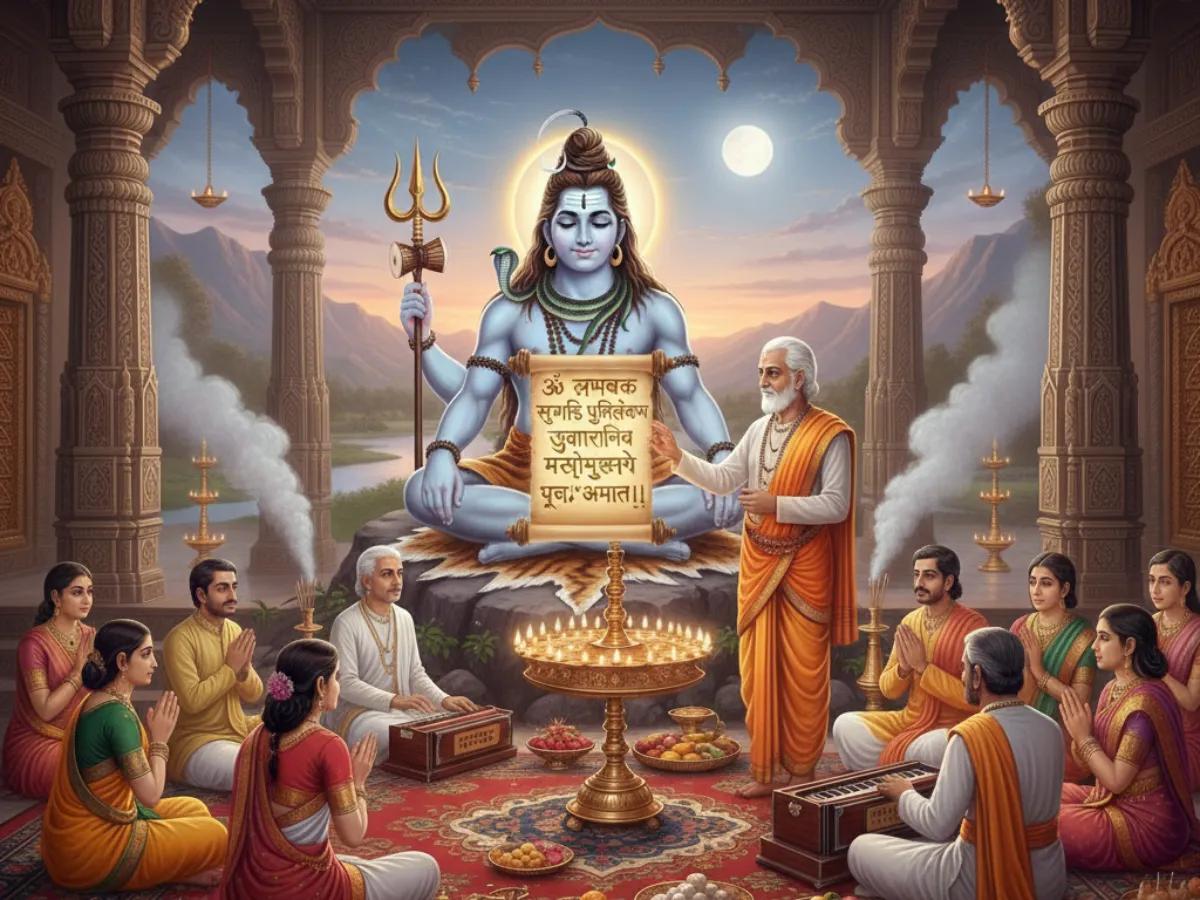
There’s a reason this mantra has been whispered for thousands of years. It’s not just another chant it’s a lifeline. The Maha Mrityunjay Mantra is one of the most powerful invocations to Lord Shiva, known for his strength to heal, protect, and awaken the deepest layers of life itself. People chant it when they want courage in dark times, when they’re praying for someone’s recovery, or when they simply want to feel close to that eternal stillness Shiva represents.
The Mantra
“Om Tryambakam Yajamahe Sugandhim Pushtivardhanam Urvarukamiva Bandhanan Mrityor Mukshiya Mamritat“
Meaning :
We bow to Lord Shiva the three-eyed one, whose fragrance sustains creation, whose presence nurtures all that lives. O Lord, just as a ripe fruit slips free from its stem, may we too be freed from attachment, from fear, from the grip of death itself and find our way toward immortal peace.
What Makes the Maha Mrityunjay Mantra So Special
This isn’t just a mantra you recite mindlessly. It’s called the Tryambakam Mantra too, because it focuses on Shiva’s third eye that symbolic vision that sees beyond illusion. The mantra first appears in the ancient Rudrashtadhyayi of the Yajurveda, making it one of the most sacred sounds in existence.
And here’s the part that always gets me: it’s often referred to as the Sanjeevani Mantra the “mantra that gives life.” People believe it can restore vitality when everything else seems lost. It’s whispered at hospital beds, during meditation, even before long journeys. It carries that vibration of “I’m not alone, I’m protected.”
How to Chant It (The Old Way, The Right Way)
If you’ve ever heard this mantra at dawn, you’ll know how its rhythm gently wakes the soul.
- Find a quiet space maybe your prayer corner or anywhere that feels calm and clean.
- Take a bath, wear fresh clothes, light a diya and some incense. Make the space sacred not fancy, just intentional.
- Sit on a Kushasana or a mat (traditionally made of grass), facing the east or north.
- Keep an image or yantra of Lord Shiva nearby. Having his presence even in the form of a picture helps anchor your focus.
- If you have a Rudraksha mala, use it to count repetitions slow, steady, no rushing. The number 108 is traditional, but sincerity matters more than the count.
- Before you begin, take a quiet moment to set your intention. It could be healing, peace, protection whatever your heart truly seeks. When the intention is clear, the mantra listens better.
What Happens When You Chant It Regularly
Something shifts. Not always instantly, but quietly like how night turns into morning without anyone noticing the exact moment.
People say this mantra offers:
- Protection from untimely death: It’s believed to create a shield of divine energy around you.
- Healing and recovery: Those facing illness often chant or play this mantra for strength the kind medicine can’t measure.
- Planetary balance: If someone’s suffering from harsh graha doshas (planetary disturbances), this mantra helps settle the energy.
- Freedom from fear: Whether it’s fear of loss, failure, or even the unknown the vibrations calm the mind.
- Peace at home: In families where tension refuses to leave, regular chanting brings emotional warmth and balance back.
- Protection of wealth and stability: Many households chant it to strengthen financial stability and ward off misfortune.
- Release from past burdens: It’s said that chanting helps cleanse old karma letting go of sins, regrets, and heaviness that you didn’t even realize you were carrying.
Over time, the mantra starts living inside you. And even when you’re not chanting, a quiet echo remains guiding, guarding, grounding.
A Few Simple Rules (And Gentle Reminders)
- Always chant after bathing, with a clean body and calm mind.
- Keep a diya burning the flame honors the fire element, Agni, which carries your prayer upward.
- Sit in the same place every day if you can. It’s said the energy gathers there and grows with time.
- Use a Rudraksha mala, and hold it in the Gau-mukhi (cow’s mouth) position pointing the bead toward your heart, not away.
- Face east when possible. That’s the direction of light, beginnings, and clarity.
- While you’re in a mantra practice, avoid harsh speech, alcohol, non-veg food, and unnecessary distractions. The mind needs clean space to listen.
- Most importantly: never chant mindlessly. Mean it, even if your voice shakes.
A Closing Thought
The Maha Mrityunjay Mantra isn’t about escaping death. It’s about understanding that life itself is eternal that what we call “end” is only a pause in a much bigger rhythm.
When you chant, feel it the way each syllable hums through your chest, the way silence stretches between breaths. That’s where Shiva lives not in a temple, but in that space between sound and stillness.
Invoke Lord Shiva’s healing and protective grace through the Maha Mrityunjay Mantra. Explore authentic mantra jaap and Rudrabhishek on Tirth.com.