On this page7 sections
That is the sangam meaning, standing in water. Sangam is a meeting, the Hindi form of the Sanskrit saṃgama, and the Mahabharata counts a meeting of rivers among the holiest tirthas, the crossing places of Hindu pilgrimage.
Search for the word and the Tamil Sangam turns up too. That was a gathering of poets, by tradition three academies, with Madurai among their seats. A different subject altogether, with no rivers in it.
In short
Sangam is a meeting, the Hindi form of the Sanskrit saṃgama, and the Mahabharata counts a meeting of rivers among the holiest tirthas, the crossing places of Hindu pilgrimage. Search for the word and the Tamil Sangam turns up too.
Sangam meaning in Hindi and Sanskrit
Hindi uses sangam as its ordinary form of saṃgama. The Monier-Williams dictionary starts broad. Its first sense is a meeting or coming together, and the river sense only arrives later.
The Monier-Williams Sanskrit-English dictionary illustrates that river sense with the Ganges and the Jumna (old English spellings of the Ganga and the Yamuna). It also lists a river meeting the sea. And it adds that such confluences are always held sacred.
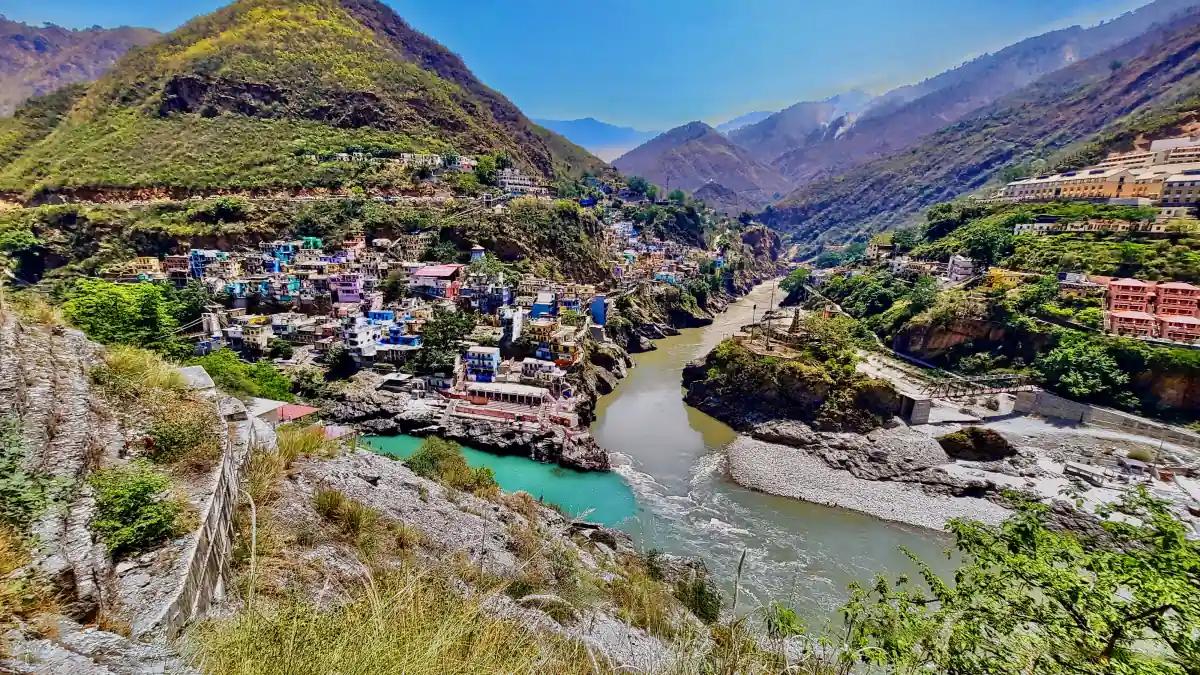
Then there is prayag. Uttarakhand’s state tourism department gives its meaning plainly: confluence. You will find it tucked inside the names Devprayag and Rudraprayag, two of the five Panch Prayag.
Why is a confluence of rivers holy?
It begins with the word tirtha. Taken literally, it is a ford. The shallow bit of a river a person can wade across on foot. Over time it came to mean any holy place.
In an essay on India’s tirthas as crossings, the scholar Diana L. Eck links this old reverence for place to the confluences of rivers, among others. She puts the great rivers first among tirtha waters.
The Rigveda praises rivers by name. Its river hymn, the Nadistuti (10.75), honours them, and the Ganga, the Yamuna and the Saraswati are on its list.
For the wider map, Tirth keeps a page on Tirth sthals across India.
What the Mahabharata and the Matsya Purana say about Prayaga
The Mahabharata puts a price on it. The passage sits in the Tirtha-yatra section of the Vana Parva, where the sage Pulastya takes Bhishma through the holy places of the land one at a time and tells him what each one is worth.
Prayaga is where the whole list shifts up a gear.
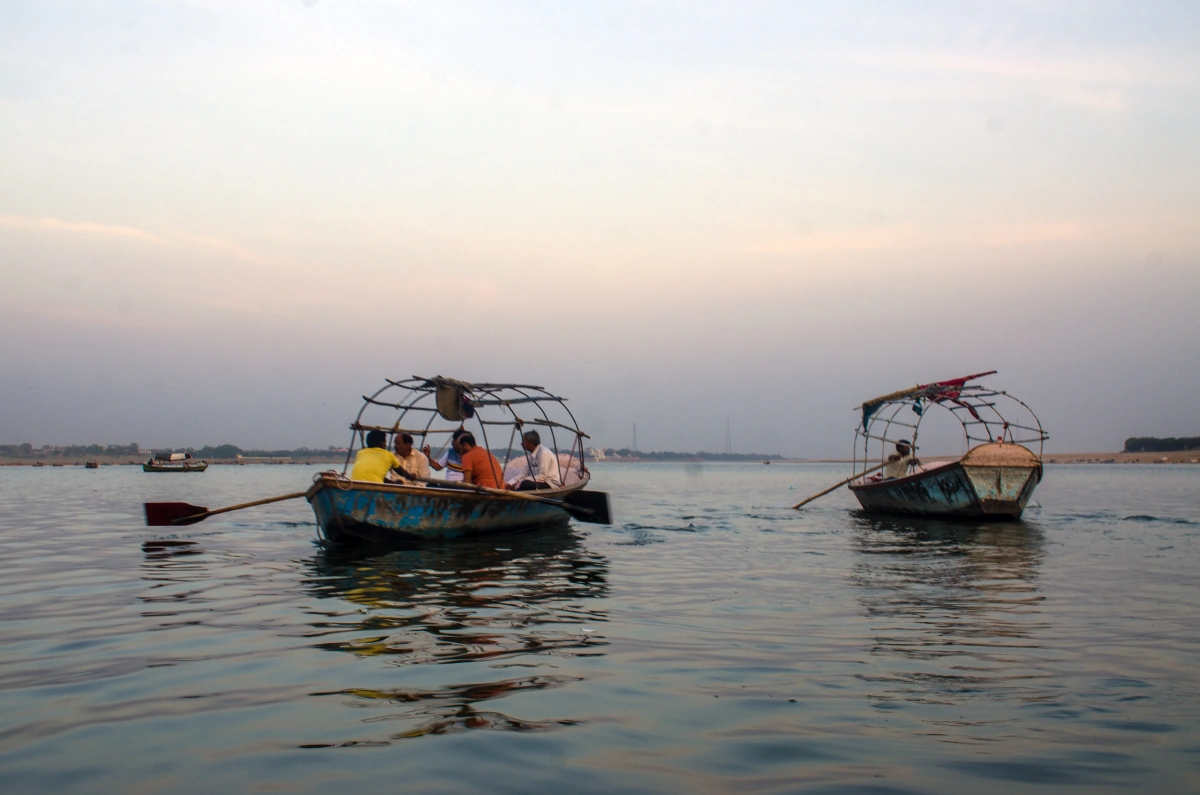
Pulastya tells him that here the Yamuna, daughter of Surya Dev, unites with the Ganga. Prayaga, he says, is the most sacred of all tirthas. He calls the land between the two rivers the centre of the world. Prayaga is its foremost point. He also counts Prayaga among the five sacrificial platforms of Bhagwan Brahma, naming Pratisthana, Kambala, Ashvatara and Bhogavati as the others.
The merit comes next, and the text is exact about it. A bath at the confluence brings the fruit of the Rajasuya and the horse sacrifice, the two great royal rites. Bathing in the Ganga and at the meeting point, it says, sanctifies seven generations of one’s line, while an earlier line in the same Tirtha-yatra section sets the figure at ten horse sacrifices. Seven lines of a family, from one bath.
A line on the ages follows in the same section, and it narrows the field age by age: every tirtha was holy in the Satya yuga. After that it names Pushkara for the Treta yuga, Kurukshetra for the Dvapara, and for the Kali yuga the Ganga alone.
The Matsya Purana goes further. It gives Prayaga a whole section, the Prayaga Mahatmya (the glory of Prayaga), and at the heart of it sit the meeting of the Ganga and the Yamuna and the bathing in the month of Magha.
The Panch Prayag, and how Devprayag makes the Ganga
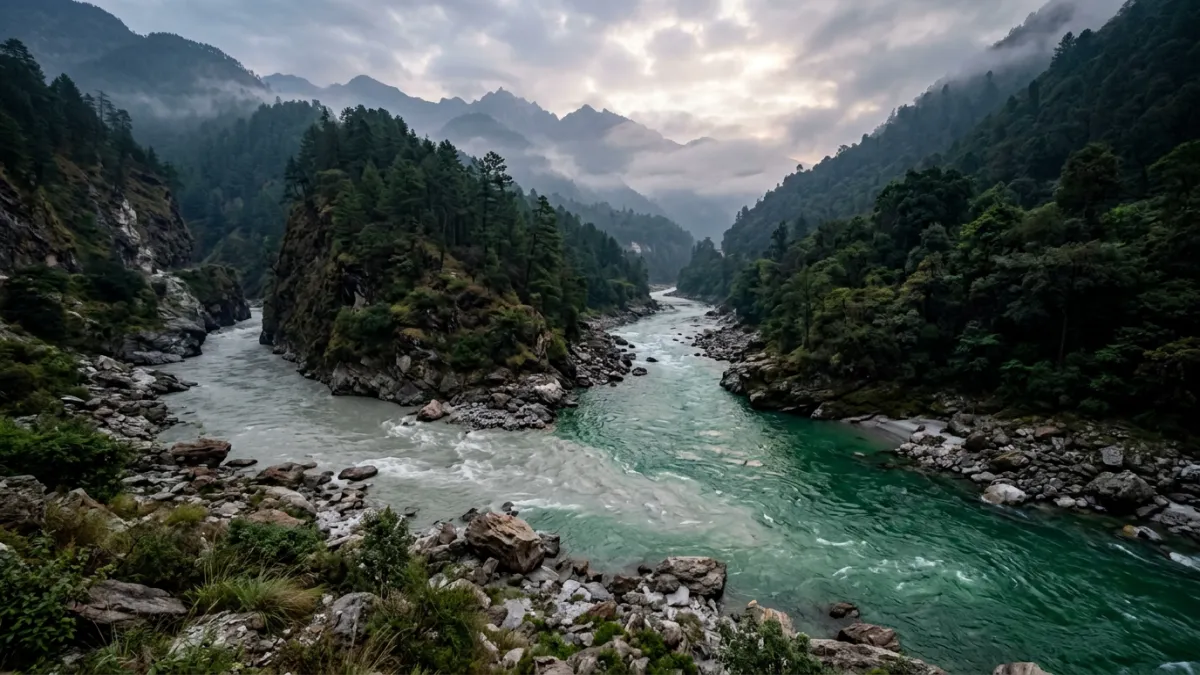
The hills of Uttarakhand string the same idea along one river. Uttarakhand’s state tourism department calls the Panch Prayag (panch means five) five revered meeting points, places where rivers merge into the Alaknanda before it goes on to form the Ganga.
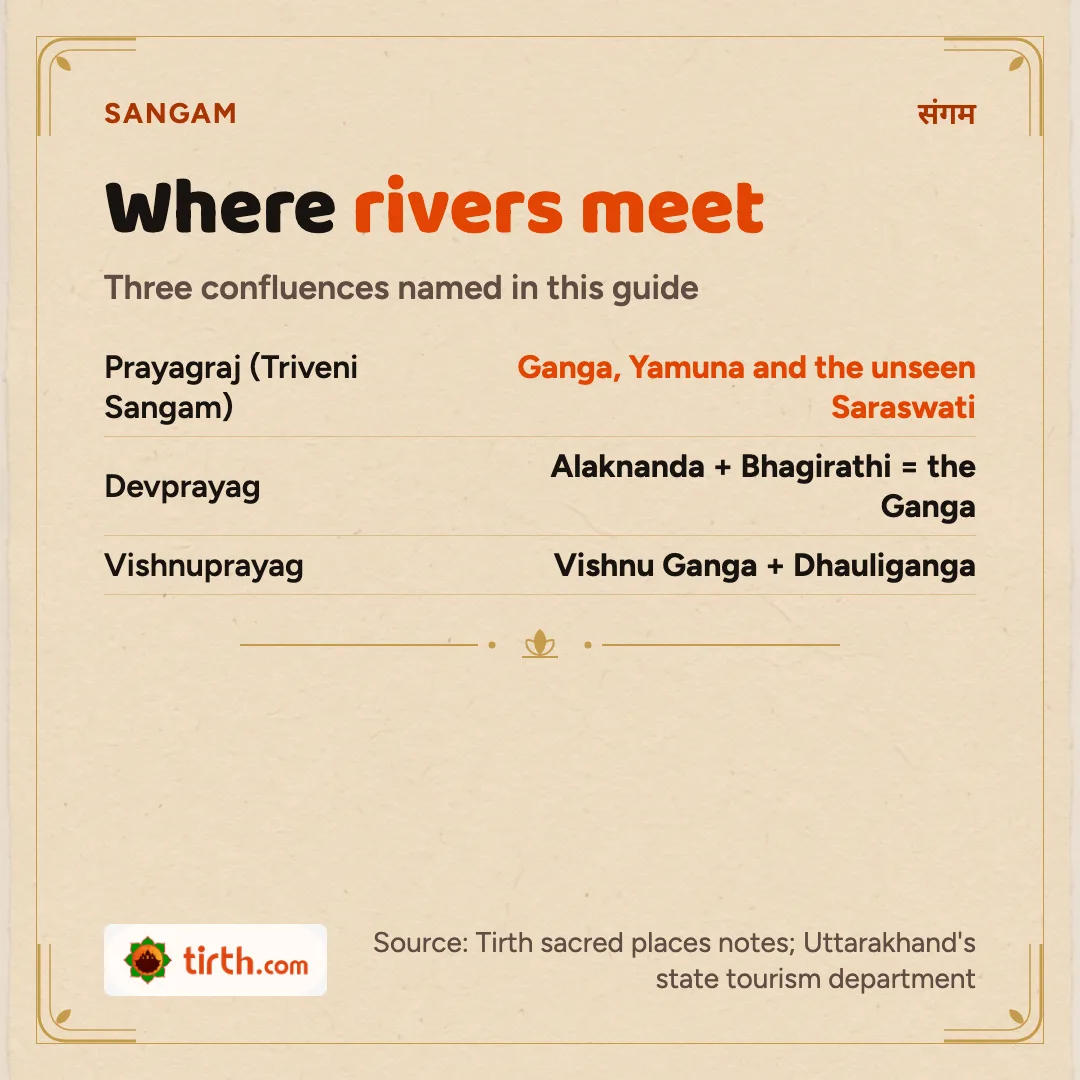
Read downstream, the five go Vishnuprayag, Nandaprayag, Karnaprayag, Rudraprayag and Devprayag.
Vishnuprayag comes first, at 1,372 metres. Here the Vishnu Ganga meets the Dhauliganga, and from this point on it is called the Alaknanda. There is an ancient temple called Vishnu Kund at the spot, and it is said the sage Narad worshipped Bhagwan Vishnu there.
Devprayag is the last. The Alaknanda meets the Bhagirathi there. Which leaves one river with one name from that point on, the Ganga.
A story goes with the place. In it, Maa Ganga, Deity page on Tirth descended with such immense force that she was split into 12 channels. Those channels flow on, and only after Devprayag do they reunite fully. Belief brings people to all five sites, the same department says, since they hold that a dip there cleanses the soul and takes them a step closer to moksha (release from rebirth).
Two names go in. One comes out.
Famous sangams in India and what is said of each
Prayagraj gets a single row here, beside two of the hill sangams.
| Sangam | State | Waters that meet | What is said of it | On Tirth |
|---|---|---|---|---|
| Triveni Sangam, Prayagraj | Uttar Pradesh | Ganga, Yamuna and the unseen Saraswati | Called the foremost of tirthas in the Mahabharata, and the place where the Kumbh Mela is held at Prayagraj | Triveni Sangam |
| Devprayag | Uttarakhand | Alaknanda and Bhagirathi | The river is the Ganga from here, and her 12 channels reunite after it | Devprayag |
| Vishnuprayag | Uttarakhand | Vishnu Ganga and Dhauliganga | First of the Panch Prayag, with the Vishnu Kund temple where Narad is said to have worshipped | Vishnuprayag |
The third river at Prayagraj needs a word of its own. It is held that Maa Saraswati, Deity page on Tirth runs there unseen, antarvahini (flowing below the surface), next to Maa Yamuna, Deity page on Tirth and Maa Ganga.
The Sangam is also where the Kumbh Mela is held at Prayagraj, and in December 2017 UNESCO added the Kumbh Mela to its list of the intangible cultural heritage of humanity. Tirth has written on why Prayagraj is the main Kumbh city.
Frequently asked questions
A meeting, a coming together. The word comes from the Sanskrit saṃgama, whose later sense is a confluence, the place where rivers join.
Rivers are central to the idea of a tirtha. The word literally means a ford, a place to cross. The Mahabharata, in its Tirtha-yatra section, names Prayaga, where the Ganga and the Yamuna meet, as the most sacred of tirthas.
Any meeting of rivers is a sangam. Triveni Sangam, the meeting of three, is the confluence at Prayagraj. There the Ganga and the Yamuna join, and the Saraswati is held to flow unseen.
A confluence, in a word. Monier-Williams gives Prayaga as the meeting of the Ganga and the Yamuna, and the word also names the five Panch Prayag on the Alaknanda in Uttarakhand, Vishnuprayag down to Devprayag.
Yes, though it is used for a different thing. Tamil uses it for a gathering or academy of poets, three of them in the traditional account, with Madurai among their seats.
Continue on Tirth
- Triveni Sangam, where the Ganga and the Yamuna meet the unseen Saraswati.
- Devprayag, where the Ganga begins as the Alaknanda and the Bhagirathi join.
- Prayagraj, Destination on Tirth, home to the Sangam and its Kumbh.
- The ghats of Varanasi, the steps that lead down to the river.