On this page9 sections
- How did Harishchandra end up owing Rishi Vishwamitra a fee?
- The Rajasuya fee, then the whole earth
- The sale in Kashi, and a chandala called Pravira
- What did Harishchandra do at the burning ground?
- A snake, a pyre, and a king who would not go to heaven alone
- What changes in the Devi Bhagavata Purana’s telling?
- Is Harishchandra Ghat in Varanasi named after him?
- Frequently asked questions
- Continue on Tirth
- Sources and review
He kept back only his wife, his son, his own body and his virtue.
The Raja Harishchandra story only properly gets going after this, though. Once the month he’d asked for was up and the fee was still unpaid, his wife was sold, then his son, and then the king himself.
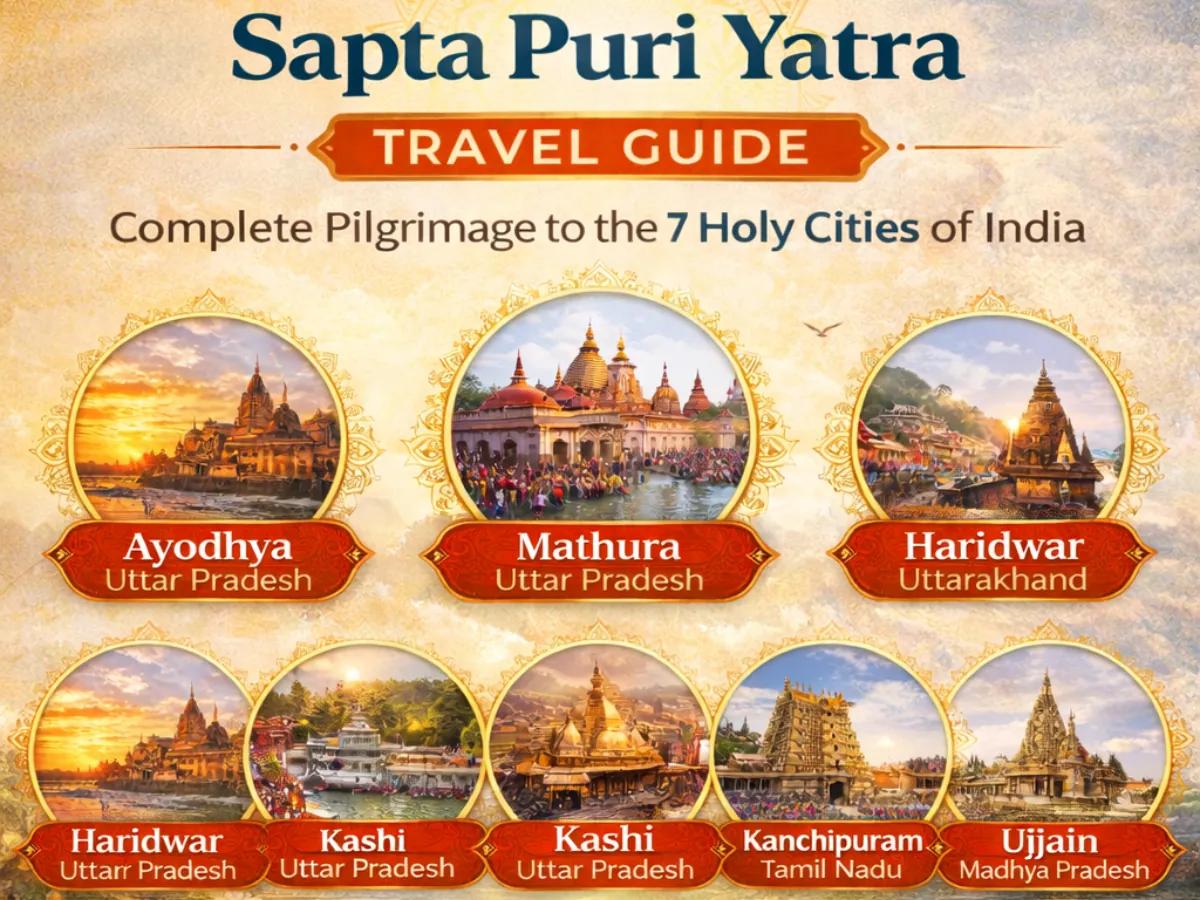
He was a Rajarshi (a king who was also a sage) in the Treta Age, and he ruled Kosala, which is Ayodhya, Destination on Tirth . His people knew neither famine nor sickness in his time, and no one died before their time (VII.1 to 3). He would not go back on his word, not even in Kashi, where keeping it cost him his wife, his son and in the end himself.
For the source, it’s the Markandeya Purana. Pargiter’s English translation has it in Cantos VII and VIII. It’s the righteous birds who tell it, answering the sage Jaimini.
In short
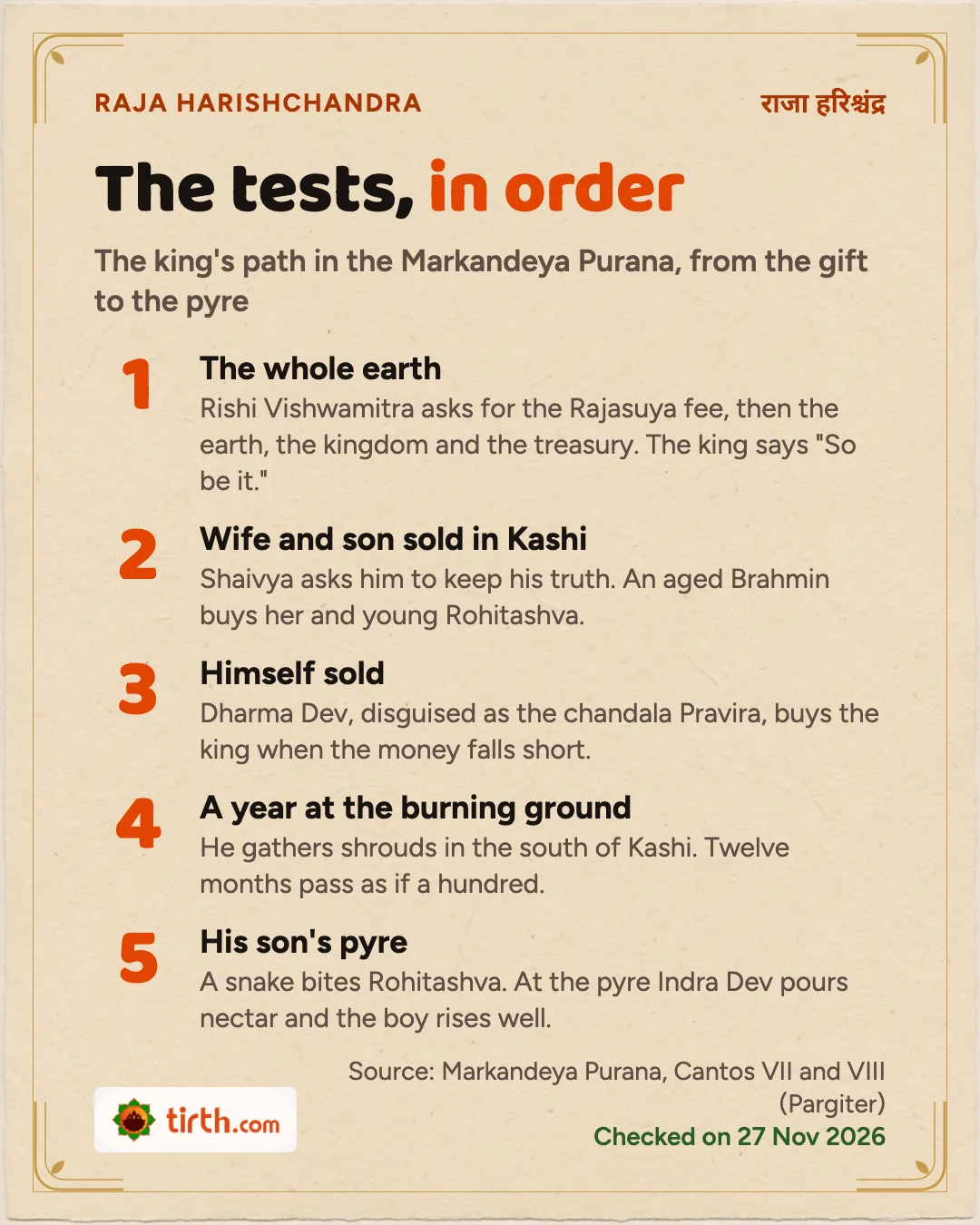
The Raja Harishchandra story only properly gets going after this, though. Once the month he’d asked for was up and the fee was still unpaid, his wife was sold, then his son, and then the king himself. He was a Rajarshi (a king who was also a sage) in the Treta Age, and he ruled Kosala, which is Ayodhya.
How did Harishchandra end up owing Rishi Vishwamitra a fee?
It starts with a deer hunt. Somewhere in the forest, while he was after the deer, Harishchandra heard women crying “save us” (VII.4 to 13).
Only the cry was coming from Rishi Vishwamitra’s vidyas, his sciences. Vighna had entered him as well, the spirit of obstacles, and the king’s words came out angry. Those words angered Rishi Vishwamitra in turn, and he let the vidyas perish.
The king trembled at that.
He bowed to the Rishi. Giving gifts and protecting people, he said, were a king’s duty (VII.14 to 21). Rishi Vishwamitra’s reply was short, that as a Brahmin he would ask for a fee.
The Rajasuya fee, then the whole earth
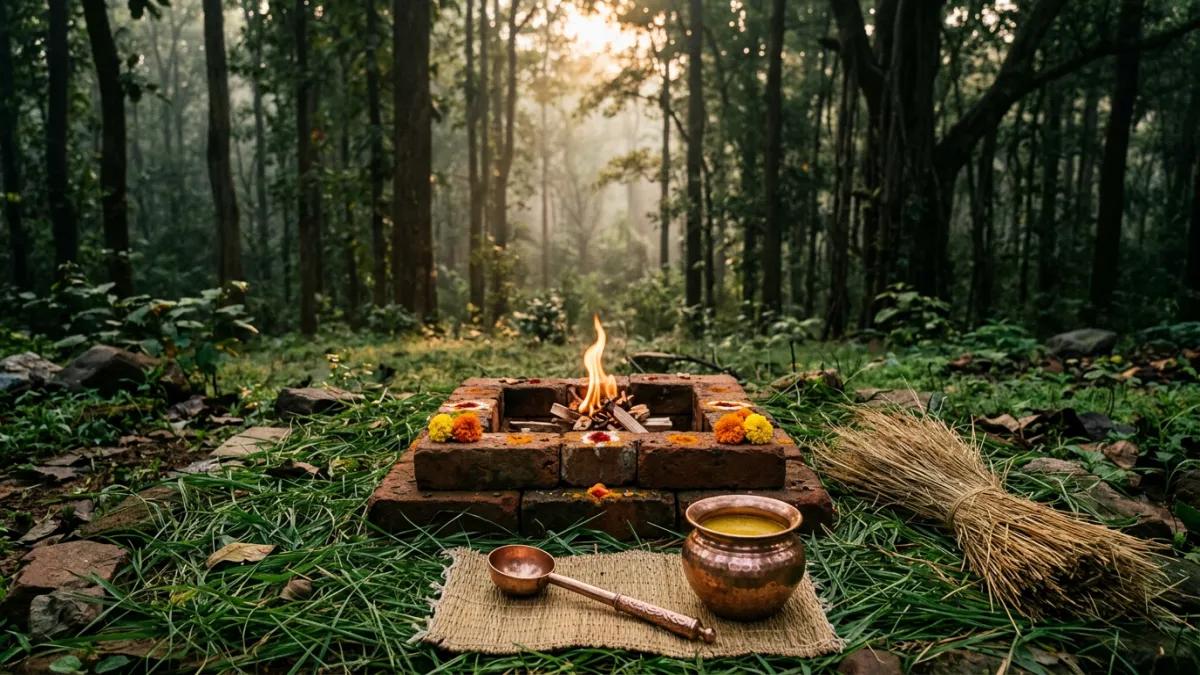
The Rajasuya sacrifice’s fee came first. After that, the whole earth. That meant the kingdom and the treasury too, the lot, and the king could keep his wife, his son, his own body and his virtue and nothing else (VII.25 to 30).
“So be it,” said Harishchandra.
It’s easy to rush past this bit when the story is told to children. What he still had was his family, his body and his virtue, and when you have been king of the whole earth that is a very short list to be left holding.
In bark clothes, with Queen Shaivya and their young son, he set off (VII.33 to 43). Not far, as it turned out. The fee was still owed. Rishi Vishwamitra stopped him to ask for it, and Harishchandra asked for one month’s time to pay.
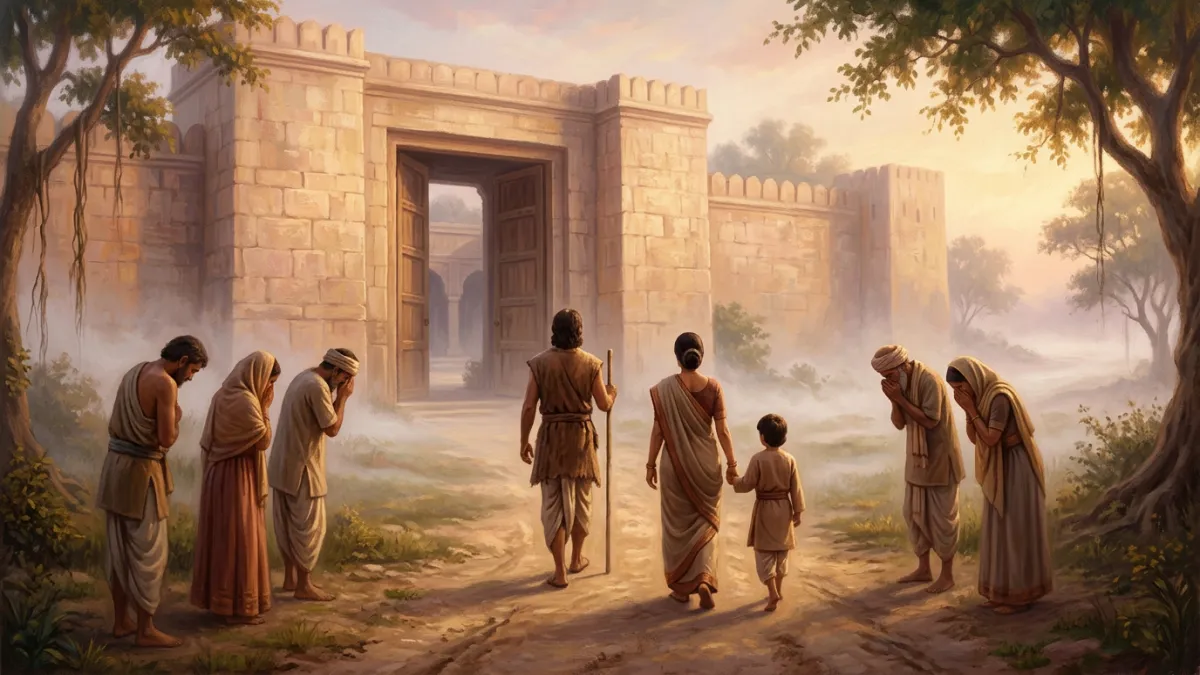
The city’s people pleaded with their king to stay. And as he drew the queen along with him, Rishi Vishwamitra, angry, struck her with a wooden staff (VII.46 to 61).
The sale in Kashi, and a chandala called Pravira
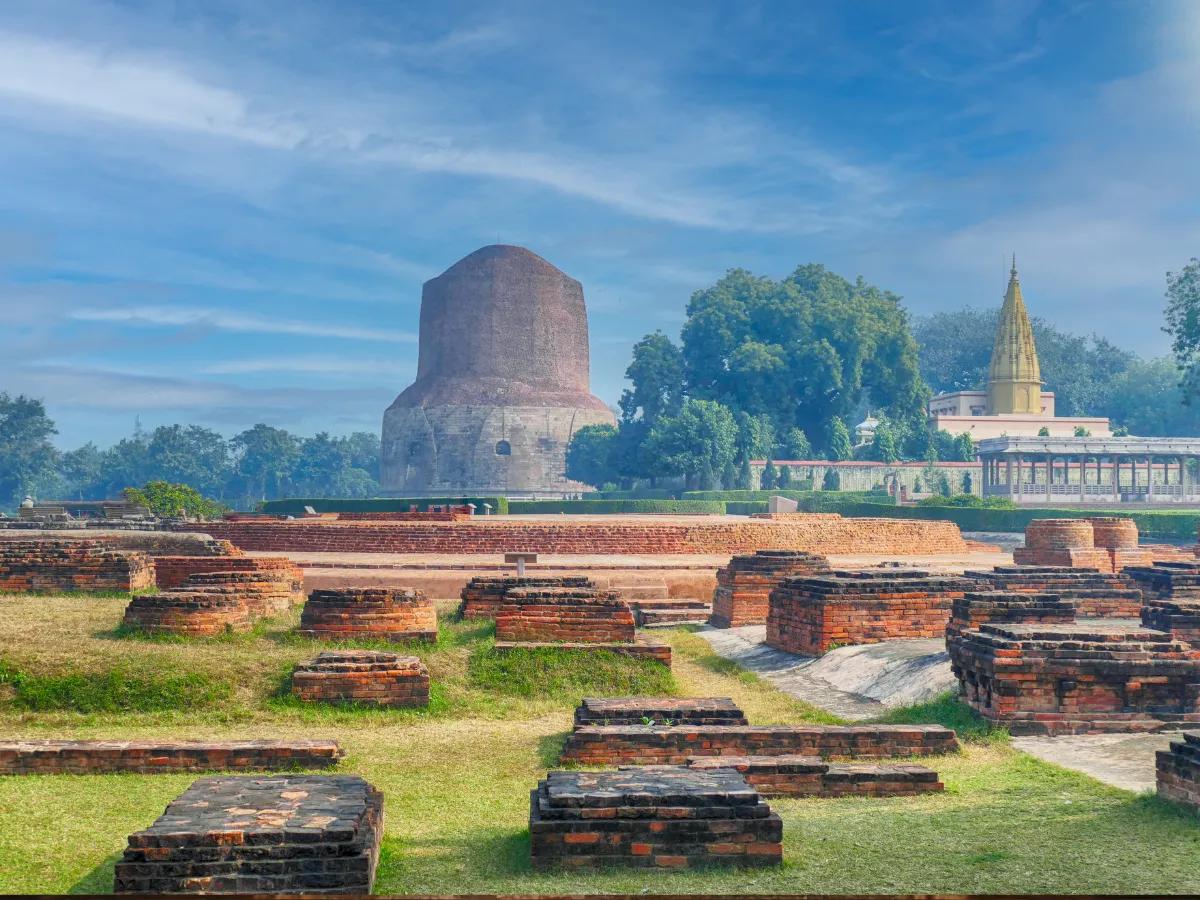
The three of them walked to Kashi (VIII.4 to 11). The Purana calls it the city of Shiva, and it’s the same Kashi you’ll find on Tirth’s Varanasi destination page, Destination on Tirth.
Then the month was over. Rishi Vishwamitra arrived for his fee, and there was nothing to give him. All Harishchandra could ask for was the half-day still left.
Shaivya was the one who spoke up, and what she told her husband was that nothing is higher than truthfulness. So keep the truth, and sell me to pay the fee (VIII.16 to 24).
To me, this is the line the whole katha stands on. With a small child, in a strange city, the queen is the one asking to be sold, so I’d call her the second hero of this story, and maybe not even second.
The buyer was an old Brahmin. Their boy, Rohitashva, wouldn’t let go of his mother, and he got kicked away (VIII.53 to 66). So Shaivya asked the Brahmin to take the child as well. He bought them both.
Even that fell short, as Rishi Vishwamitra judged it.
Now a chandala stepped in, Pravira by name, and offered to buy the king himself. The king’s first answer was no. Only when Rishi Vishwamitra threatened a shaap did he give in, and the king of Ayodhya became the chandala’s servant (VIII.81 to 96).
What did Harishchandra do at the burning ground?
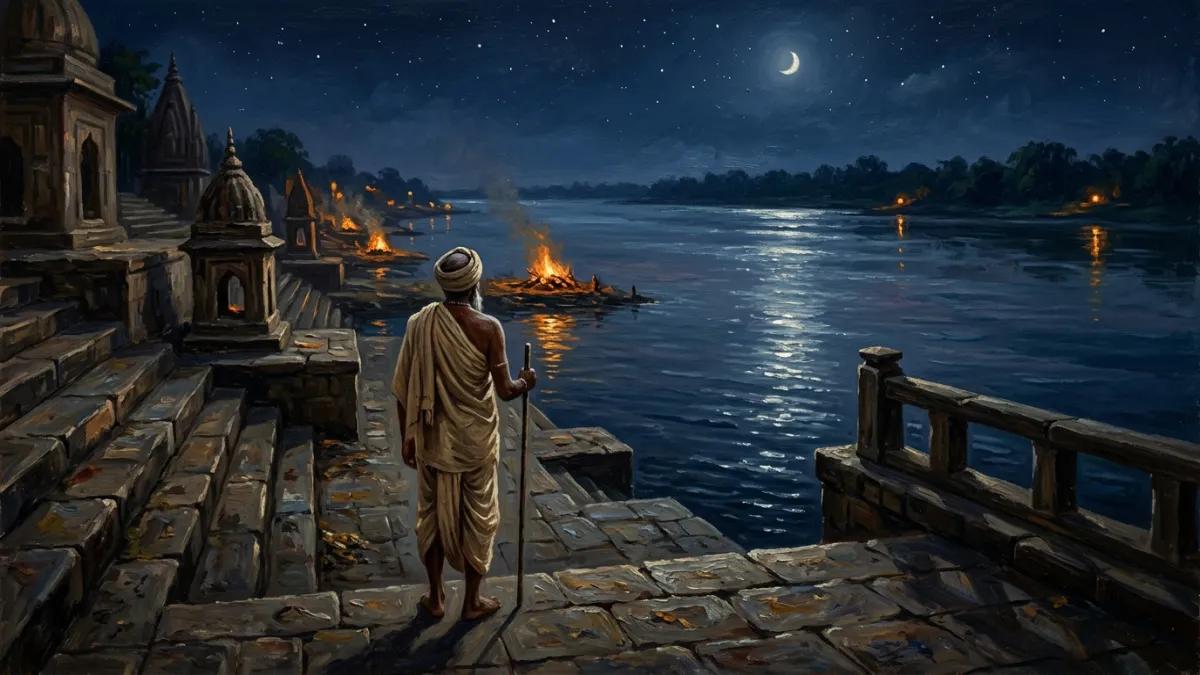
Pravira gave him the shrouds of the dead to collect. That was out at the burning ground in the south of the city (VIII.103 to 127). The takings from each body were divided into shares, and his portion was two of them.
A Rajarshi of Ayodhya, taking cloth off the dead for two shares.
It went on for twelve months. To him, says the Purana, they felt like a hundred.
Then came sleep, and a dream twelve years long, with births and rebirths in it, Naraka, Yama Dev himself, and only when he woke did he find that none of it had happened (VIII.128 to 165).
A snake, a pyre, and a king who would not go to heaven alone
Then a snake bit Rohitashva, and the boy died.
His mother carried him to the burning ground, and her husband was there. Neither knew the other at first. Then they did (VIII.171 to 187).
Husband and wife resolved to enter the fire together with their son. The boy was laid on the pyre by his father, and Harishchandra fixed his mind on the Supreme (VIII.223 to 230).
Right then, the gods came. Indra Dev was there, Dharma Dev too, and Rishi Vishwamitra with the rest of the gods, and over the pyre Indra Dev poured nectar and flowers, and Rohitashva rose up healthy, and his father held him, and held Shaivya (VIII.231 to 243).
Dharma Dev explained it then. The chandala had been him, he said, come in that form through illusion (VIII.246).
So Pravira, the man who bought a king and put him to work among the shrouds, was Dharma Dev.
Heaven was open to him now, and he would not go.
Not without his master’s permission. Nor without his subjects of Kosala, he said, and he asked for his merit to be shared out among them (VIII.245 to 257). So his people rose to heaven along with him, and at Ayodhya Rohitashva was crowned.
Shukracharya, called Ushanas in the text, sang of him after that. No king like Harishchandra had ever been, and none ever would be (VIII.259 to 268).
If I were telling this to a child, I would start here. The man who gave up everything for his word turned down heaven until his people could come with him.
What changes in the Devi Bhagavata Purana’s telling?
So here it is, sorted by text. Book 7 of the Devi Bhagavata Purana tells the same story, and in chapter 22 it gives the queen a second name, Madhavi.
The old Brahmin who buys her and the boy is, in this telling, Rishi Vishwamitra in disguise.
Is Harishchandra Ghat in Varanasi named after him?
Yes, Harishchandra Ghat in Varanasi is named for the legend of this king, though in the Purana itself his burning ground is just somewhere in the south of the city.
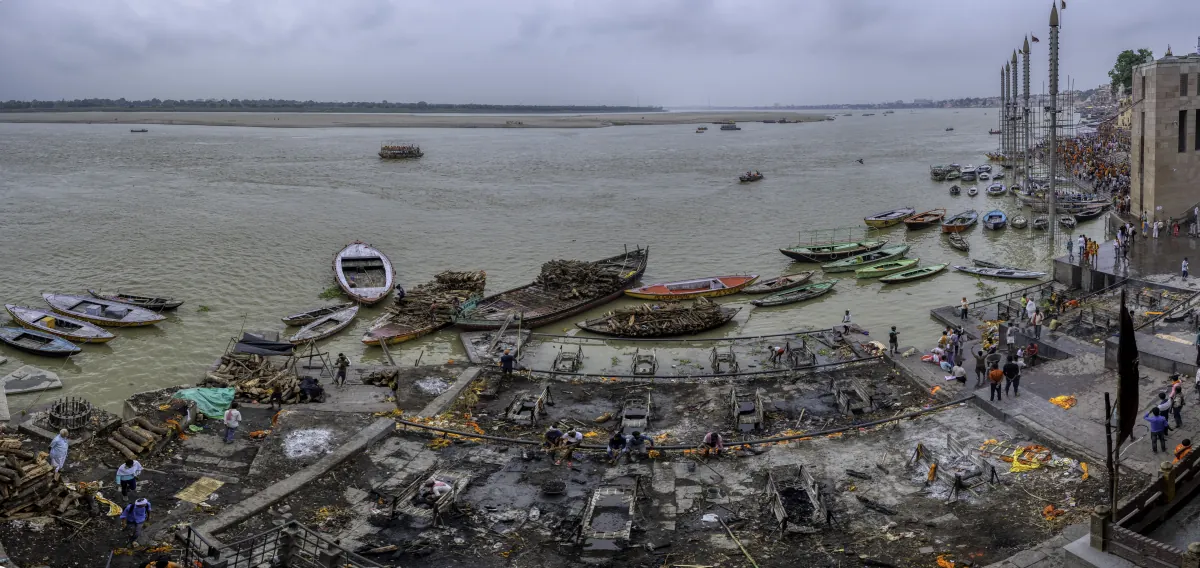
One way to plan a visit to the ghat is Tirth’s Varanasi 2-Day Divine Pilgrimage.
Frequently asked questions
Kosala was his kingdom, ruled from Ayodhya, and the Markandeya Purana calls him a Rajarshi of the Treta Age. He handed Rishi Vishwamitra the whole earth, and when the fee was still owed he sold his wife, his son and himself instead of leaving it unpaid. The same Purana has Shukracharya singing that there never was a king like him, and never would be.
Rishi Vishwamitra asked for a fee. The king gave him the earth and still owed it. He sold his wife and son in Kashi to an old Brahmin, then himself to a chandala. A year working the burning ground followed. When his son lay on the pyre, the gods came. Nectar brought the boy back, and the chandala was revealed to be Dharma Dev.
The Markandeya Purana tells it in full. You’ll find it in Cantos VII and VIII of Pargiter’s translation. The Devi Bhagavata Purana has it too, in Book 7, with some differences.
In the Markandeya Purana she is Shaivya. Madhavi is the other name the Devi Bhagavata Purana gives her.
It is named for the legend of King Harishchandra. In the Markandeya Purana, his burning ground was in the south of Kashi, and he served a year there.
No. The episode in the Aitareya Brahmana, of Harishchandra, Varuna Dev, his son and Shunahshepa, is a different story. A version of it does come before Rishi Vishwamitra’s test in the Devi Bhagavata Purana. Not in the Markandeya Purana, though.
Continue on Tirth
- Varanasi on Tirth, Destination on Tirth, where most of this story takes place.
- The Manikarnika Ghat story.
- Why Varanasi’s steps go down to the Ganga.
- Nachiketa in Yama Dev’s house, a father’s word that could not be taken back.
- Chitragupta ji’s story.