On this page8 sections
- How did Sahasrarjun get his thousand arms, and why did the gods turn on him?
- What did the king do after Jamadagni fed him?
- One axe against 17 akshauhinis in Mahishmati
- Why was Jamadagni angry with his son after the fight?
- How did Kartavirya’s sons kill Jamadagni?
- Did he clear the earth 21 times or only seven?
- Frequently asked questions
- Continue on Tirth
- Sources and review
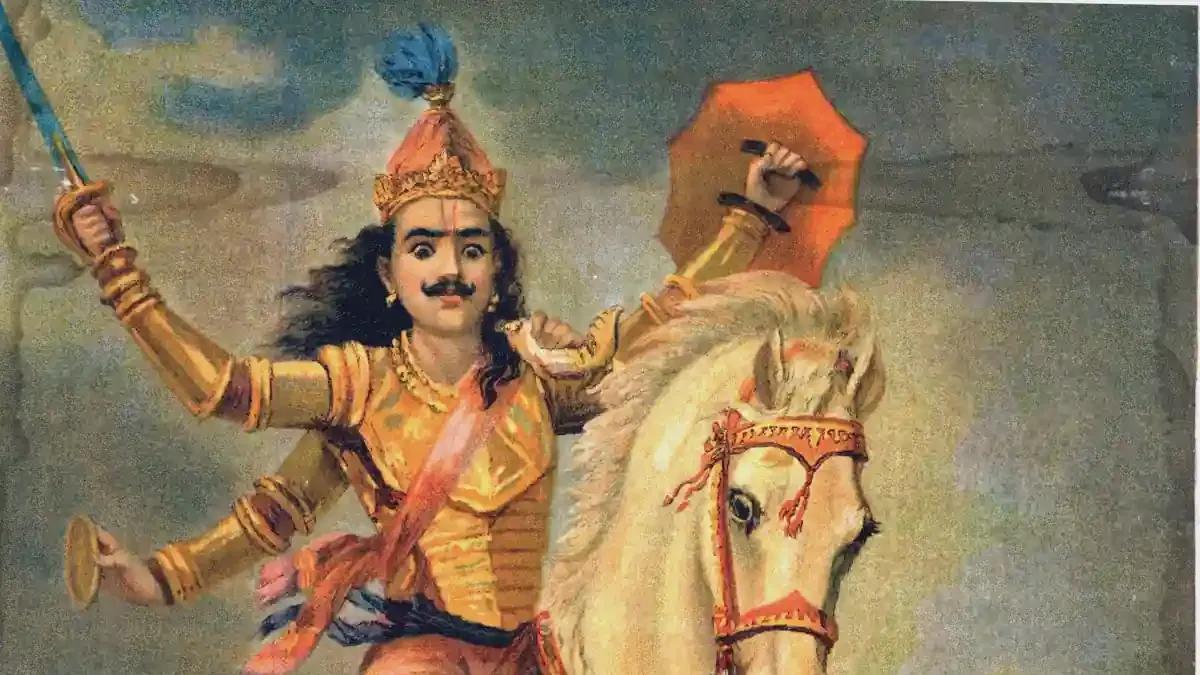
When Kartavirya Arjuna’s kinsmen shot him with arrows, says the Mahabharata, he only called out his son’s name, Rama. The son had cut off the king’s thousand arms over a stolen cow, and the killing turned his grief into a vow to clear the earth of kshatriyas, 21 times in the Bhagavata Purana and seven in the Vana Parva.
That son is Bhagwan Parashurama, often written Parshuram, and this is the Parshuram story people mean when they search for it.
The basics, that he is the sixth avatar of Bhagwan Vishnu and carries an axe from Bhagwan Shiva, Deity page on Tirth , are on Tirth’s page on Bhagwan Parashurama. Here I only want the one fight, between a single family and a king, told the way the texts tell it, with each place where they disagree marked out.
In short
The son had cut off the king’s thousand arms over a stolen cow, and the killing turned his grief into a vow to clear the earth of kshatriyas, 21 times in the Bhagavata Purana and seven in the Vana Parva.
How did Sahasrarjun get his thousand arms, and why did the gods turn on him?
Kartavirya Arjuna was king of the Haihayas. A lot of people just call him Sahasrarjun.
According to the Bhagavata Purana (9.15.17 to 19), the thousand arms came from worshipping Bhagwan Dattatreya, and yogic powers came with them.
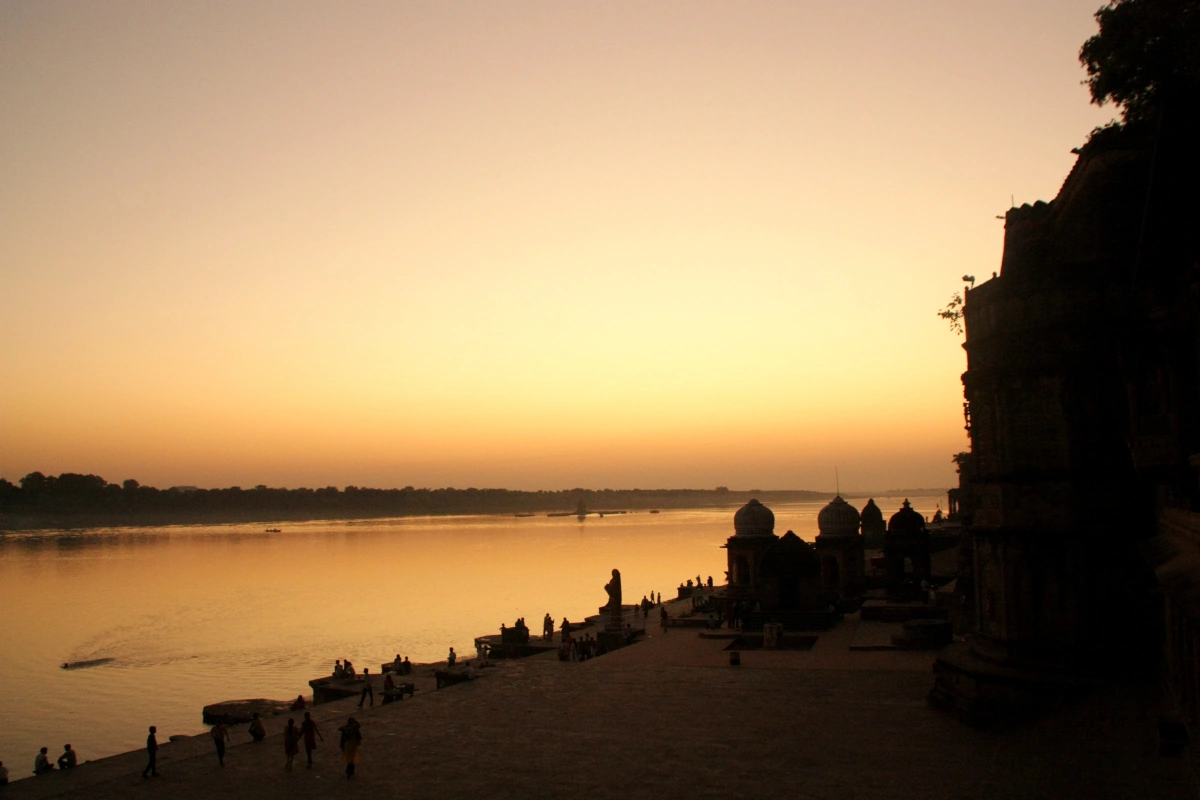
Once he held back the Narmada with those arms, and the flood that followed wrecked Ravana’s camp. Kartavirya took Ravana prisoner, kept him in Mahishmati for some time and then let him go (9.15.20 to 22), so for a while Ravana was the one sitting captive in somebody else’s city.
Turn to the Mahabharata and the king looks darker. It is the sage Akritavrana who tells Yudhishthira about him, in Section CXV of the Vana Parva (Ganguli’s numbering), and in that telling this king wins a golden celestial car from Bhagwan Dattatreya, then oppresses gods and sages alike. The gods went to Bhagwan Vishnu with one request, that he bring the king down. Jamadagni and his son appear in the next section, CXVI.
What did the king do after Jamadagni fed him?
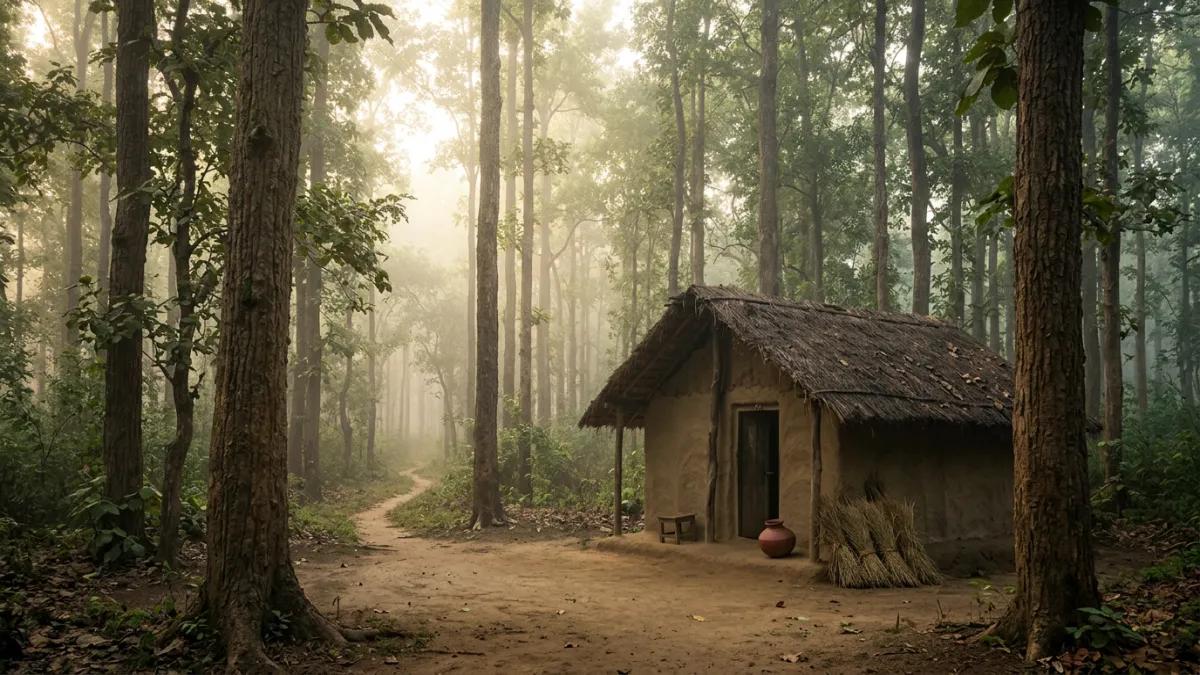
Out hunting, the king comes to Jamadagni’s hermitage, says the Bhagavata (9.15.23 to 26). The sage feeds him and all his retinue.
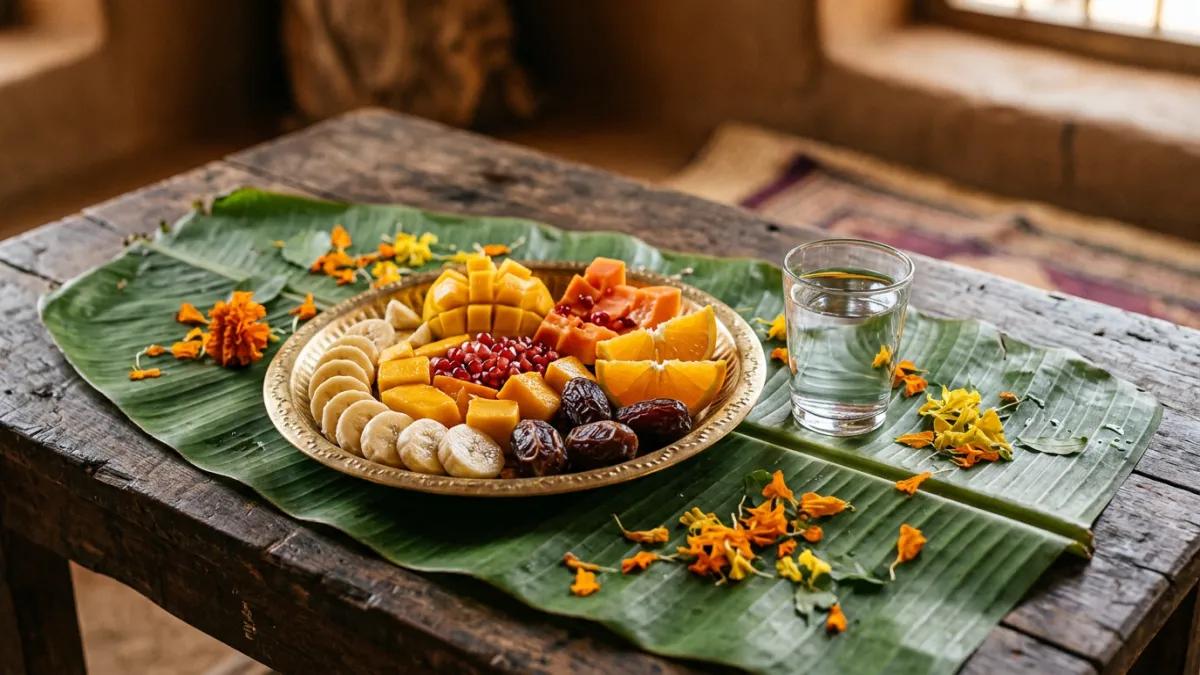
He can manage that because of one cow, the one he keeps for the fire sacrifice. Read the Sanskrit and what you get is the cow of the oblation. Kamadhenu, the cow that satisfies every wish, is the word a widely read English translation uses, and it’s the name the story usually goes by.
The king sees what she can do and wants her, so his men drive her and her calf off to Mahishmati by force.
The king had just been fed at the hermitage and then his men took the cow, and it was his own host who lost her.
The Mahabharata tells the theft twice. In its Vana Parva (CXVI) the one who turns up, while Jamadagni is away, is the king’s son. He takes the chief cow of the hermitage by force (her milk gave the ghee for the sacrifices) and cuts down the trees as he goes. The Shanti Parva (Section L) has Kartavirya’s sons seizing the calf of Jamadagni’s homa cow.
The word Kamadhenu isn’t in either passage, which is worth knowing if you ever tell the story to someone else.
One axe against 17 akshauhinis in Mahishmati
In these Mahabharata passages he is named Rama, and for the full fight you have to go to the Bhagavata.
When he gets back and hears what was done, he takes up his axe, shield, bow and quiver (9.15.27 to 35) and goes into Mahishmati with nobody beside him. The army he destroys there, one man against all of it, comes to 17 akshauhinis by the Bhagavata’s count. An akshauhini is a full battle host of chariots, elephants, horse and foot-soldiers, and the Mahabharata (Adi Parva II) counts 21,870 chariots to each one.
After that the king comes at him in person, hurling trees and hills. Bhagwan Parashurama cuts the thousand arms off and then takes his head. The king’s ten thousand sons run.
The Vana Parva says far less. Rama attacked, the thousand arms were cut off, and that’s about it.
Only the Shanti Parva gives a separate reason for his end. Apava was a sage whose hermitage Kartavirya had once burned, and in his anger Apava said Rama would one day cut those arms off.
Why was Jamadagni angry with his son after the fight?
So the cow and the calf come home with Bhagwan Parashurama. Jamadagni is not pleased.
The Bhagavata (9.15.36 to 41) gives his rebuke. Killing a king who has been anointed is a grave sin, he says. A brahmin’s glory lies in forgiveness. Then he sends his son round the holy places to atone, and the son goes.
He had obeyed his father before. The Vana Parva (CXVI) keeps another story about that. Seeing King Chitraratha bathing, Maa Renuka let her mind wander, and Jamadagni in his anger told his sons to kill her, and of all of them it was only the youngest, Rama, who obeyed. Jamadagni granted him a boon, which Rama used to ask for his mother’s life and to have his brothers restored. It’s a story that needs a post of its own, so I’m leaving it at that.
How did Kartavirya’s sons kill Jamadagni?
Kartavirya’s sons waited until Bhagwan Parashurama was away, says the Bhagavata (9.16.10 to 13), and then beheaded Jamadagni at his sacred fire, and Maa Renuka, beating her body, cried out for Rama.
The Mahabharata changes the weapons and keeps the killing. In the Vana Parva it is arrows, the kinsmen shooting while the sage does not resist and only calls his son’s name, and in the Shanti Parva it is lances, with Rama out gathering fuel.
A few verses back, Jamadagni had told his son that a brahmin’s glory is forgiveness. The king’s sons killed him anyway.
Did he clear the earth 21 times or only seven?
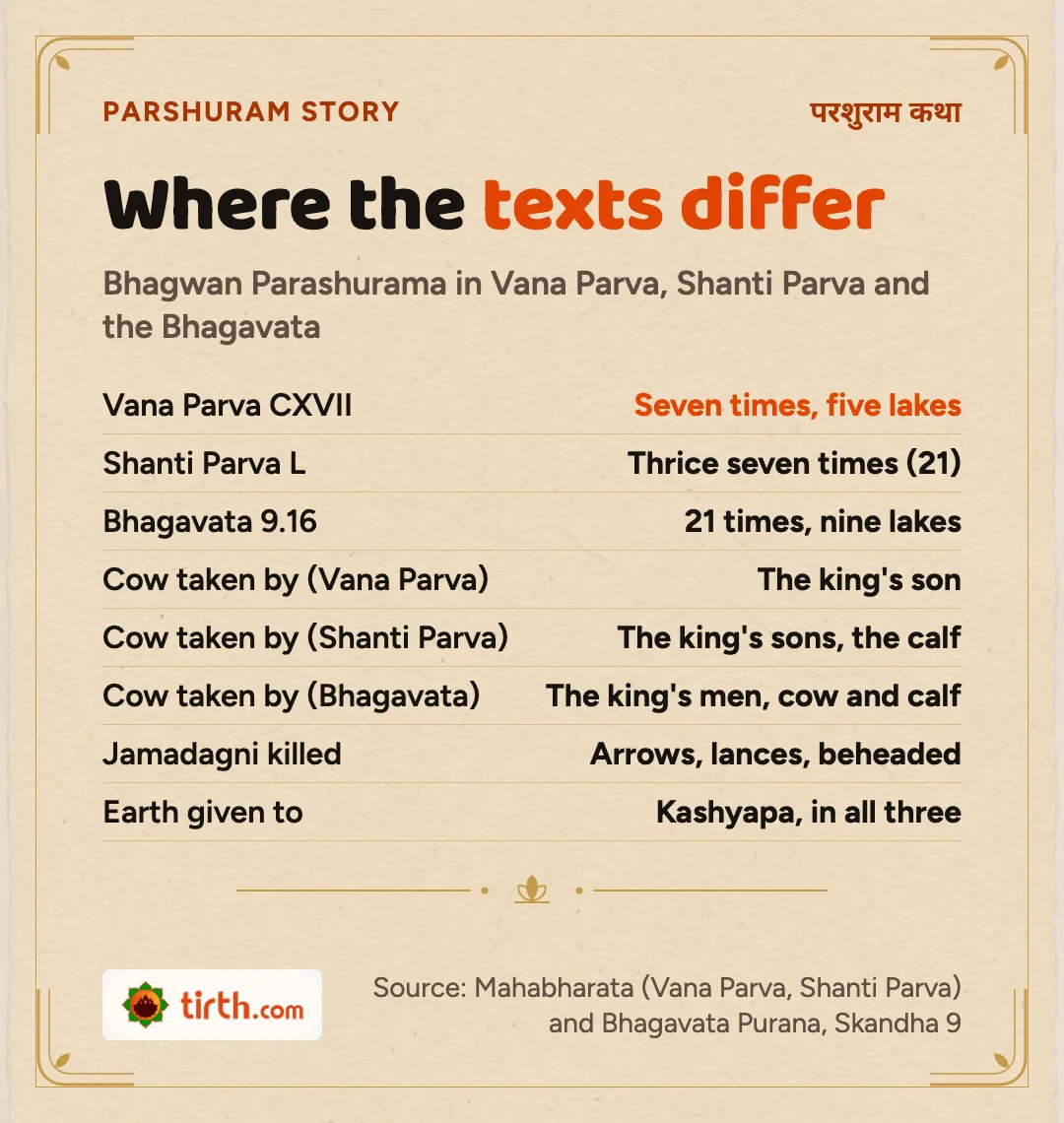
Once the funeral is over, the Bhagavata (9.16.16 to 19) takes him to Mahishmati first, where he heaps up the heads of Kartavirya’s sons. After that he clears the earth of kshatriyas 21 times and fills nine lakes at Samantapanchaka with blood. The same Purana had already said as much at 9.15.14, calling him a portion of Vasudeva who cleared the earth 21 times.

Count it by the Vana Parva (CXVII) and you get another number. There Rama vows to destroy the kshatriya class and kills Kartavirya’s sons along with their followers. He strikes the warrior tribes down seven times. The lakes of blood number five. The Shanti Parva, though, is back to “thrice seven times”, the same count as the Bhagavata.
Where the three agree is how it ends, with the earth handed to Kashyapa, and the Bhagavata (9.16.21 to 22) has the directions given out as the sacrifice’s fees, with the central region for Kashyapa.
There’s a popular explanation for the 21, that Maa Renuka struck her chest 21 times. That is a Puranic and popular telling. All the Bhagavata verse says is that she struck her body and cried for Rama, and in the Vana Parva sections it isn’t there at all.
| Mahabharata, Vana Parva CXVI to CXVII | Mahabharata, Shanti Parva L | Bhagavata Purana 9.15 to 9.16 | |
|---|---|---|---|
| Who takes it | Kartavirya’s son | Kartavirya’s sons | The king’s men, because the king wants it |
| What is taken | The chief cow of the hermitage | The calf of the homa cow | The cow and her calf |
| Called Kamadhenu? | No | No | In the English translation, yes. The Sanskrit says the cow of the oblation |
| How Jamadagni dies | Shot with arrows by Kartavirya’s kinsmen | Killed with lances by the sons while Rama gathers fuel | Beheaded at his fire by the sons |
| Clearings of the kshatriyas | Seven | Thrice seven (21) | 21 |
| Who gets the earth | Kashyapa | Kashyapa | Kashyapa gets the central region |
In the end he lays his weapons down. The Bhagavata (9.16.26) and the Vana Parva (CXVII) both leave him on Mount Mahendra. Placing that mountain in Odisha or Andhra, as Mahendragiri, is a modern identification these chapters do not make.
He turns up on Mount Mahendra again in Tirth’s story of when Kalki will come.
Frequently asked questions
Kartavirya Arjuna’s sons killed his father Jamadagni, and once the funeral was over he vowed to clear the earth of kshatriyas. The count of 21 is in the Bhagavata Purana (9.16) and in the Shanti Parva of the Mahabharata. The Vana Parva (CXVII) puts it at seven instead.
He was king of the Haihayas. In the Bhagavata Purana his thousand arms come from worshipping Bhagwan Dattatreya, and Ravana was once his prisoner. Those arms were cut off by Bhagwan Parashurama once Jamadagni’s cow had been taken from the hermitage.
In a widely read English translation of the Bhagavata Purana she is a kamadhenu, the cow that satisfies every wish, and she fed the king’s whole retinue. The Sanskrit verses call her the cow of the oblation, and the Mahabharata doesn’t use the name at all. What the Mahabharata has is the chief cow of the hermitage in the Vana Parva and the calf of the homa cow in the Shanti Parva.
It was done while Bhagwan Parashurama was away, by Kartavirya Arjuna’s sons or his kinsmen. The Bhagavata has him beheaded at his own fire. In the Mahabharata the weapons are arrows in the Vana Parva telling and lances in the Shanti Parva telling.
Continue on Tirth
- Bhagwan Parashurama on Tirth, the sixth avatar, his axe and the questions people ask about him.
- Bhagwan Vishnu on Tirth, Deity page on Tirth, whom the gods asked to bring Kartavirya Arjuna down.
- The Vamana avatar story, another avatar of Bhagwan Vishnu.
- Kalki avatar kab hoga, where Bhagwan Parashurama turns up again on Mount Mahendra.