On this page7 sections
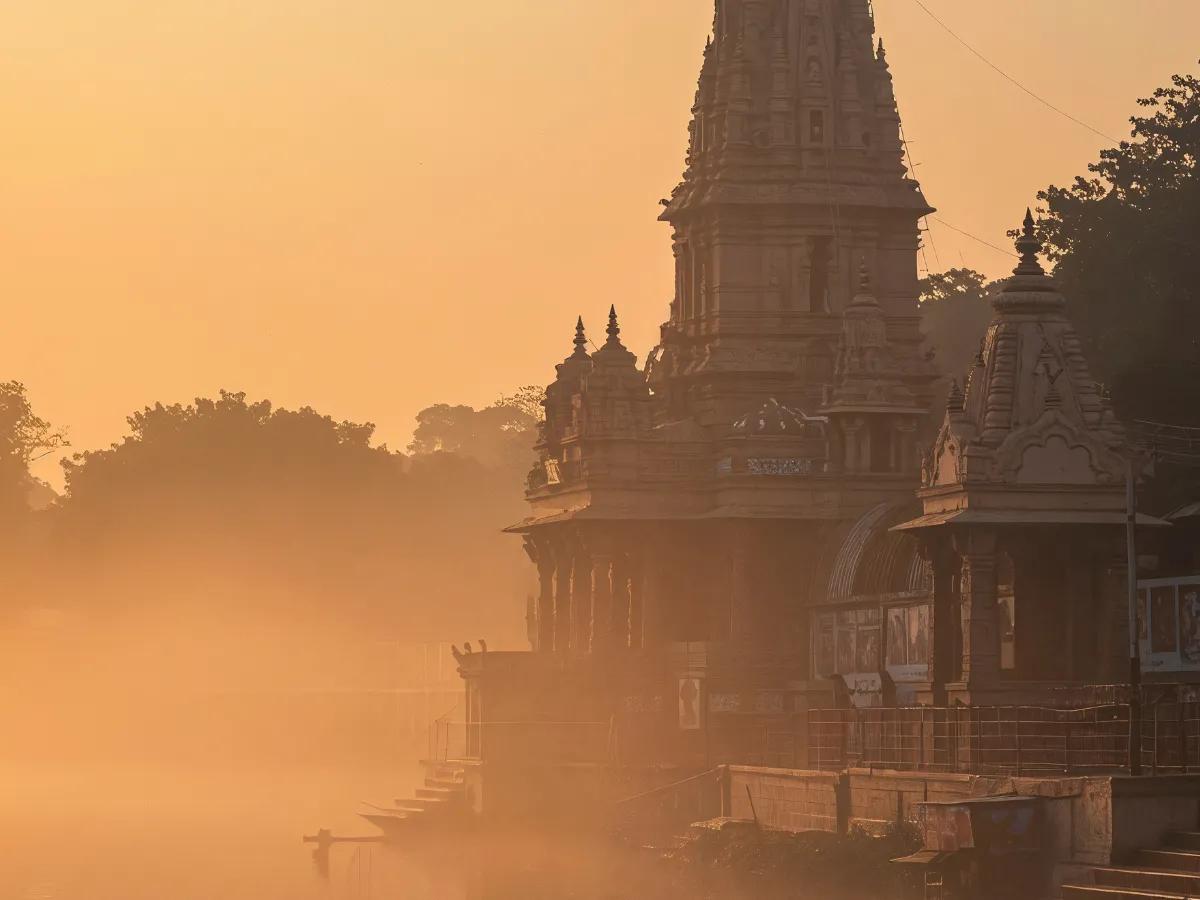
In the Kashi Khanda of the Skanda Purana, Bhagwan Shiva shakes his head in wonder at Bhagwan Vishnu’s tapas, his jewelled earring drops into the pool Bhagwan Vishnu had dug with his discus, and Bhagwan Shiva names the pool after it. Mani is a jewel. Karnika is an ear ornament.
That same chapter is why Kashi is called the city of liberation. Bhagwan Vishnu asks that every being who dies in Kashi be set free. Bhagwan Shiva says yes. Later chapters add a whisper, the Taraka mantra that Bhagwan Shiva gives into the ear of the dying.
An ear at the start of the story, then, and an ear at its end.
In short
Mani is a jewel. Karnika is an ear ornament. That same chapter is why Kashi is called the city of liberation. Bhagwan Vishnu asks that every being who dies in Kashi be set free. Bhagwan Shiva says yes. Later chapters add a whisper, the Taraka mantra that Bhagwan Shiva gives into the ear of the dying.
How a discus dug the Chakra Pushkarini
In the Kashi Khanda, chapter 26 goes by the title Description of Manikarnika. It opens on a question from Rishi Agastya to Bhagwan Skanda. What made Avimukta so famous, he asks? What gave Manikarnika its standing, and where did the city’s names of Varanasi, Kashi and Rudravasa come from? The word Mahashmashana (a great cremation ground) is already there in verse 5, inside the question itself.
Bhagwan Skanda replies by going back to Bhagwan Vishnu.
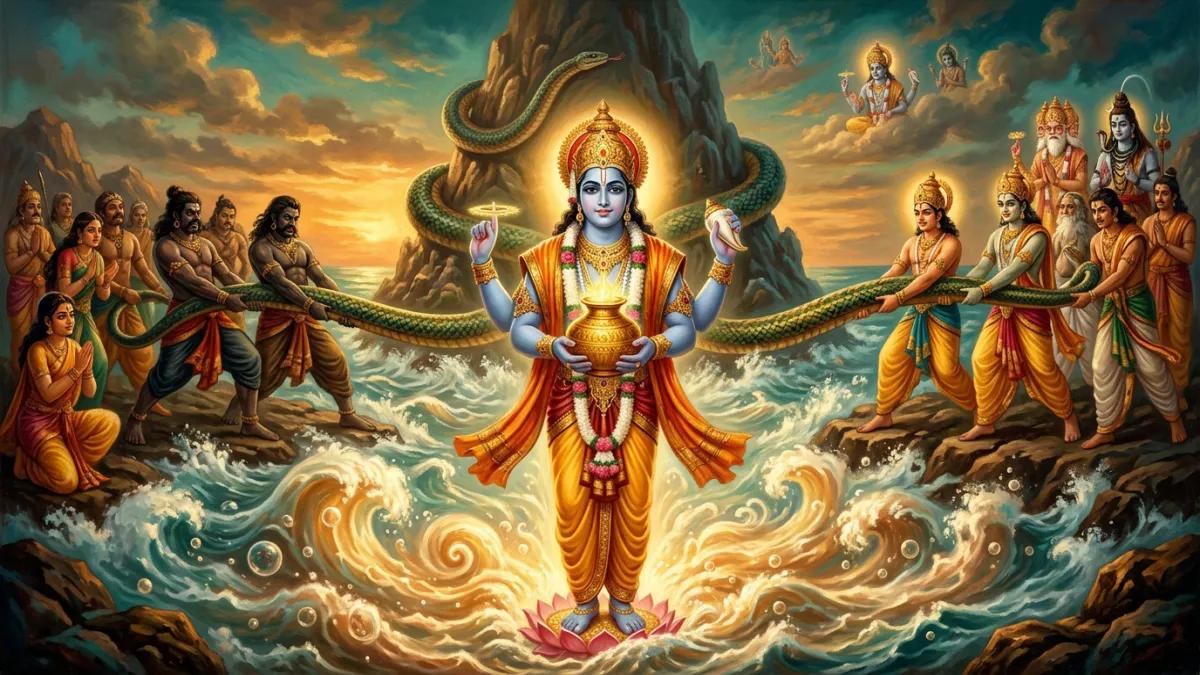
Verses 51 to 53 tell it plainly. Bhagwan Vishnu digs a lotus pond with his discus and fills it with his own sweat. He names it Chakra Pushkarini, the lotus pool of the discus. On its bank he sits in tapas (austerity kept up without a break) for fifty thousand years. The text gives that figure and moves on.
Bhagwan Shiva and Maa Parvati come to see this, and the verses give them the names Mrida and Mridani. Watching the tapas, Bhagwan Shiva shakes his head in wonder. He offers Bhagwan Vishnu a boon of his choosing (all of this is verses 54 to 65). Bhagwan Vishnu wants one thing before anything else. He asks to see Bhagwan Shiva always with Bhavani, Maa Parvati, beside him, and for devotion that stays steady. Bhagwan Shiva grants it. Then comes the earring. When he shook his head in wonder, Bhagwan Shiva tells him, his jewelled earring fell down, and the pond shall carry the name Manikarnika.
After fifty thousand years of tapas, what Bhagwan Vishnu asks for first is a sight of Bhagwan Shiva with Bhavani beside him.
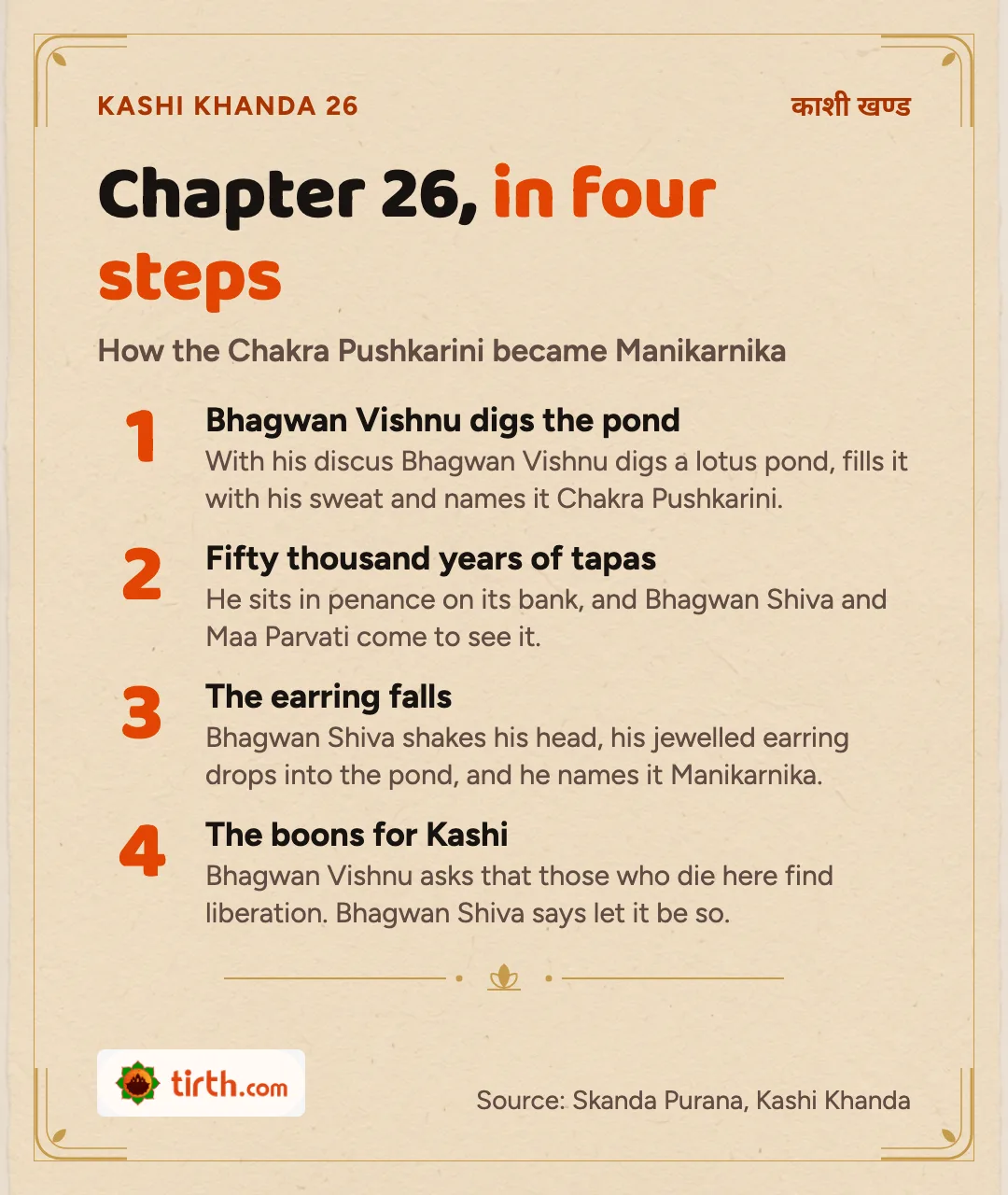
The Kashi Khanda uses both names for the pool, Chakra Pushkarini and Manikarnika, in verses 64 to 65 of chapter 26 and again in chapter 30, verse 80. Our explainer on what a ghat is at Varanasi covers the word itself.
Bhagwan Shiva’s earring, or Maa Parvati’s, or Maa Sati’s?
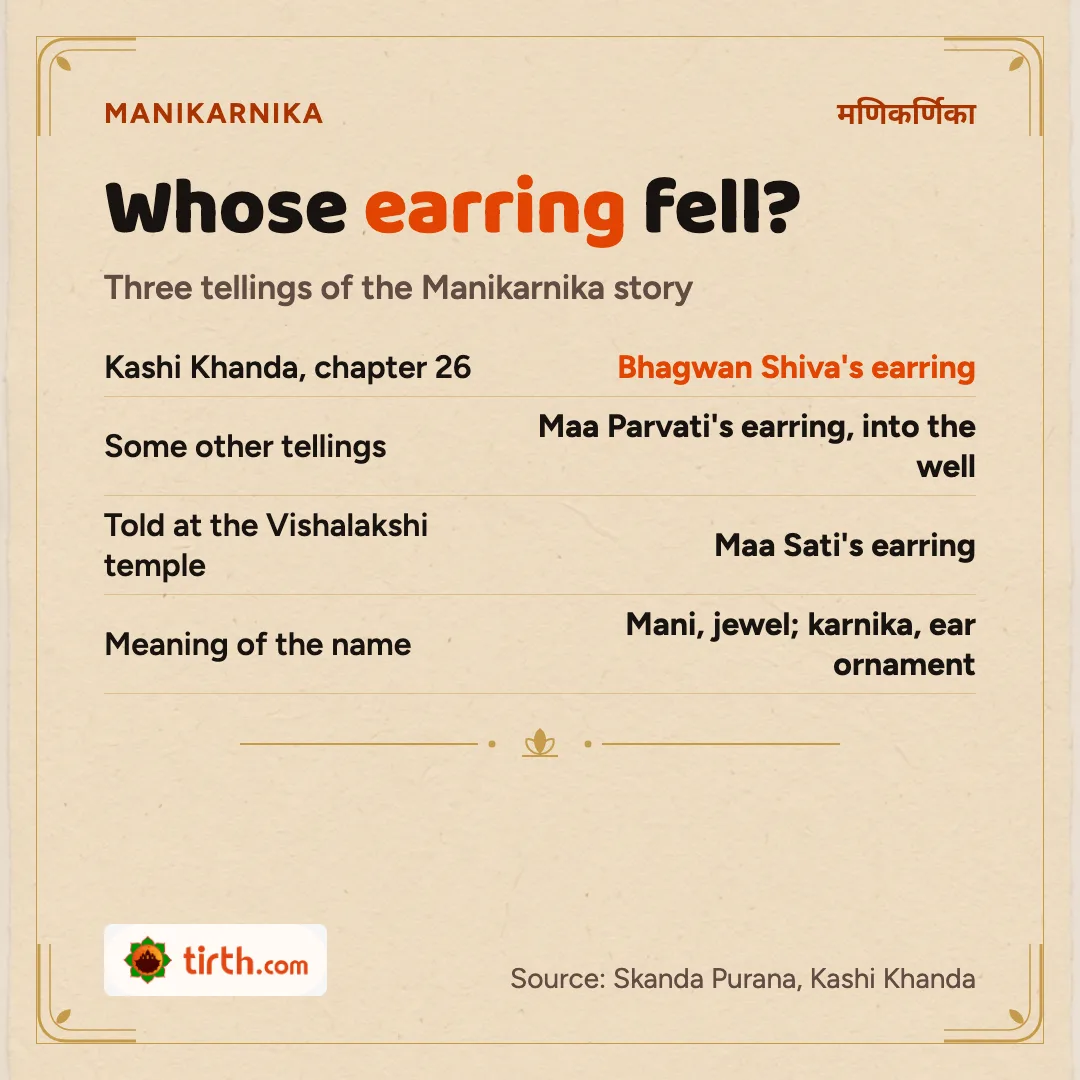
You will come across three answers to this. In chapter 26 of the Kashi Khanda the earring is Bhagwan Shiva, Deity page on Tirth ’s own, with no room for doubt.
In some tellings the earring is Maa Parvati’s and drops into the well. Maa Sati’s earring is the version told at the Vishalakshi temple. Both are later or local versions. Neither is the Purana’s account.
If you are telling this to children at home, start with the Kashi Khanda version, because it is the one you can point to by chapter and verse.
The boons that made Kashi the city of liberation
The earring sits in the middle of chapter 26. The part after it explains why the city matters so much to the dying.
Bhagwan Vishnu keeps asking. Verses 66 to 93 carry the rest of what he wants for this place. That this place be the greatest of tirthas and carry the name Kashi. That every being who dies there reach liberation, even small creatures within five krosha of it, with no need for Sankhya or for yoga, and with no vow either. And that the merit of rites done in Kashi should last.
The liberation he asks for is moksha, and our post on what moksha means covers that word on its own.
Bhagwan Shiva says let it be so. Kashi is his own domain, he says in verses 94 to 148, and even remembering Avimukta at the moment of death, from far away, brings merit, so people should reach Kashi before they die.
In chapter 26, then, the request is Bhagwan Vishnu’s and the yes is Bhagwan Shiva’s.
Which mantra does Bhagwan Shiva whisper into the right ear?
A person lies dying in Kashi. As death comes, chapter 25 of the Kashi Khanda says, memory grows weak.
That is the moment Bhagwan Shiva steps in. As the soul departs, Vishveshvara himself gives the dying person the Taraka Brahman, and in this chapter it is the six-syllable Rama mantra (chapter 25, verse 73). Taraka is the one that carries a person across.
Chapter 30 tells the same moment more quietly. Bhagwan Shiva whispers something into the ear, and the creature does not enter a womb again.
Chapter 7 says which ear. Bhagwan Shiva whispers the Taraka mantra into the right ear of good people as they die, and for this reason, it says, the spot is called Manikarnika (chapter 7, verse 79). The same passage speaks of Omkara given at death, and adds a second reason for the name: the spot is a jewel in the pedestal of the goddess of salvation.
So the words differ from chapter to chapter, a Rama mantra in one, Omkara in another, and only something whispered in a third.
Two Upanishads differ too, since the Ramottaratapaniya ties the whisper to the Rama Taraka mantra and the Tarasara Upanishad gives Om Namo Narayanaya.
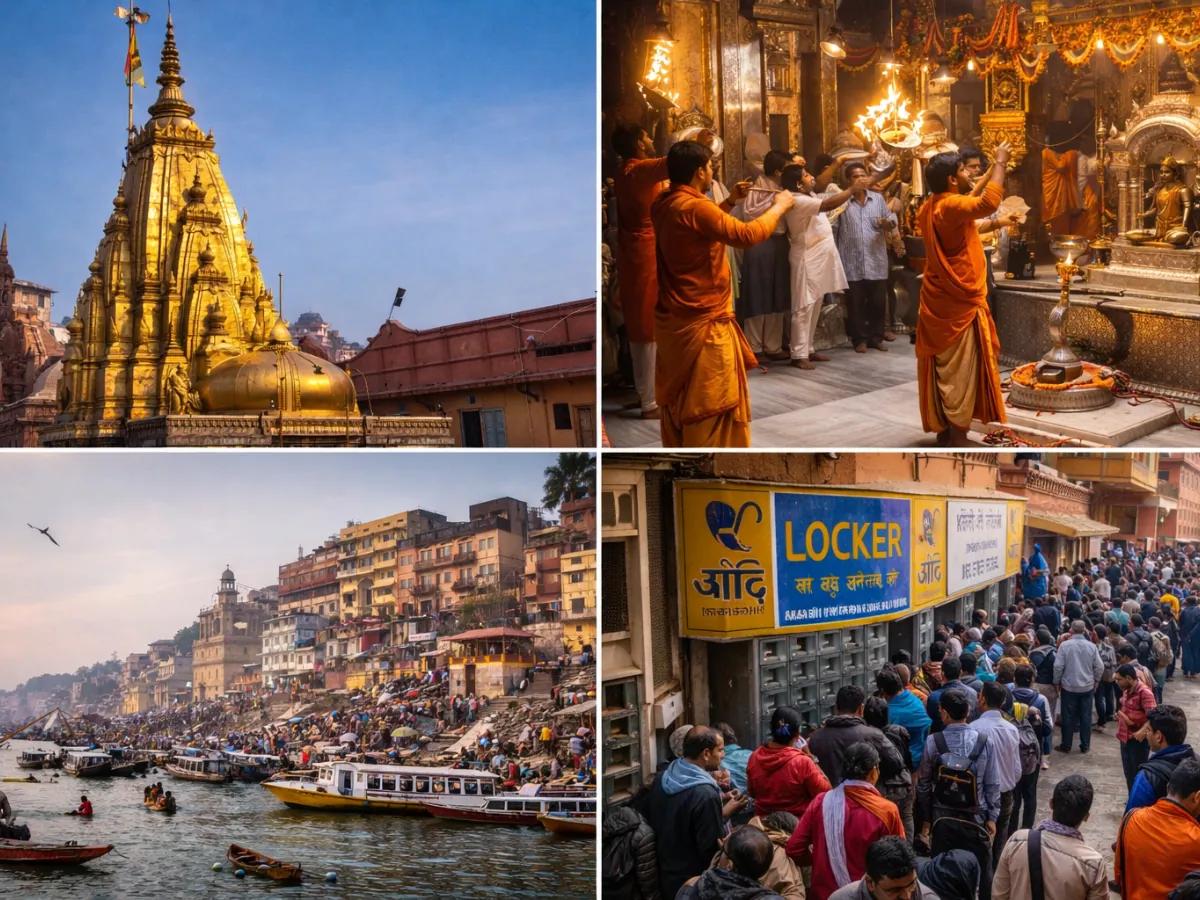
Pilgrims who want to stand before Bhagwan Shiva as Vishwanath, Lord of the Universe, go to Shri Kashi Vishwanath Temple, Temple page on Tirth, and our post on the Kashi Vishwanath Jyotirlinga tells that side of the city.
Why is Kashi called a Mahashmashana?
Verses 103 to 104 of chapter 30 give the reason. The great elements lie down here as if they were corpses, and so Kashi is a Mahashmashana, a great cremation ground. Casting off the body at Manikarnika comes up a little before that, in verses 84 to 85.
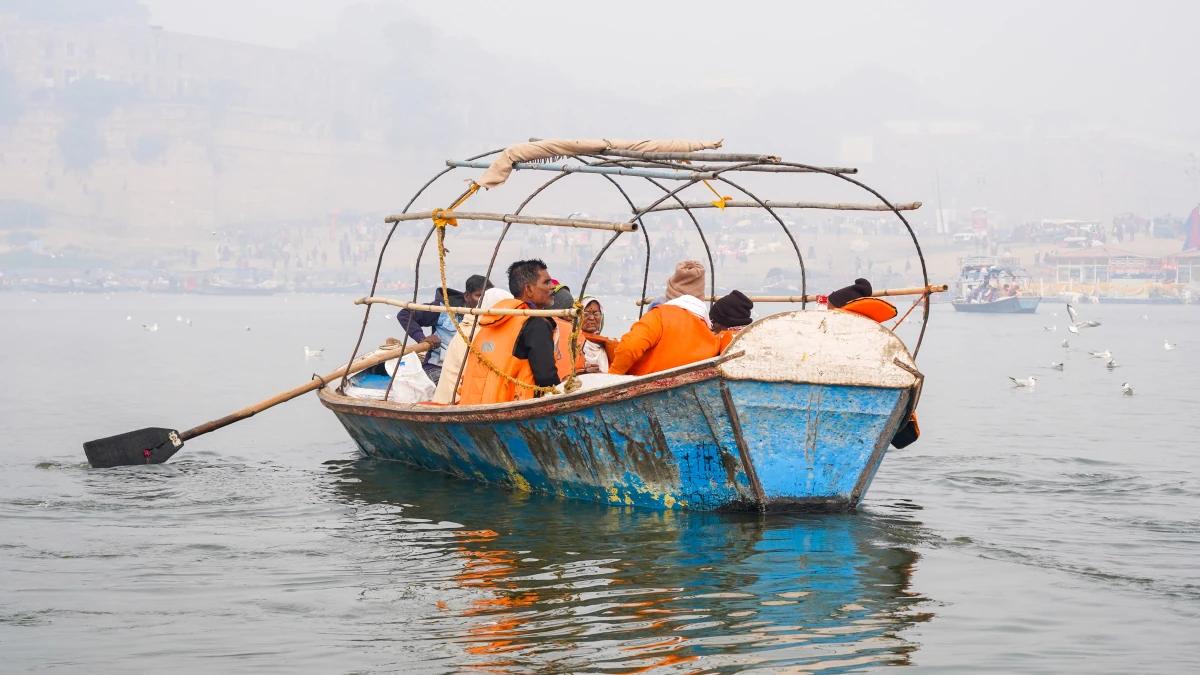
For getting to the ghats and planning your days in the city, the Varanasi page on Tirth, Destination on Tirth has the practical side. Our list of Varanasi sightseeing places helps with the rest of the day.
Frequently asked questions
It is told in chapter 26 of the Kashi Khanda, in the Skanda Purana. Bhagwan Vishnu dug a pond with his discus and kept up tapas beside it for fifty thousand years, and when Bhagwan Shiva came to grant him a boon, his jewelled earring fell into the pond. He named it Manikarnika.
The word joins mani, a jewel, with karnika, an ear ornament. The Kashi Khanda gives the earring to Bhagwan Shiva. Some tellings give it to Maa Parvati, and the telling at the Vishalakshi temple to Maa Sati. Chapter 7 adds more reasons for the name. The dying there receive the Taraka mantra in the ear, and the spot is the jewel of liberation.
Chapter 26 of the Kashi Khanda has Bhagwan Vishnu ask that all beings who die in Kashi reach liberation without Sankhya, yoga or vows. Bhagwan Shiva agrees. In later chapters he also gives the Taraka mantra, in a whisper, to those dying in the city.
It is the mantra believed to carry the dying across, and the Kashi Khanda does not fix one text for it. Chapter 25 names the six-syllable Rama mantra. Chapter 7 speaks of Omkara, while chapter 30 says only that Bhagwan Shiva whispers something.
Yes. The Varanasi destination page on Tirth covers how to reach the ghats.
Continue on Tirth
- Varanasi on Tirth, Destination on Tirth, for the ghats, the temples and how to get there.
- Shri Kashi Vishwanath Temple, Temple page on Tirth, the home of Vishveshvara.
- Varanasi yatra packages, if you would like Tirth to plan the trip.
- The lamps of Kashi on Dev Deepawali, another story the ghats keep.