On this page9 sections
- Taraka’s three sons, and what they asked of Bhagwan Brahma
- A city of devotees that beat the gods
- Why Bhagwan Shiva refused, and the crore of Om Namah Shivayas
- The universe as a chariot
- The single arrow, and a request from Tarakaksha
- Purana vs festival: where the full moon comes in
- Dev Deepawali in Kashi, from Ravidas Ghat to Rajghat
- Frequently asked questions
- Continue on Tirth
- Sources and review
Tripura was a set of three asura cities, far out of the gods’ reach.
Kashi turns that story into light. People there say the gods descend to Maa Ganga to bathe, and the ghats are lit with lamps. The Kartik Purnima ki kahani runs in two parts here, the texts and then the lamps.
Kartik Purnima in 2026: Tuesday, 24 November. Purnima tithi in New Delhi: 11:41 PM on 23 November to 8:22 PM on 24 November. Moonrise in New Delhi: 5:01 PM.
Checked on 13 Nov 2026. Timings for your city in the Tirth Spiritual Calendar
In short
Kashi turns that story into light. People there say the gods descend to Maa Ganga to bathe, and the ghats are lit with lamps. The Kartik Purnima ki kahani runs in two parts here, the texts and then the lamps.
Taraka’s three sons, and what they asked of Bhagwan Brahma
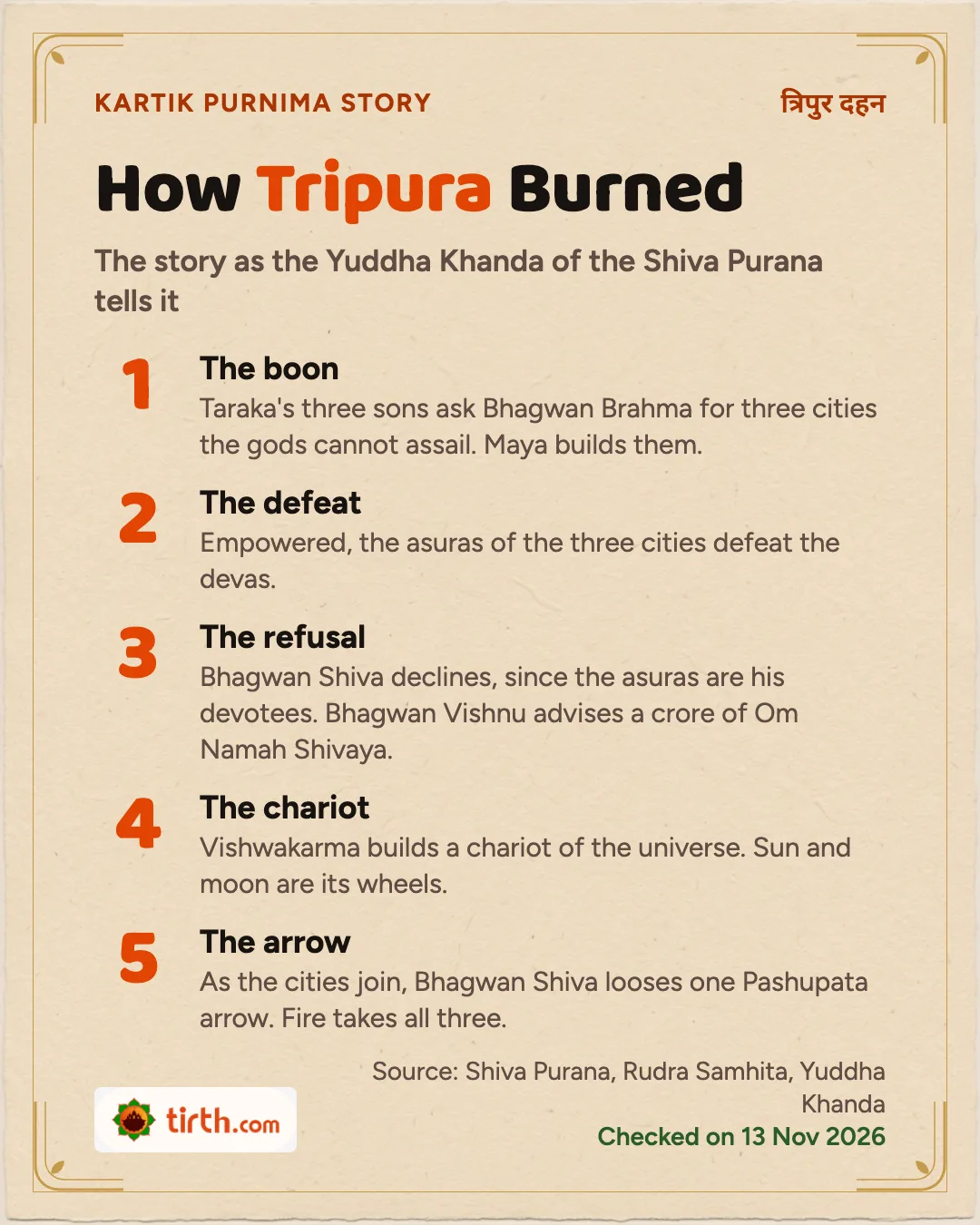
Bhagwan Skanda killed the asura Taraka. That is where this story begins. His three sons, Tarakaksha, Vidyunmali and Kamalaksha, then went to Mount Meru for severe penance, worshipping Bhagwan Brahma. The Yuddha Khanda of the Shiva Purana picks the story up there, in its first chapter.
They wanted never to die. Bhagwan Brahma refused. Beyond death, he told them, there are only Bhagwan Shiva and Bhagwan Vishnu. Next they asked for cities. Three of them, splendid ones, which the gods could never assail and which could join together only at a rare astrological moment. Bhagwan Brahma agreed, and Maya, the asura artificer, was told to build them.
A city of devotees that beat the gods
The Yuddha Khanda describes temples of Rudra in the three cities, along with halls for studying the Vedas and devout brahmins, and the asuras living there kept the sacred rites. The text says they ruled by Bhagwan Shiva’s own principles. Think of it: temples, study halls and devout brahmins, inside the cities the devas could not assail. Boon in hand, they beat the devas, and the devas themselves say as much in the second chapter.
Why Bhagwan Shiva refused, and the crore of Om Namah Shivayas
The devas brought their request to Bhagwan Shiva: destroy the Tripura asuras. He said no. Plainly, flatly, no. The asuras were his own devotees, and the Yuddha Khanda gives that as his reason.
Bhagwan Vishnu was the next door they knocked on. His advice was a chant, a mantra of Bhagwan Shiva built on Om Namah Shivaya, to be repeated a crore times to please him. A crore is ten million. Ten million repetitions of Om Namah Shivaya, offered to please him.
The universe as a chariot
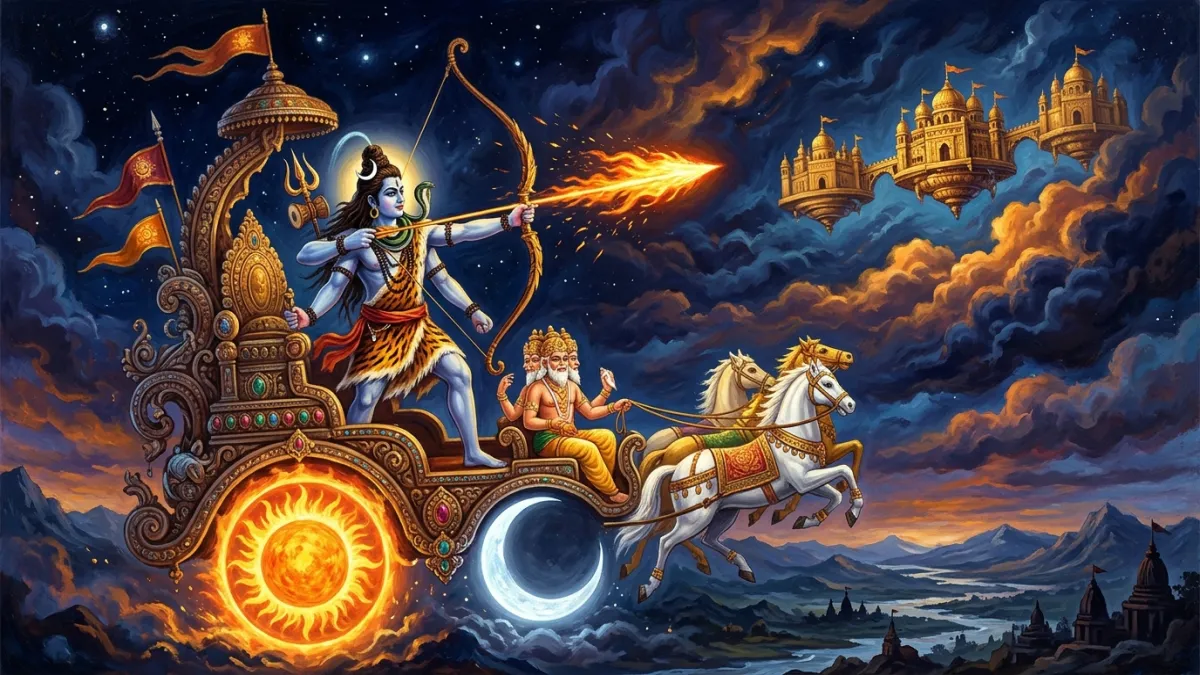
Now Bhagwan Shiva had the devas build a chariot. Its maker was Bhagwan Vishwakarma and its material was the universe itself: sun and moon for wheels, the seasons for its parts.
The Shiva Purana lingers over the fittings. Its charioteer is Bhagwan Brahma, its bow the lord of mountains, its bowstring the lord of serpents and its arrow Bhagwan Vishnu. Other tellings give Mount Meru as the bow and Vasuki as the string.
The single arrow, and a request from Tarakaksha
The cities could join only at one rare astrological moment. That was the brothers’ own request. As they joined, the gods, the Siddhas and the sages cried victory. Bhagwan Shiva then loosed one Pashupata arrow into the united cities. Fire took them, asuras and all. One arrow, and the three cities were gone.
Only Maya, the builder, came out of the fire, as the tenth chapter tells it.
Chapter 10 holds one more detail, about the enemy. Tarakaksha, burning alongside his brothers, called on Bhagwan Shiva and asked that any future burning include his kinsfolk. According to the chapter, those who sought Bhagwan Shiva’s refuge were spared. So were those who did not oppose the gods.
This act gave Bhagwan Shiva two names, Tripurari, meaning foe of Tripura, and Tripurantaka, meaning its ender.
Purana vs festival: where the full moon comes in
In the tenth chapter, where the cities burn, you will not find a month, a full moon or a lamp. The name Tripurari is missing too. The Purana tells the story, and tradition supplies the date and the lamps.
Tradition ties the story to Kartik Purnima. It says Bhagwan Shiva burned the cities on that day, and from there come the names Tripurari Purnima and Tripuri Purnima, and Dev Deepawali, Spiritual Calendar on Tirth , the Diwali of the gods.
Earlier and parallel tellings exist, and they disagree on details. For the oldest hint, go to the Taittiriya Samhita, with citadels of iron, silver and gold and an arrow of Rudra. The Matsya Purana retells the burning too, with a plan built on Bhagwan Shiva’s Pushya-yoga, and in the Mahabharata’s Karna Parva, you get the battle and a single shaft. Read each in its own text.
More stories from this month are collected in Kartik Mahatmya stories.
Dev Deepawali in Kashi, from Ravidas Ghat to Rajghat
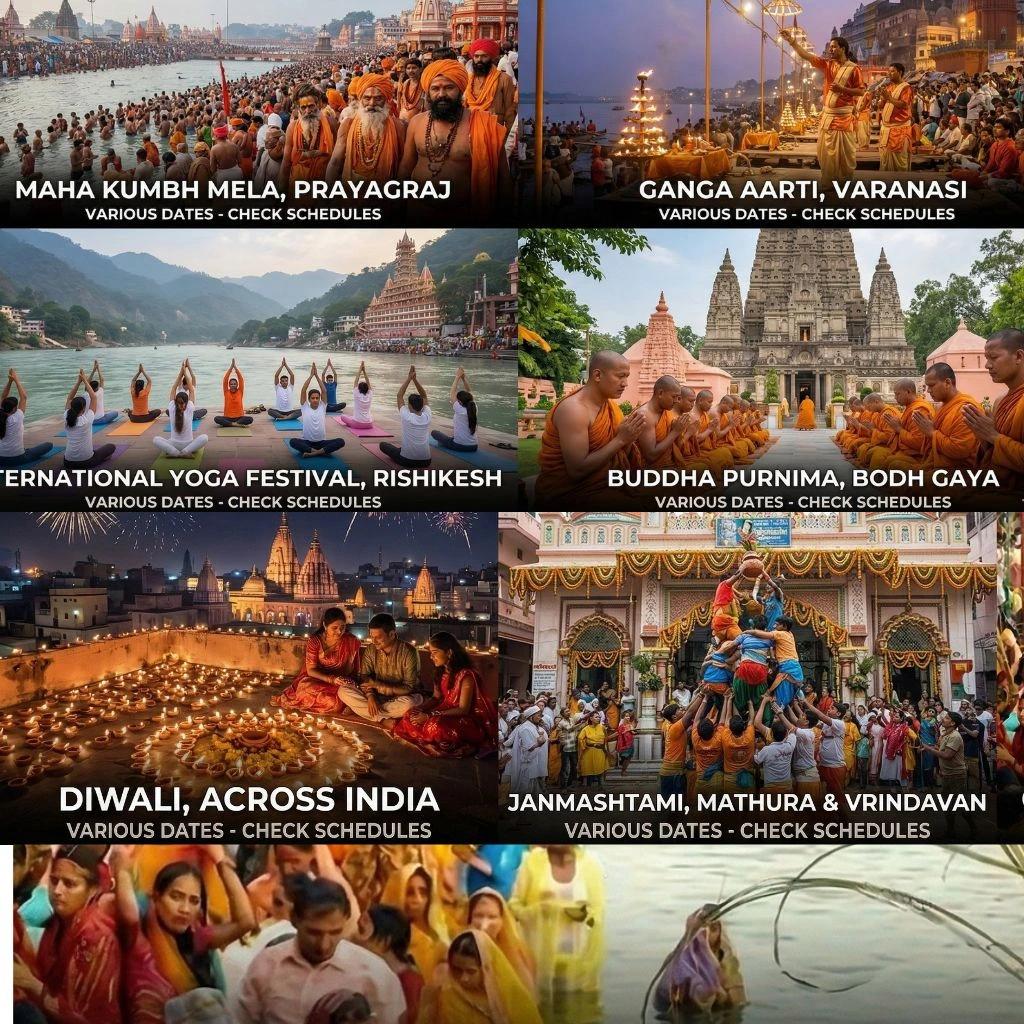
Varanasi, Destination on Tirth holds Dev Deepawali on the same day as Kartik Purnima. The city calls the day Dev Deepawali. The gods are said to descend and bathe in the Ganga, and the ghats from Ravidas Ghat to Rajghat are lit with earthen lamps. For families a Kartik snan is part of the day. The bath comes first. In the evening they offer lamps to Maa Ganga, an offering known as deepdan.
Before planning a visit, you can read about Kashi Vishwanath Jyotirlinga, the ghats of Varanasi and the festivals of Varanasi.
The Diwali festival is covered in our Diwali guide, and the day and timings for your city are in the Tirth Spiritual Calendar, Spiritual Calendar on Tirth.
Frequently asked questions
Tradition remembers this day as the one when Bhagwan Shiva ended Tripura’s three cities with one arrow. In Varanasi, devotees take a Kartik snan and offer lamps.
Taraka’s sons Tarakaksha, Vidyunmali and Kamalaksha ruled the three cities of Tripura. Those cities gave them power over the devas. The devas first asked Bhagwan Shiva to destroy them, and he refused, because the asuras worshipped him. They then turned to Bhagwan Vishnu. On his advice, they chanted Om Namah Shivaya a crore times to please Bhagwan Shiva, and the three cities were later burned with a single arrow.
Dev Deepawali is Varanasi’s observance on Kartik Purnima. People say the gods descend to bathe in the Ganga that day, and the ghats from Ravidas Ghat to Rajghat are lit with earthen lamps.
Tripurari is a name of Bhagwan Shiva meaning foe of Tripura. The full moon wears it because the burning of Tripura is remembered on this day.
The Diwali festival is covered in our Diwali guide.
Continue on Tirth
- Tirth Spiritual Calendar, Spiritual Calendar on Tirth for the day and timings in your city.
- Tirth pujas, Pujas on Tirth if you wish to offer a puja in Kashi or elsewhere.
- Festivals of Varanasi for the ghats beyond Dev Deepawali.
- Maha Shivaratri for another festival of Bhagwan Shiva.