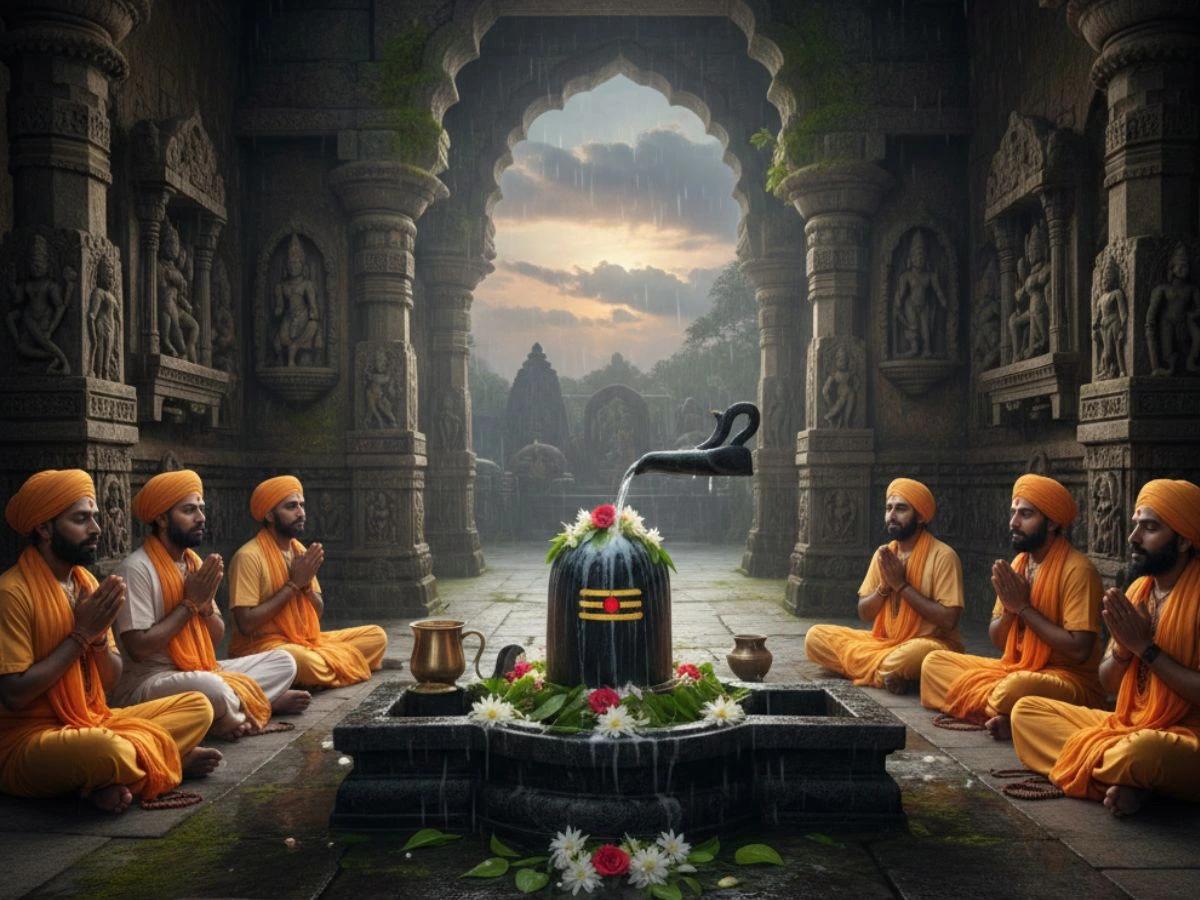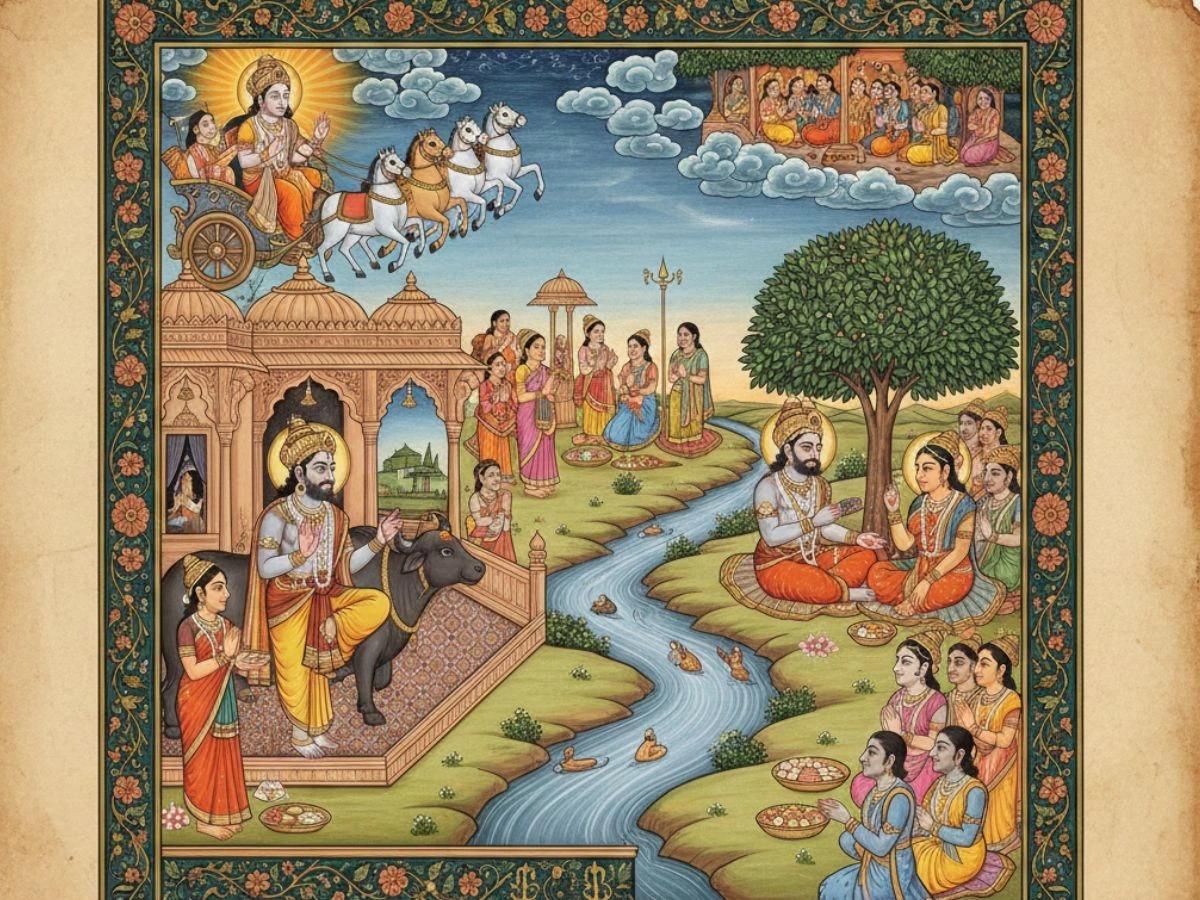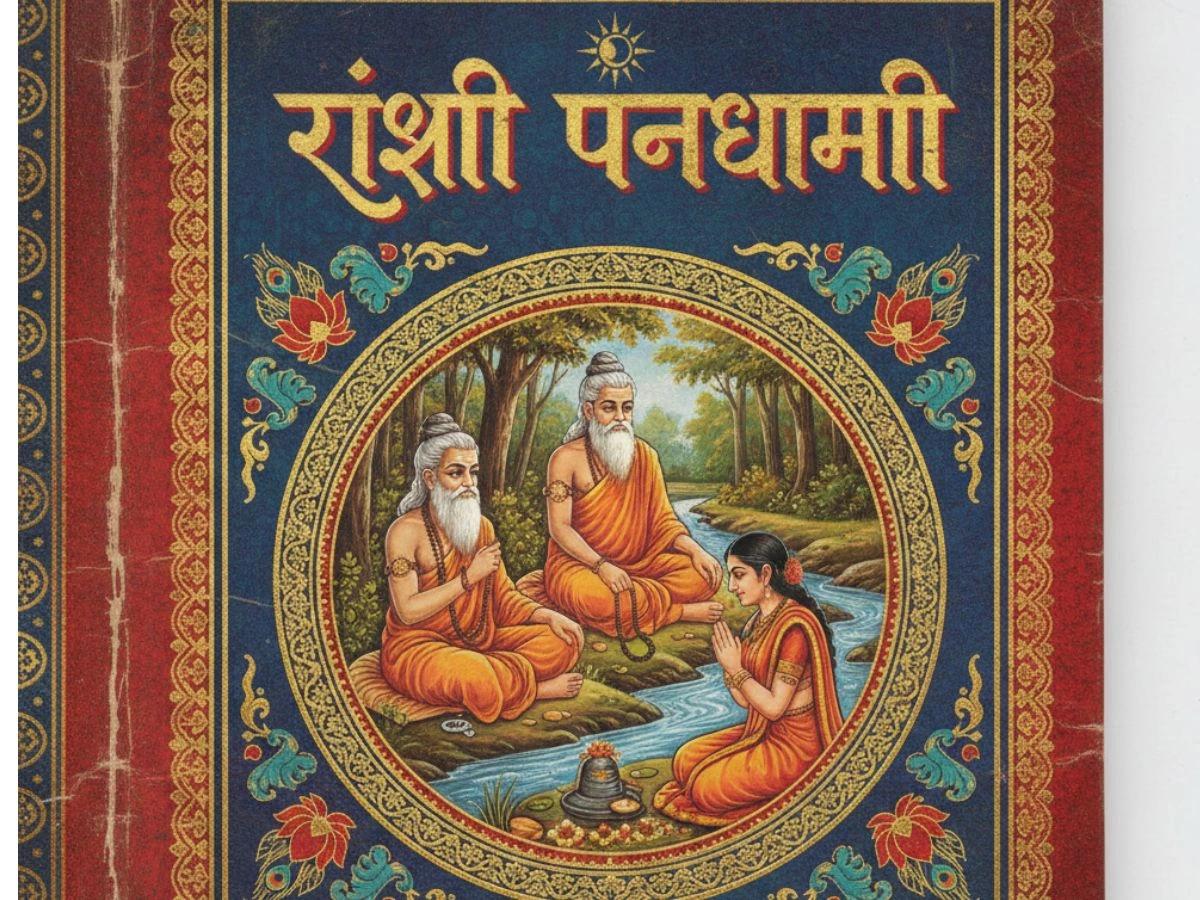
Rishi Panchami Vrat Katha is an important Hindu observance dedicated to the seven great sages known as the Saptarishis. This Vrat is observed mainly by women, especially after Hartalika Teej and Ganesh Chaturthi, as a ritual of purification and spiritual cleansing.
The word “Rishi” means sage, and “Panchami” refers to the fifth day of the lunar fortnight. This sacred day falls on the Shukla Panchami of the Bhadrapada month in the Hindu calendar. Devotees believe that observing this Vrat helps cleanse past mistakes and brings blessings of wisdom and peace.
ऋषि पंचमी व्रत कथा
प्राचीन समय की बात है। एक नगर में एक धर्मपरायण ब्राह्मण अपनी पत्नी और पुत्री के साथ रहता था। उनकी पुत्री अत्यंत संस्कारी और धार्मिक थी। एक दिन अनजाने में उसने मासिक धर्म के समय शुद्धि नियमों का पालन ठीक से नहीं किया। उस समय उसे इन नियमों का पूर्ण ज्ञान नहीं था।
कालांतर में जब उसकी मृत्यु हुई तो अगले जन्म में उसे कीड़े के रूप में जन्म मिला। उसके माता पिता को अपनी पुत्री की यह स्थिति जानकर अत्यंत दुःख हुआ। उन्होंने विद्वान ऋषियों से इसका कारण पूछा।
तब सप्तऋषियों ने बताया कि मासिक धर्म के समय शुद्धाचार का पालन न करने के कारण उसे यह कष्ट मिला है। यदि वह श्रद्धा और नियमपूर्वक ऋषि पंचमी व्रत का पालन करे और सप्तऋषियों की पूजा करे, तो उसे इस पाप से मुक्ति मिल सकती है।
ब्राह्मण दंपत्ति ने पूरे विधि विधान से ऋषि पंचमी का व्रत किया। उन्होंने सप्तऋषियों की पूजा की, कथा सुनी और दिनभर उपवास रखा। उनकी श्रद्धा और भक्ति से प्रसन्न होकर सप्तऋषियों ने उनकी पुत्री को पूर्व जन्म के पापों से मुक्त कर दिया और उसे उत्तम जीवन प्रदान किया।
Rishi Panchami Vrat Katha Significance
The Rishi Panchami Vrat Katha holds deep spiritual meaning. It emphasizes purity, discipline, and respect for ancient sages who preserved sacred knowledge.
When is Rishi Panchami Observed?
Rishi Panchami is celebrated on the fifth day (Panchami) of the bright fortnight (Shukla Paksha) in the month of Bhadrapada, usually in August or September.
Who are the Saptarishis?
The Vrat is dedicated to the Saptarishis, the seven legendary sages:
- Kashyapa
- Atri
- Bharadvaja
- Vishvamitra
- Gautama
- Jamadagni
- Vashistha
These sages are believed to be the custodians of Vedic wisdom and spiritual discipline.
Rishi Panchami Vrat Rituals
Performing the Vrat properly enhances its spiritual power.
Required Puja Samagri
- Clay or metal idols of the Saptarishis
- Kalash with water
- Mango leaves
- Rice grains
- Turmeric and kumkum
- Flowers
- Fruits
- Panchamrit (milk, curd, honey, ghee, sugar)
- Incense sticks and lamp
Fasting Rules and Restrictions
- Wake up before sunrise
- Take a bath using herbal leaves like Datura or Tulsi
- Observe a full day fast (fruit based or water only)
- Avoid grains and salt
- Listen to or recite the Rishi Panchami Vrat Katha
- Maintain purity in thoughts and actions
Spiritual and Personal Benefits
- Spiritual purification
- Forgiveness of past sins
- Mental peace
- Improved discipline
- Family harmony
Women and Rishi Panchami Vrat
Traditionally, women observe this Vrat to atone for any unintentional mistakes related to ritual purity. It is seen as a way to maintain spiritual cleanliness and devotion.
Regional Celebrations in India
Rishi Panchami is widely observed in Maharashtra, Gujarat, and Nepal. In Nepal, women gather near rivers to perform ritual baths and worship the Saptarishis collectively.
Scientific and Ethical Perspective
From a broader view, the Vrat promotes hygiene awareness and self discipline. The ritual bath and fasting support detoxification and mindfulness. It also encourages respect for natural biological processes.
Common Beliefs and Traditions
- Observing the Vrat removes accumulated karmic impurities.
- Worshipping the Saptarishis brings wisdom and clarity.
- Fasting strengthens spiritual focus and inner discipline.
Frequently Asked Questions (FAQs)
1. Who can observe Rishi Panchami Vrat?
Primarily women observe it, but anyone seeking purification may perform it.
2. Is fasting mandatory?
Fasting is recommended but can be modified based on health.
3. Can unmarried girls perform this Vrat?
Yes, they can observe it for spiritual growth.
4. What is the main purpose of Rishi Panchami?
It is observed for spiritual purification and forgiveness.
5. What should be avoided on this day?
Grains, salt, and impure thoughts should be avoided.
6. Is listening to the Rishi Panchami Vrat Katha necessary?
Yes, reading or listening to the story completes the ritual.
Conclusion
Rishi Panchami Vrat Katha is more than a ritual it is a journey of self awareness and purification. By honoring the Saptarishis and observing this sacred Vrat, devotees seek forgiveness, wisdom, and peace. The observance teaches that discipline and sincere devotion can transform one’s life.
Tirth provides a tranquil space to appreciate India’s spiritual heritage and fosters an environment to learn and celebrate during your own time and depth.