On this page7 sections
Twenty-four times a year, families keep a fast for Bhagwan Vishnu on Ekadashi, the 11th tithi (lunar day) of a fortnight. Every month has two such days, one in the waxing Shukla paksha and one in the waning Krishna paksha.
The question most homes end up asking is why some families fast a day after their neighbours. The answers sit below, along with the eleventh day and the rice.
In short
Every month has two such days, one in the waxing Shukla paksha and one in the waning Krishna paksha. The question most homes end up asking is why some families fast a day after their neighbours. The answers sit below, along with the eleventh day and the rice.
Why the 11th day and not another
The Moon slowly pulls ahead of the Sun, and every 12 degrees it gains marks one finished tithi. Fifteen tithis fill a paksha (fortnight). The eleventh of them is Ekadashi.
Two pakshas make two Ekadashis a month, so the year stands at 24, with two more when an adhik (leap) month is added. Every 2026 Ekadashi date is in our list.
The Moon keeps an uneven pace, so a tithi can run long or short. Delhi’s Devutthana Ekadashi 2026 is a fair example. It begins at 7:14 AM on 20 November and ends at 6:30 AM on 21 November.
| Ekadashi (Delhi) | Starts | Ends | Length |
|---|---|---|---|
| Devutthana Ekadashi | 7:14 AM, 20 November 2026 | 6:30 AM, 21 November 2026 | 23 hours 16 minutes |
| Gita Jayanti Ekadashi | 10:08 PM, 19 December 2026 | 8:13 PM, 20 December 2026 | 22 hours 5 minutes |
Neither runs to 24 hours, and neither begins at midnight. These times are from the Tirth Spiritual Calendar; open today’s Panchang, Panchang on Tirth and you can see the same working for whichever day you pick.
Ekadashi vrat kyu rakhte hai: the reasons families give
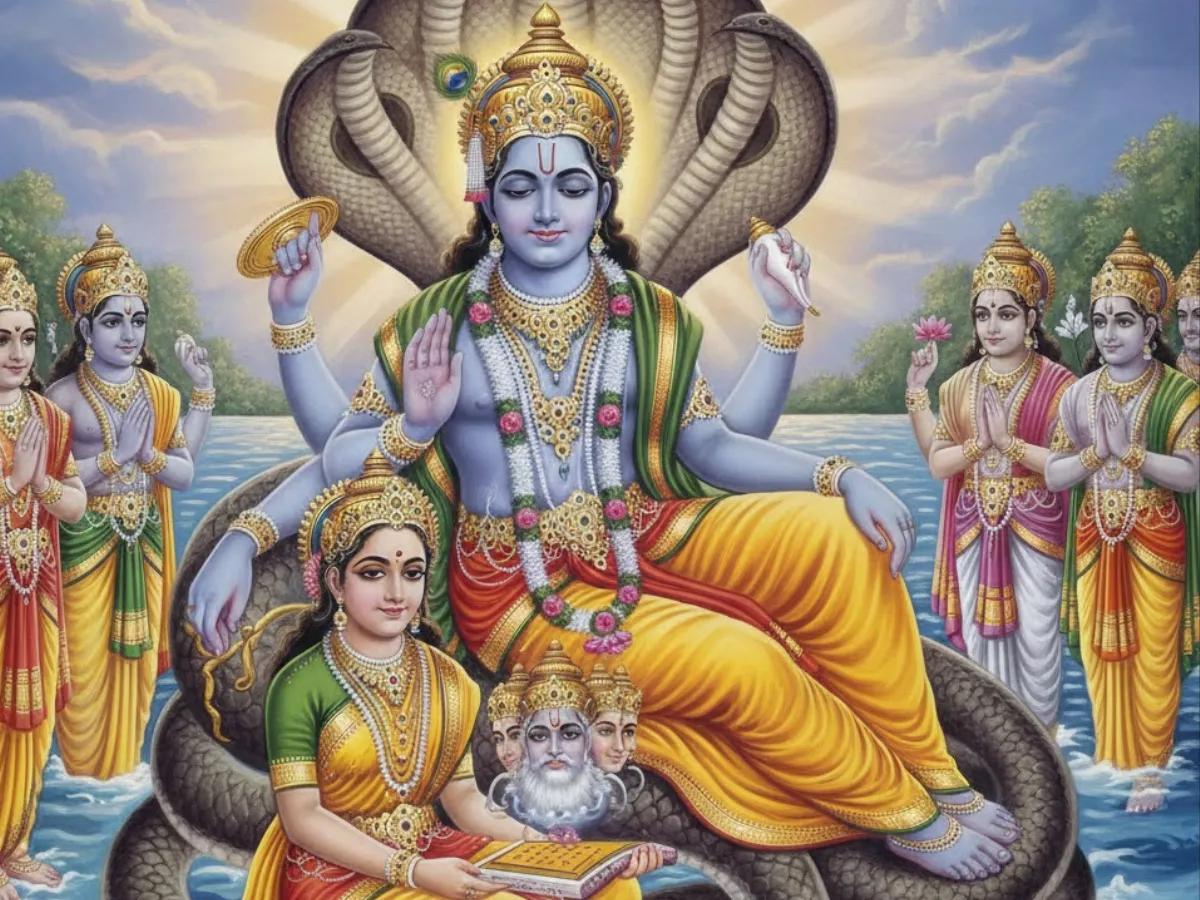
Devotion comes first. Bhagwan Vishnu owns this day, and a light stomach leaves the mind free for his name. For words to say, start with the Vishnu mantras with their meaning.
Then the texts. For the Dharma Sindhu, an 18th-century rulebook for religious observance, Ekadashi upavasa (fasting) is compulsory for Vaishnavas, Shaivites and worshippers of Surya Dev, and it says anyone from age 8 to 80 may keep the vrata. The book also states that the vrata carries the fruit of a hundred yagnas. That is the text’s own claim, and it is not ours to promise.
The same text is gentler on this point: it lets anyone who cannot manage a full fast take fruit, milk, water or ghee. A missed fast can be made up on Dwadashi, the twelfth tithi.
King Ambarisha is the best-known keeper of the vow: the Bhagavata Purana (Canto 9, Chapter 4) has him keeping Ekadashi and Dwadashi for a year. How Ekadashi herself came to be is a different tale, kept in the Ekadashi Devi story and not repeated here.

A small fast you can hold to beats a grand one dropped by noon, in our view. If a health condition is part of your life, ask your doctor before fasting at all.
Why is rice not eaten on Ekadashi?
Rice sits inside a wider rule. In many homes the fast leaves out grains and legumes, which takes rice out along with wheat, millets, dals and beans. Family and region decide how the rule is put into words, and which grains count.
Each family has its own reason for the rice. The popular telling is about Sage Medha, who gave up his body after a curse. His essence is said to have become rice and barley, so eating rice on Ekadashi is like eating the sage. It is a popular telling with no named text behind it, and no printed Purana we could check holds it.
How strictly a household keeps the day decides the rest. The usual grades, strictest first:
- Nirjala, with neither food nor water.
- Jalahar, water only.
- Ksheerbhoji, milk and milk products.
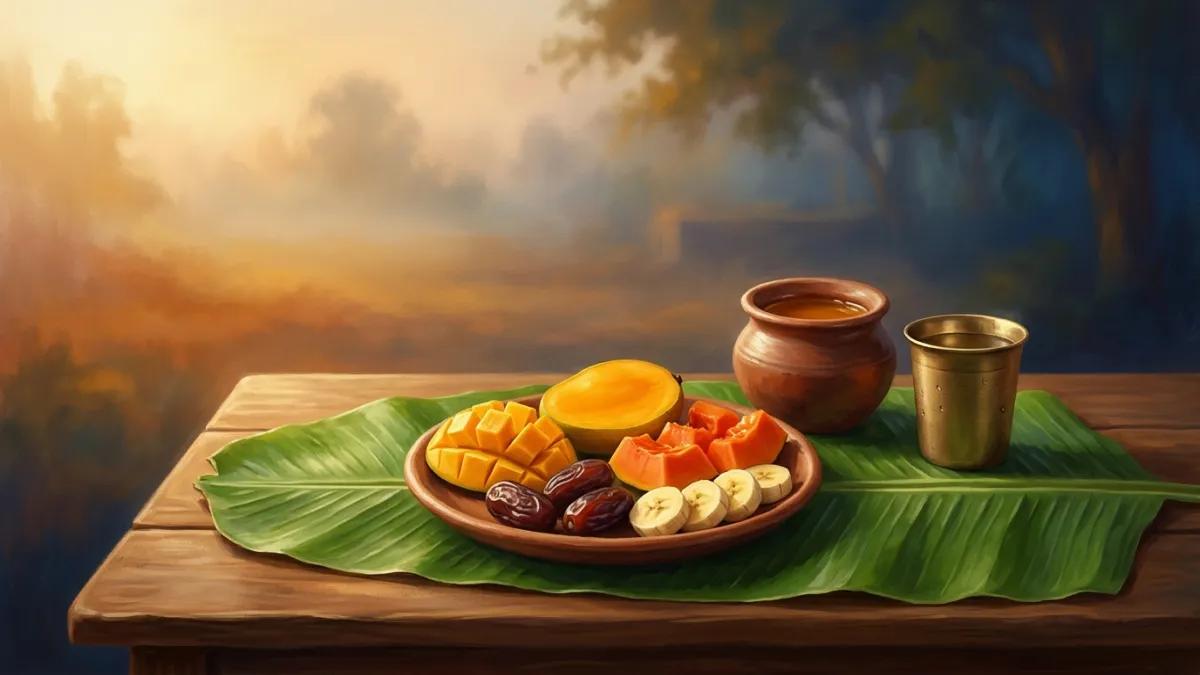
- Phalahari, fruit only.
- Naktabhoji, one evening meal of sabudana, singhada, potato, sweet potato or groundnut.
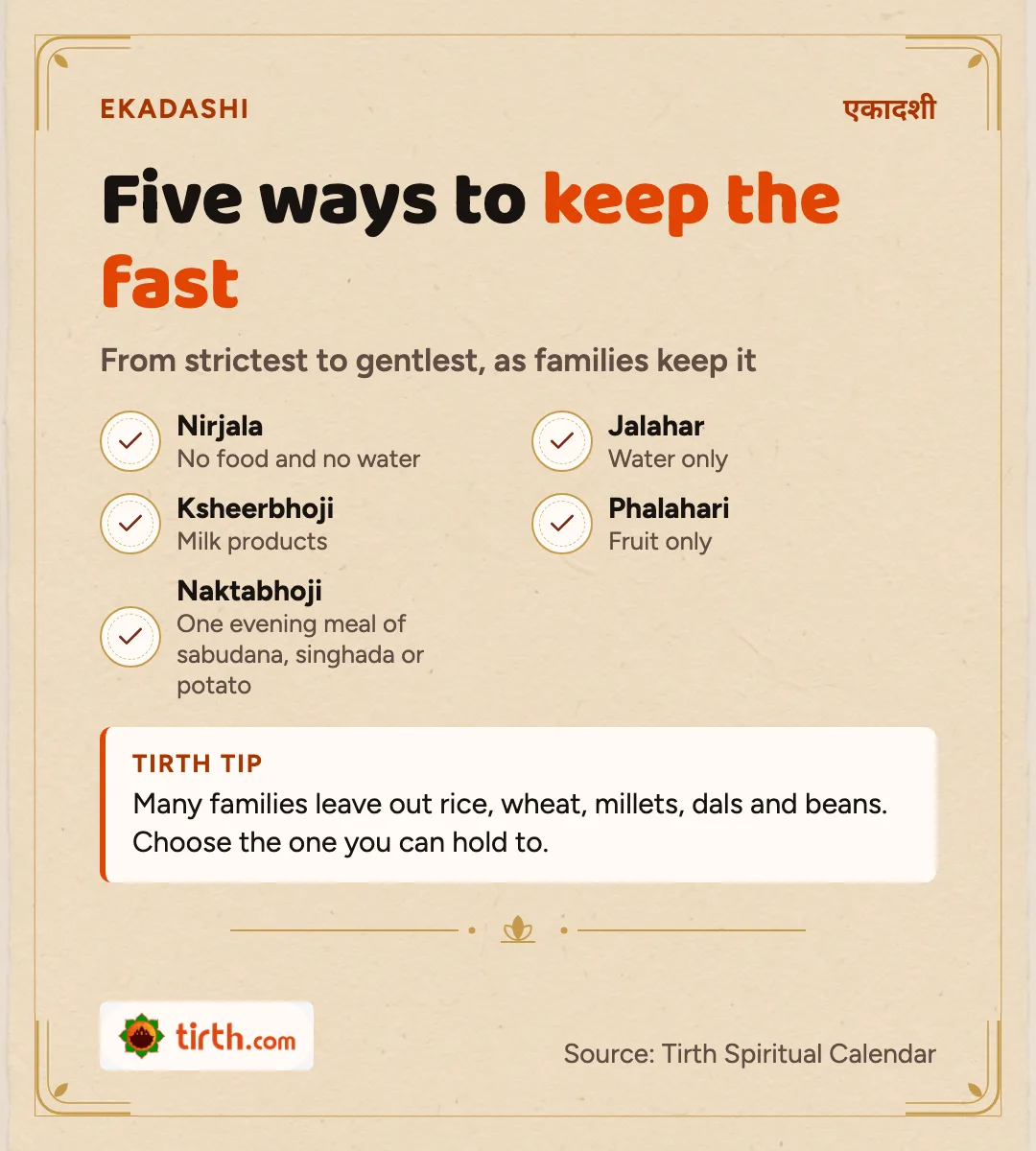
Houses differ on how strict to be and which grains count. Follow your own family, and ask the elder who keeps the fast, since each household has its small variations.
Why Ekadashi falls on different days for different families
Two schools decide the day. The Smarta way is to keep the first day that carries Ekadashi, even when the tithi begins after that morning’s sunrise. In Delhi in 2026 that is 20 November, although Ekadashi starts at 7:14 AM, after sunrise. The Vaishnava way asks that Ekadashi be clear of Dashami (the tenth tithi) a little before sunrise, at the time called arunodaya, and that is how their fast can land a day after the Smarta one.
Place matters too. The tithi ends at one moment for everybody, yet sunrise arrives at different hours. Devutthana Ekadashi 2026 ends at 6:30 AM on 21 November. Delhi’s sunrise that day is 6:48 AM and Jaipur’s 6:50 AM, so the tithi is over before the sun is up. In Kolkata the sun rises at 5:52 AM and in Chennai at 6:10 AM, with Ekadashi still running.
The Tirth Spiritual Calendar lists the Devutthana Ekadashi 2026 fast on Friday 20 November, the first day the tithi touches in Delhi. Families who follow the Vaishnava rule keep it on Saturday 21 November, since Dashami is still running in the early hours of the 20th. For your own city’s day and parana time, open the Tirth Spiritual Calendar vrat page.
How and when the fast is broken
Breaking the fast is parana. Do it on Dwadashi, after sunrise, and finish before the Dwadashi tithi ends. The day before, on Dashami, the Dharma Sindhu also asks for just one simple meal, so that the fast begins from a light stomach.
For your city’s parana window, open the same calendar.
Frequently asked questions
The 11th tithi of each paksha. It comes twice a month, and families keep it as a fast for Bhagwan Vishnu, 24 times in a normal year.
It falls under the grain restriction, which in many homes also covers wheat, dals and beans. The Sage Medha story is told as the reason, though no printed Purana we could find carries it.
Twenty-four in a normal year, one in each of the two pakshas of every month. A year that carries an adhik month has two more.
On Dwadashi, after sunrise, and before the Dwadashi tithi ends. Before you plan the day, look up your city’s exact time in the Tirth Spiritual Calendar.
Smarta families keep the first day that carries Ekadashi. Vaishnava families need Ekadashi clear of Dashami a little before sunrise, at arunodaya. That is why the two can fall on neighbouring days.
Yes, in a lighter form: the Dharma Sindhu allows fruit, milk, water or ghee for anyone who cannot keep a full fast. With a health condition, speak to your doctor first.
Continue on Tirth
- Tirth Spiritual Calendar vrat page: the fasting day and parana time for your city.
- Tirth Spiritual Calendar, Spiritual Calendar on Tirth: festivals and their dates by city.
- Ekadashi Aarti: the words to sing on the day.
- Every Ekadashi of 2026: the full year at a glance.