On this page7 sections
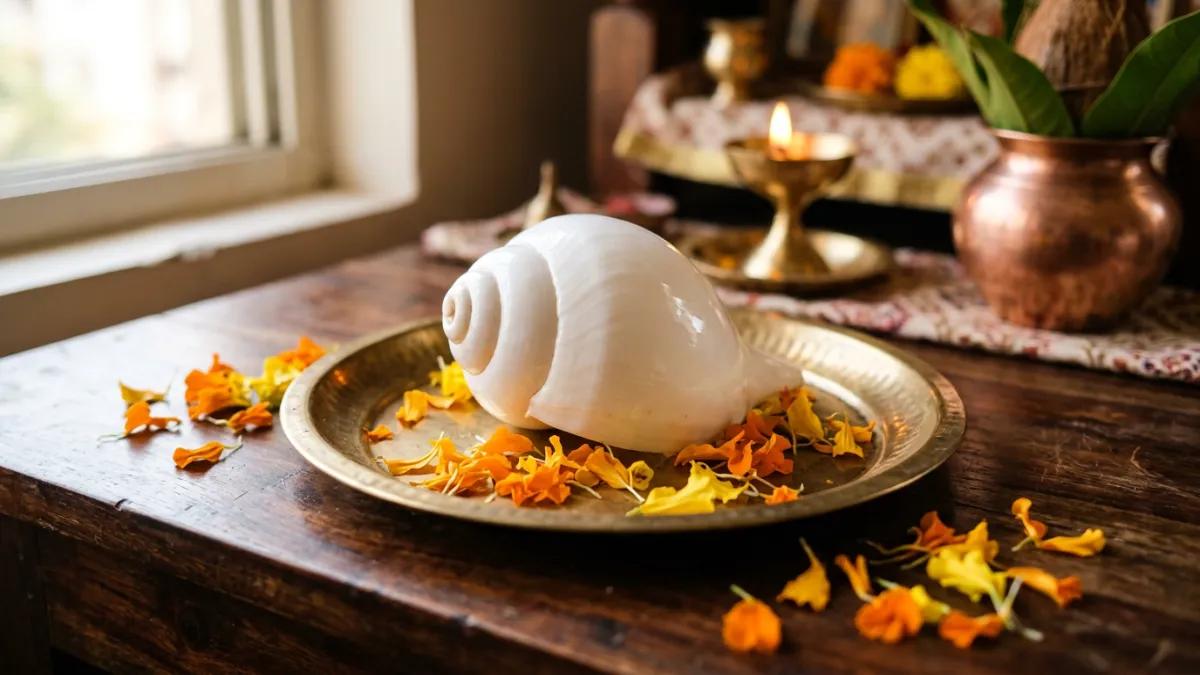
It is Panchajanya, the conch in Bhagwan Vishnu’s hand, and its sound is what tells you, in many temples, that the sanctum doors are opening and the aarti is about to begin.
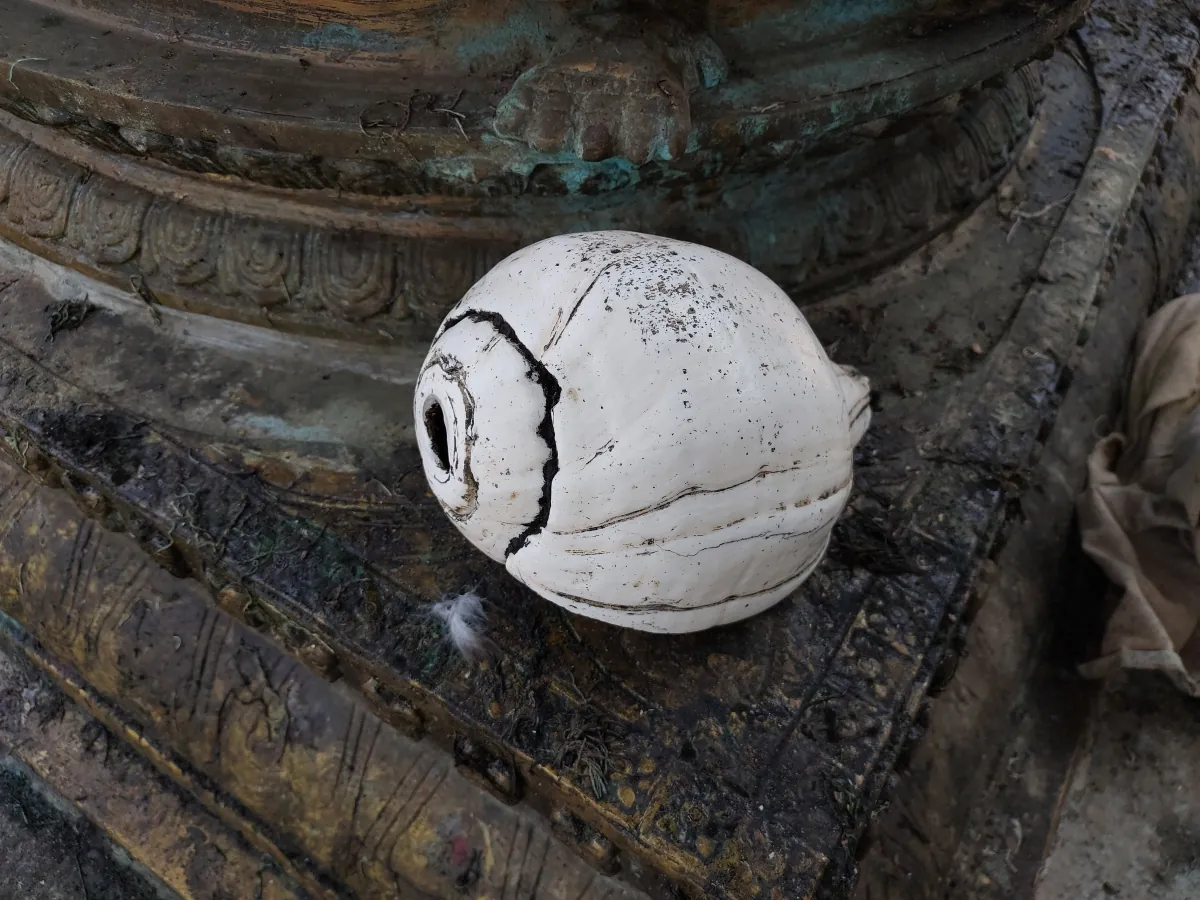
Look at the one being blown and you will see a hole cut at its tip.
The conch Bhagwan Krishna, Deity page on Tirth blows has a story behind it, and it starts with a teacher whose son had died.
In short
Look at the one being blown and you will see a hole cut at its tip. The conch Bhagwan Krishna blows has a story behind it, and it starts with a teacher whose son had died.
Is there a story behind Bhagwan Krishna’s conch?
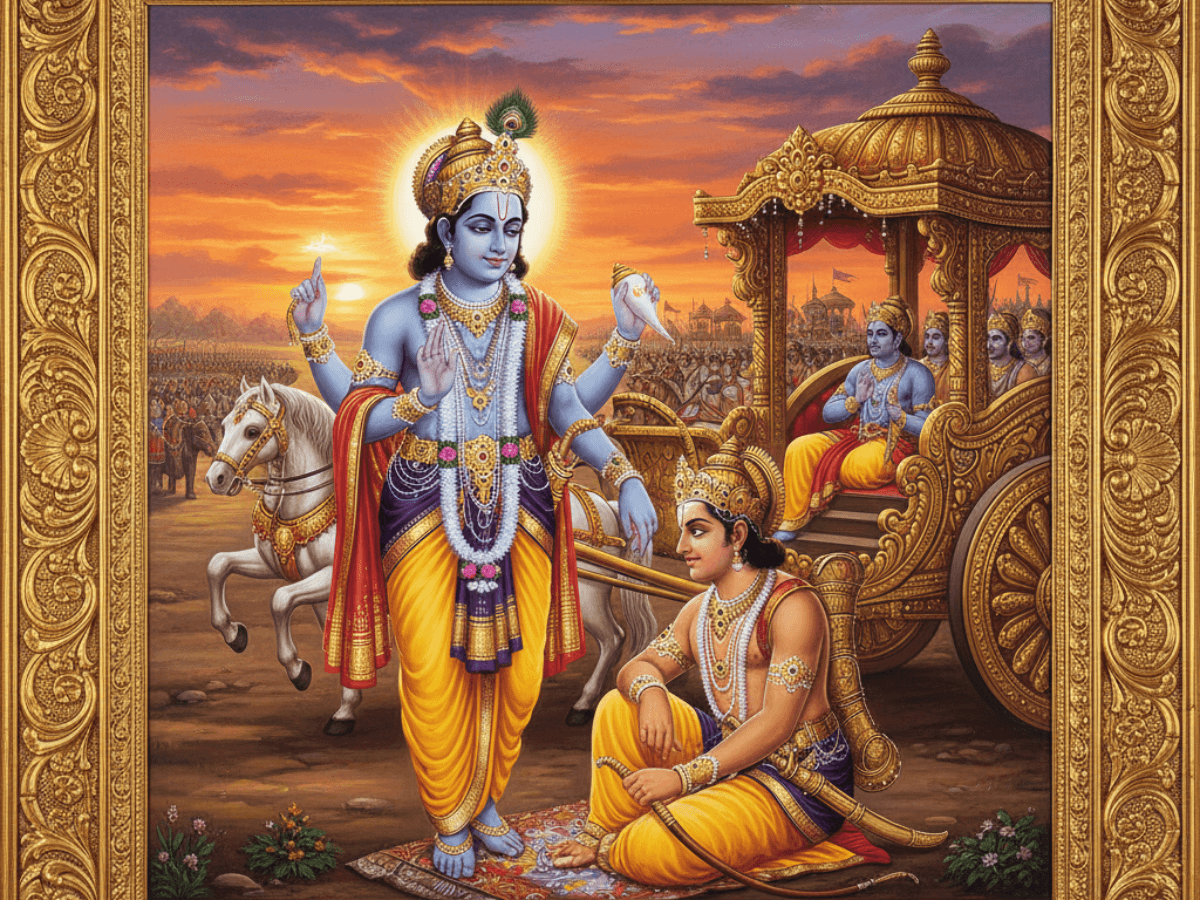
Bhagwan Krishna’s guru Sandipani asked him for his gurudakshina (the gift a student owes his teacher); he asked for his son. Back from the dead.
From here the Bhagavata Purana takes over (10.45.40 to 42). According to it, the ocean told Bhagwan Krishna who had the boy, a demon named Panchajana who was hiding in the water in the form of a conch. Bhagwan Krishna went in after him. He killed the demon and took the conch that had formed from its body.
You may have heard another origin, that the conch came up when the ocean was churned. Popular lists of the treasures do include it. The four best-known tellings leave it out. Go through the four best-known tellings of the churning of the ocean, in the Bhagavata, the Vishnu Purana, the Mahabharata and the Valmiki Ramayana, and there is no conch in any of their lists of what came up. In 1840 H. H. Wilson wrote that the conch had been added to the popular lists on sectarian grounds.
What are the six conches named in the Bhagavad Gita?
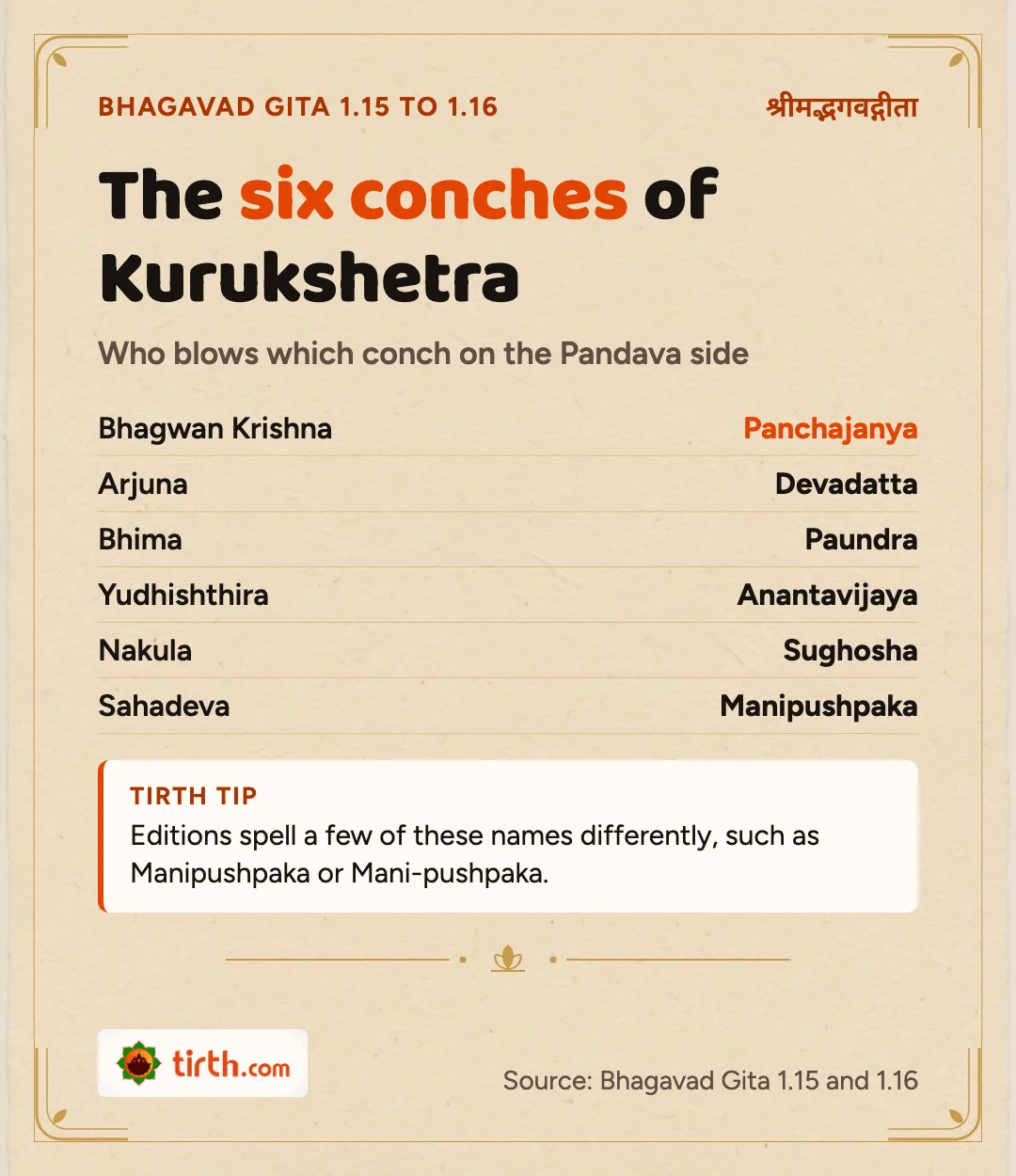
Panchajanya turns up again in the opening chapter of the Bhagavad Gita. Two verses, 1.15 and 1.16, name six conches on the Pandava side, each with a name of its own. Panchajanya comes first.
| Warrior | Conch | Where the Gita names it |
|---|---|---|
| Bhagwan Krishna | Panchajanya | Bhagavad Gita 1.15 |
| Arjuna | Devadatta | Bhagavad Gita 1.15 |
| Bhima | Paundra | Bhagavad Gita 1.15 |
| Yudhishthira | Anantavijaya | Bhagavad Gita 1.16 |
| Nakula | Sughosha | Bhagavad Gita 1.16 |
| Sahadeva | Manipushpaka | Bhagavad Gita 1.16 |
Your family Gita may spell a couple of these differently. Spellings drift between editions (Mani-pushpaka, Ananta-Vijaya etc.), so a copy that prints them a little differently from this table has not got them wrong. And if the warriors themselves are a blur, Tirth’s page on the five Pandavas goes through who each one was.
In which hand does Bhagwan Vishnu hold the conch?
The conch is one of four things Bhagwan Vishnu, Deity page on Tirth holds in his images, with the discus, the mace and the lotus. His conch is Panchajanya.
No single hand is the right one. The murti at the temple down the road can carry the conch in one hand while the calendar print in your kitchen has it in another, and neither of them is a mistake (handy to know before somebody at home starts a debate about it).
Shankha is an old word, too. You find it in the Rigveda and the Atharvaveda, used for the shell and also for the trumpet made out of it. Tirth keeps the Vishnu mantras with meaning on a page of their own.
When do you blow the shankha during a puja?
In many temples the conch sounds as the sanctum doors open, again when the aarti starts, and a last time once abhishekam (the bathing of the deity) is over.
Your family might sing Om Jai Jagdish Hare, or an aarti handed down at home. Either way, the sound is traditionally taken as an invitation to the deity. Temples differ on this, and so do families. Where your Pandit has a way of his own, go with it.
A puja shelf can hold two shells, and they are not interchangeable.
The one you blow has the hole. A shell kept for abhishekam has no hole, so nobody can blow it. It is there for the bath. The lamp and the incense on that same thali have pages of their own as well, the lamp in worship and incense in worship, and more symbols are gathered under meaning and symbols.
Which sea snail does the shankha come from?
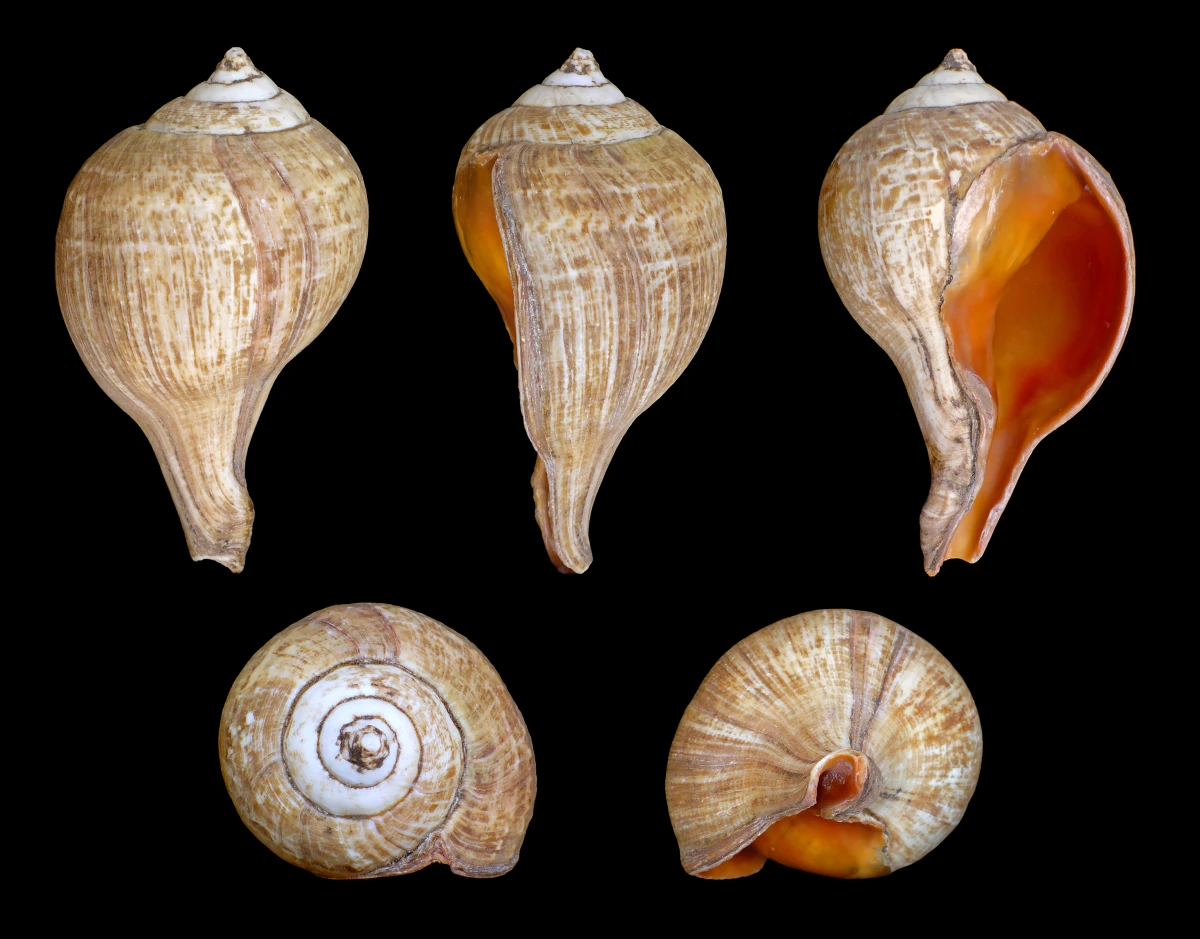
Turbinella pyrum. That is the large sea snail behind the shankha, known as the Indian sacred chank.
It is a thick-shelled gastropod of the shallow seas between India and Sri Lanka, and you will not find it anywhere outside the Indian subcontinent, its range running from the Gulf of Mannar and Palk Bay across to the south-eastern Arabian Sea. The chank is collected off Tamil Nadu and Kerala, at Thoothukudi, Keelakarai and in the Gulf of Mannar. Dead shells are gathered as well. One fisheries case study at Thoothukudi looked at precisely that harvest.
Frequently asked questions
It is Bhagwan Vishnu’s emblem. His conch is called Panchajanya, and he holds it along with the discus, the mace and the lotus. Its sound opens sacred moments in worship, the start of aarti among them.
Many temples blow it when the sanctum doors open, when aarti starts and when abhishekam ends. Its sound is taken as an invitation to the deity. For home worship, go by your family’s own custom on timing.
It is the name of Bhagwan Vishnu’s conch, the same one Bhagwan Krishna blows in Bhagavad Gita 1.15.
A large sea snail, Turbinella pyrum, called the Indian sacred chank. You find it only around the Indian subcontinent, in the Gulf of Mannar, Palk Bay and the south-eastern Arabian Sea.
Not in the four best-known tellings. The Bhagavata, the Vishnu Purana, the Mahabharata and the Valmiki Ramayana all leave it off their lists of treasures. Popular lists add it, and in 1840 H. H. Wilson called that a sectarian addition.
Continue on Tirth
- Bhagwan Vishnu on Tirth, Deity page on Tirth for who he is and the four things he holds.
- The churning of the ocean for the full story and the treasures each telling lists.
- Om Jai Jagdish Hare aarti with its words and meaning, for the moment the conch is blown.
- Book a puja with Tirth, Pujas on Tirth when you want a Pandit to do the worship for your family.