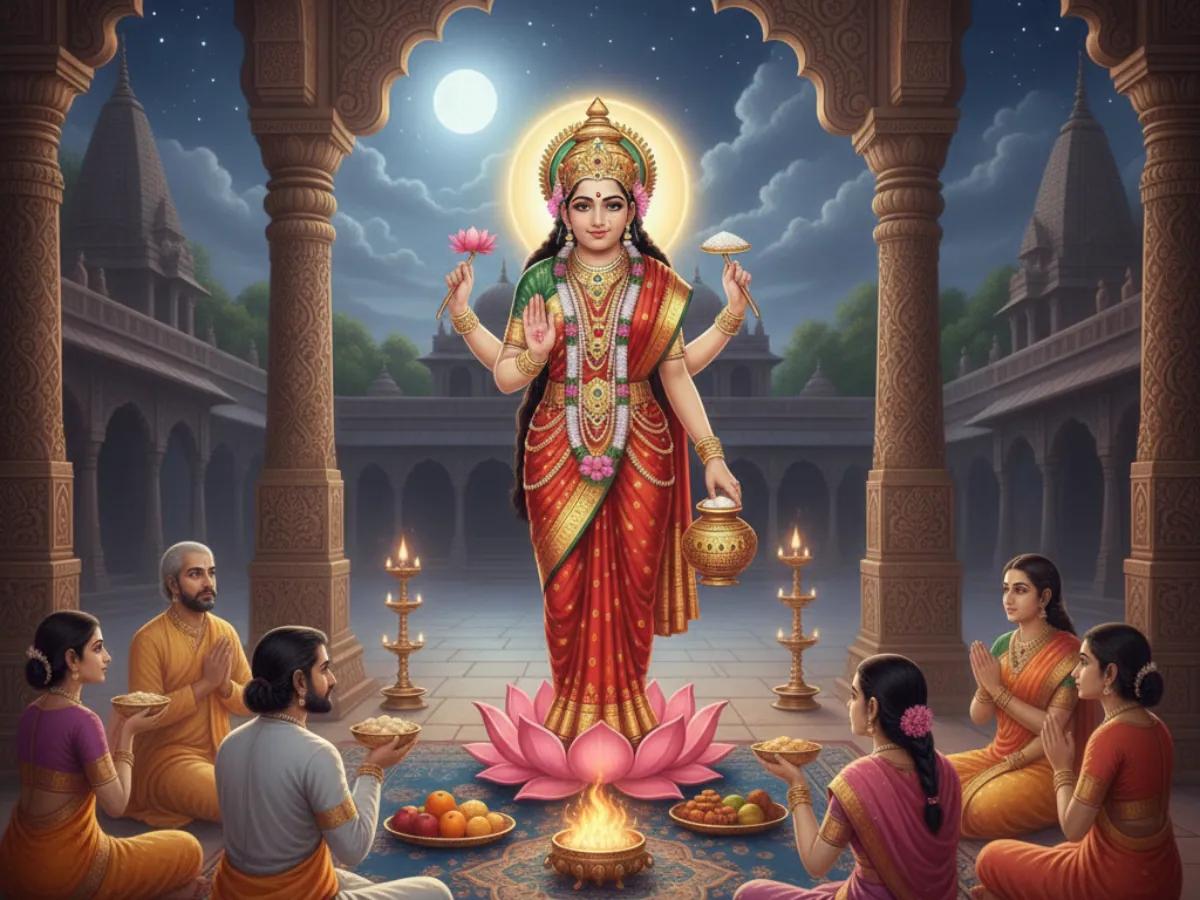
If you’ve ever stood in a kitchen where someone’s cooking with love really cooking you’ve felt her presence already. The quiet, nourishing energy that fills a home with warmth and promise, that’s Maa Annapurna.
Her name means “the one who fills” not just with food, but with grace, with satisfaction, with peace. When you chant the Annapurna Mantra, you’re not asking for luxury. You’re asking for enough. For fullness. For the kind of abundance that feeds body and soul alike.
1. The Kailash Mantra
Mantra:
Kailasachala Kandaralaya Kari Gauri Uma Shankari Kaumari Nigamartha Gocharkari Omkar Bijakshari | Moksha Dwara Kapat Patan Kari Kashipuradhishwari Bhiksham Dehi Kripavalambanakari Maat Annapurneshwari ||
This is one of the oldest invocations a prayer that calls out to the goddess who dwells near Mahadev on Mount Kailash. She is liberation itself, the mother of Kashi, the one who gives food as alms, not to beggars but to every hungry heart.
2. The Yogananda‑Giving Mantra
Mantra:
Yoganandakari Ripukshayakari Dharmartha Nishthakari Chandrarkanalabhasa Manalahari Trailokya Rakshakari | Sarvaishwarya Samasta Vanchitakari Kashipuradhishwari Bhiksham Dehi Kripavalambanakari Maat Annapurneshwari ||
This mantra praises her as the bringer of yogic bliss the one who destroys enemies, both inner and outer. Her power shines like the sun, the moon, and fire together. When you recite this, you’re asking her to nourish your body and your will so nothing stands between you and goodness.
3. The Cosmic Mother Mantra
Mantra:
Drishyadrishya Vibhuti Vahanakari Brahmand Bhandodari Leela Nataka Sutra Bhedanakari Vijnan Deepankari | Shri Vishwesh Manah Prasadanakari Kashipuradhishwari Bhiksham Dehi Kripavalambanakari Maat Annapurneshwari ||
Here, she’s seen as the one within whom the entire universe rests visible and invisible alike. She’s the playwright behind creation, weaving the strings of destiny with ease. She is also the giver of wisdom, lighting lamps in dark minds. When you chant this one, you’re essentially whispering “Let knowledge and sustenance go hand in hand.”
4. The Radiant Beauty Mantra
Mantra:
Nana Ratna Vichitra Bhushanakari Hemambaraadambari Muktahara Vilambamana Vilasad Vakshoja Kumbhantari | Kashmira Agaru Vasitangaruchire Kashipuradhishwari Bhiksham Dehi Kripavalambanakari Maat Annapurneshwari ||
You picture her here glowing, peaceful, dressed in gold and jewels not for vanity, but because even light wants to rest on her skin. Her perfume is saffron and sandalwood, her smile soft and knowing. When you chant this, you’re appreciating beauty as holy the grace in simple luxuries that sustain life.
5. The Eternal Bliss Mantra
Mantra:
Nityanandakari Varabhayakari Saundarya Ratnakari Nirdhuta Akhila Ghora Pavanakari Pratyaksha Maheshwari | Praleyachal Vansh Pavanakari Kashipuradhishwari Bhiksham Dehi Kripavalambanakari Maat Annapurneshwari ||
In this chant, she is the giver of joy, one hand raised in blessings, another in protection. She is mercy embodied the living presence of Maheshwari herself. Her grace cleanses fear and hunger and replaces them with contentment.
Who is Goddess Annapurna?
In the stories, she’s none other than Mata Parvati, the eternal Shakti of Lord Shiva the goddess who one day withheld food from the world to remind humanity that even ascetics need balance.
They say when Shiva realized his beloved was also the giver of sustenance, he extended his begging bowl to her and from that moment onward, she became Annapurna, the feeder of all.
Even today, it’s considered deeply auspicious to take her name before every meal. That small “thank you, Maa,” before you eat it’s a spiritual act.
Tradition says: keep your kitchen clean, share your food, and never waste what she’s given. If you can, offer food to the poor or a Brahmin on Ekadashi. That’s how her blessing multiplies.
How to Chant the Annapurna Mantra
Here’s how most devotees do it, though honestly, what matters is sincerity:
- Take a bath and wear clean clothes start fresh.
- Clean your home and kitchen purity attracts her energy.
- Sprinkle Ganga water around your kitchen or altar.
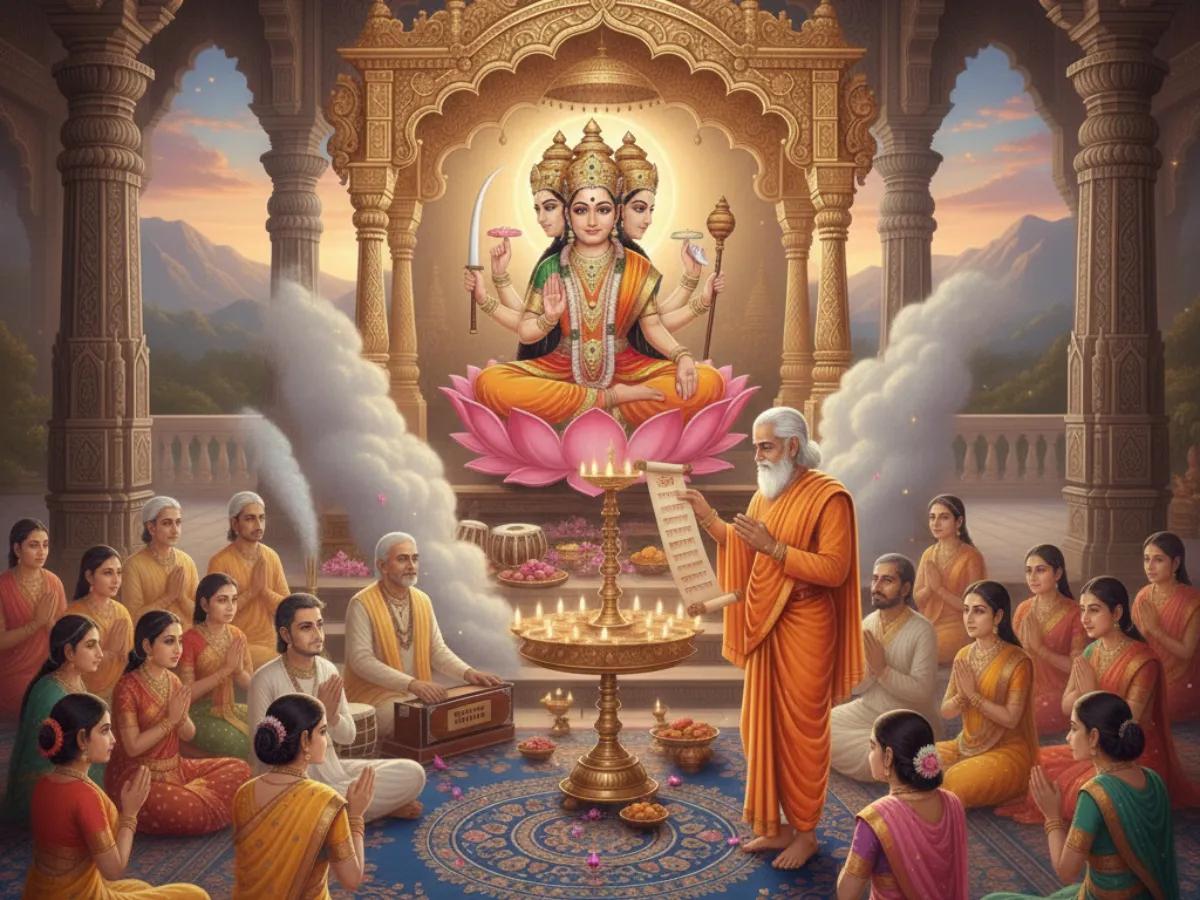
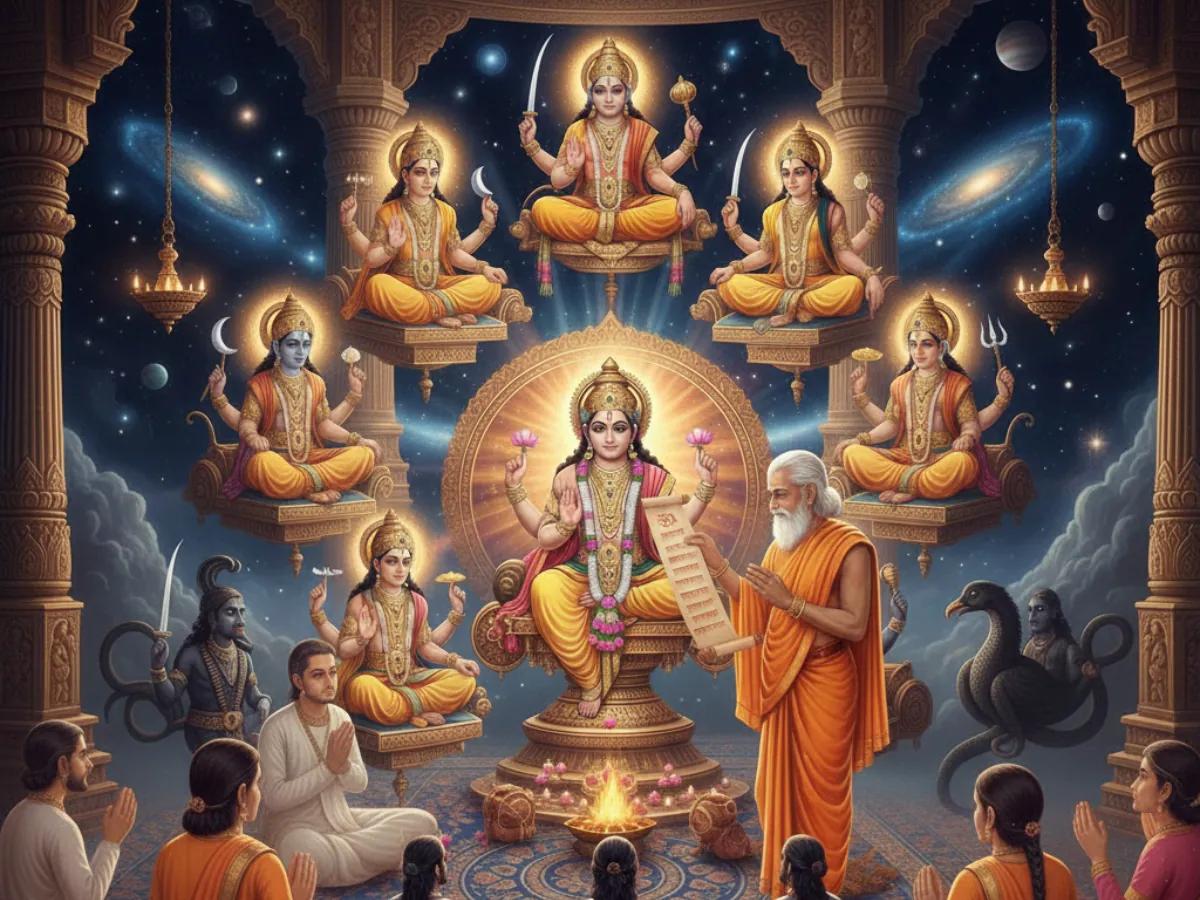
- Spread a yellow or red cloth and respectfully place idols or pictures of the Goddesssometimes with the Navagrahas beside her.
- Offer garments, jewelry, and flowerstokens of love, not display.
- Purify the cooking stove with a pinch of turmeric, kumkum, rice, and petals; light a ghee lamp and some incense.
- Begin chanting the Annapurna Mantra slowly, letting your breath match the rhythm of the words.
You’ll feel it the air in the room will shift, like gratitude taking shape.
Why People Chant Her Name
- To ensure food is always sufficient even in lean days.
- To keep hunger and scarcity away from the household.
- To bless the kitchen, the meals, the hands that cook.
- To strengthen the spirit of giving because no one who feeds others ever stays empty.
- To fill the home with warmth, fragrance, and quiet prosperity.
A Few Sacred Reminders
- Don’t eat until the chanting is done let food be prasad, not habit.
- Avoid tamasic food no meat, no garlic, no onion while performing the ritual.
- Keep your kitchen sacred and uncluttered.
- Never forget: to insult food or women is to dishonor Maa Annapurna herself.
When you say her name, you’re not just calling a goddess; you’re awakening gratitude. Every grain of rice becomes a blessing. Every meal, a prayer.
Because at the heart of it all Annapurna isn’t about fullness of the plate, but fullness of the heart.
Recommended Mantras:
Brihaspati Grah Mantra , Rudra Mantra , Krishna Mantras
Learn the Annapurna Mantra and its blessings at Tirth.com for abundance and nourishment.