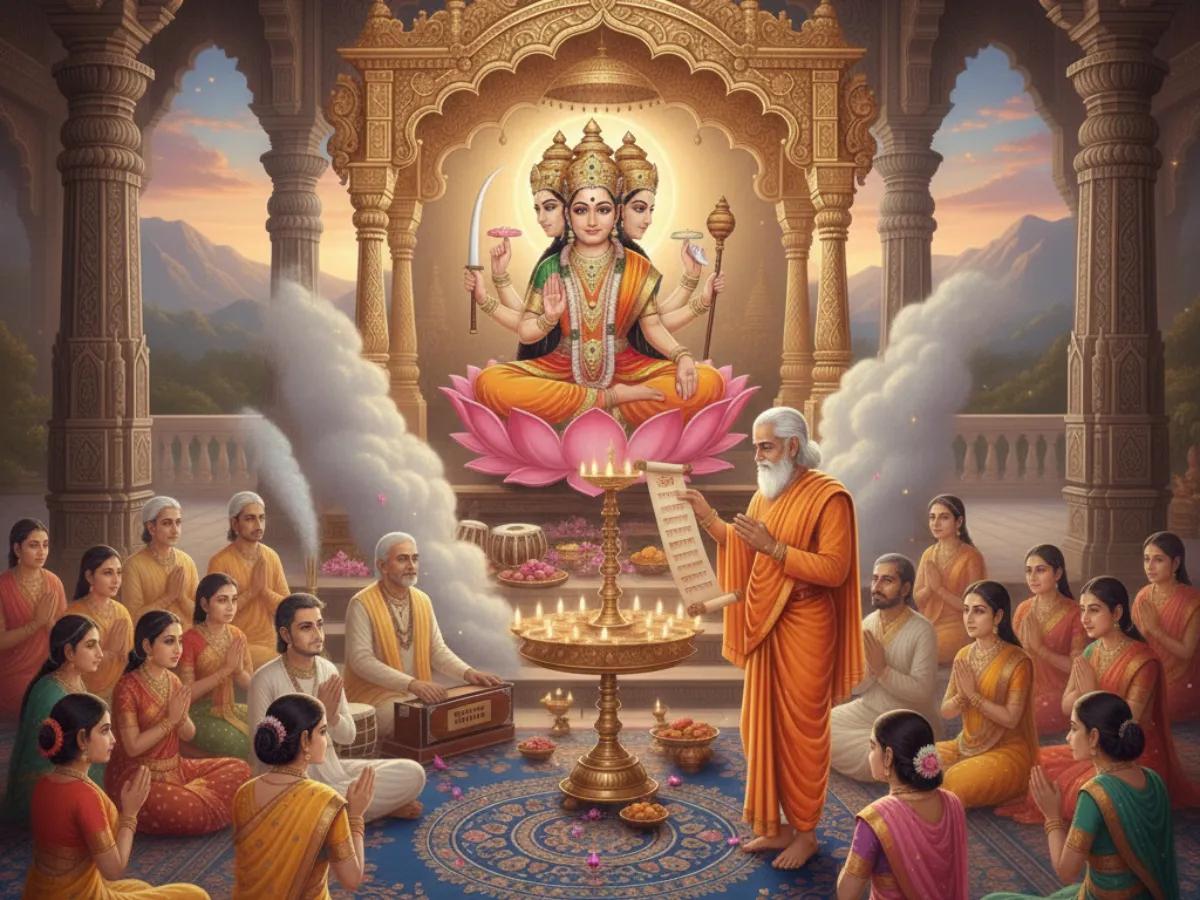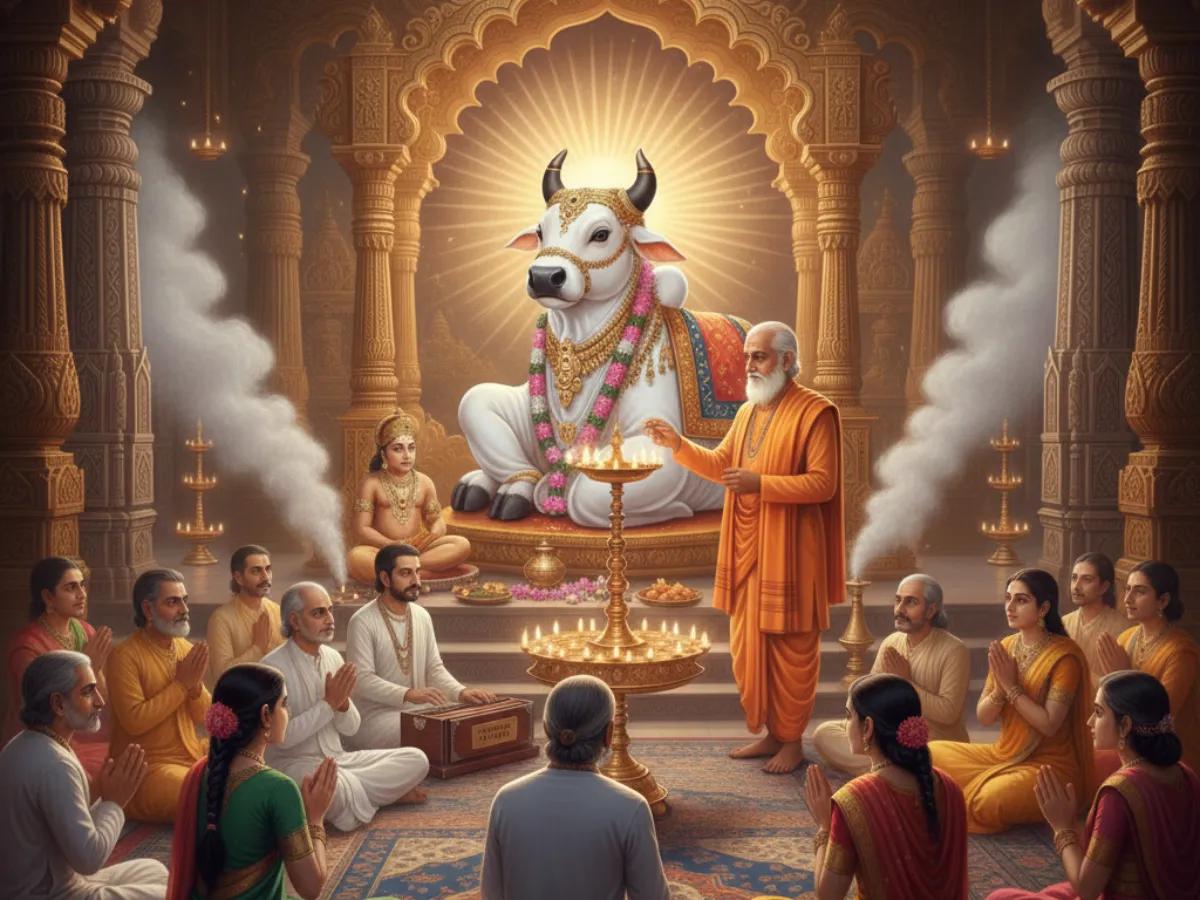
You know, there’s something quietly grounding about chanting to Nandi. People often look past him focus straight on the Shivling but Nandi is the first one who sees, the first one who listens. The Nandi Pooja Mantra calls his name not just for strength and discipline, but for that pure devotion, the kind that never wavers, no matter what storms through life.
When you chant it sincerely, you’re basically saying: “Let me stand steady in my faith. Let me face my path with courage. Keep my heart clean, and my resolve unshakable.”
Nandikeshwar Mantras
“Om Tatpurushaya Vidmahe, Nandikeshwaraya Dhimahi, Tanno Vrishabhah Prachodayat.”
Meaning:
O great Nandikeshwar, remover of suffering and protector of the devoted I bow before you. Grant me the strength to overcome my hardships and keep walking toward truth.
“Om Tatpurushaya Vidmahe Chakratundaya Dhimahi, Tanno Nandi Prachodayat.”
Meaning:
I meditate upon Lord Nandi, whose wisdom is fierce and guiding. May he illuminate my path and give clarity to my mind.
“Om Shivvahanaya Vidmahe Tundaya Dhimahi, Tanno Nandi Prachodayat.”
Meaning:
O Nandi, beloved of Lord Shiva and his most loyal servant bless me. Remove my suffering and fill my life with devotion and peace.
“Bhavesham Bhaveshanam Eedyam Suresham Vibhum Vishwanatham Bhavani Samardram Shrachchandra Gaatram Sudha Poorna Netram Bhaje Nandikeshwar Daridraartinasham.”
Meaning:
I worship Nandikeshwar, the destroyer of sorrow. His body glows like moonlight, his eyes flow with compassion. He uplifts the poor and protects the humble.
“Himadrau Nivaasam Sphuratchandra Chudam Vibhootim Dadhanam Maha Neelakantham Prabhum Digbhujam Shool Tangkayudhadhyam Bhaje Nandikeshwar Daridraartinasham.”
Meaning:
I bow to Nandi radiant as the Himalayan moon, carrying sacred ash upon his body, blue throated, wielding the trident and sword. May his blessings wash away my troubles and guide me to peace.
The Spirit of the Nandi Pooja
People sometimes forget that Nandi isn’t just Shiva’s gatekeeper he’s the bridge. He’s the one through whom prayers pass. They say that when you whisper your wish into Nandi’s ear at the temple, he carries your words straight to Mahadev himself.
In the old stories, when poison (Halahal) spilled onto Earth during the churning of the ocean, it was Nandi who licked that drop away so that no life would be harmed. Since then, he’s remembered not only as Shiva’s mount but as the embodiment of loyalty, strength, and service.
Nandi isn’t just a bull, though that’s how he appears. He’s a mind disciplined, steady, devoted the essence of dharma in motion. And in many Shaiva traditions, he’s the guru of great souls like Patanjali, Tirumular, and Vyagrapad. His wisdom is what anchors the path of yoga and meditation.
That’s why in every temple of Shiva, you’ll find Nandi sitting before the sanctum, facing the Shivling directly alert, unwavering, listening. That stillness? That’s devotion made stone.
The Story of Nandi and Lord Shiva
A long time ago, there lived a sage named Shilad a man so pure that even the winds slowed near him. But one day, a worry entered his heart: he had no child, and he feared his lineage would end with him. So he performed deep penance to please Lord Shiva, asking for a son who would be immortal and always under Shiva’s grace.
Time passed, and one morning Shilad found a baby in his field a child glowing with divine energy. A voice echoed in the air: “This is your son, Nandi.”
Nandi grew into a boy filled with faith. But when two wandering sages visited and blessed Shilad for long life, they paused and said nothing to Nandi. Concerned, Shilad asked why and was told that the boy’s life was short.
Nandi didn’t flinch. He smiled at his father and said, “If Lord Shiva gave me life, he will sustain it too.”
Then, with steady resolve, he began his penance meditating, chanting, surrendering completely. Pleased beyond measure, Shiva appeared before him, radiant and fierce, and said, “You are mine, Nandi. From this day forth, you will dwell with me, as my mount, my gatekeeper, my devotee eternal.”
From that moment, Nandi became the symbol of devotion itself the one who listens to every prayer that calls upon Lord Shiva’s name.
Benefits of Chanting the Nandikeshwar Mantra
Those who chant Nandi’s mantras with sincerity say the changes go beyond the visible. They bring discipline to the daily rhythm of life, faith to the uncertain heart, and strength where weakness once sat.
- Fulfills heartfelt desires
- Removes difficulties, obstacles, and unseen blockages
- Clears negativity and restless thoughts
- Brings success in work, progress in career and business
- Balances the effects of difficult planetary influences
- Brings peace, happiness, and prosperity at home
- Helps those longing for children
- Protects from envy and ill wishing
- Deepens devotion to Lord Shiva, especially when paired with chanting the Shiv Chalisa
Basically, chanting to Nandi isn’t about asking for miracles; it’s about asking for steadfastness to keep holding faith when things get rough.
Things to Keep in Mind During the Chant
A few traditions matter. Not because they’re strict, but because they ground your intention.
- Always bathe before chanting; start clean in body and heart.
- Avoid blowing the conch while chanting, it’s said to disturb Nandi’s meditative energy.
- Never offer Tulsi leaves or Ketaki flowers to Lord Shiva during this practice.
- Skip sindoor, turmeric, black sesame, or kumkum, these are not meant for Shiva’s rituals.
- Keep your focus gentle but firm. Don’t chant for show; chant to connect.
- And above all, chant with love. Because faith, when it’s simple, is more powerful than any ritual done by habit.
A Quiet Reflection
When you look at Nandi that stone figure sitting patient and watchful before the Lord remember what he truly represents: loyalty, purity, and attention so deep that even silence becomes prayer.
He doesn’t speak. He listens. He doesn’t move. He trusts. Maybe that’s the secret of real devotion not to beg endlessly, but to sit steady, heart open, and know that your prayer has already been heard.