Some celebrations are loud and boisterous. Firecrackers. Drumming. Parades that can be heard from three lanes away. Dussehra is one of these celebrations. However, if you listen closely, you can hear something quieter happening between all of that noise. A stillness. A moment where people pause and look inward. What needs to be let go of so something better can begin?
Understanding Dussehra: The Festival of Victory Over Evil
Dussehra comes like clockwork each year on the tenth day of the Ashwin month of the Hindu calendar. Dussehra reminds us that the struggle between good and evil is not something that can be found only in the ancient Hindu epic, the Ramayana. It is a struggle that exists all around us, in our homes, in our minds, within all of us.
The celebration is also called Vijayadashami, which rightfully issues a feeling of release after a long period of suffering, stillness after a battle. This is one of the many spiritual significances of Dussehra.
The Quiet Reverence of Dussehra Morning Prayers
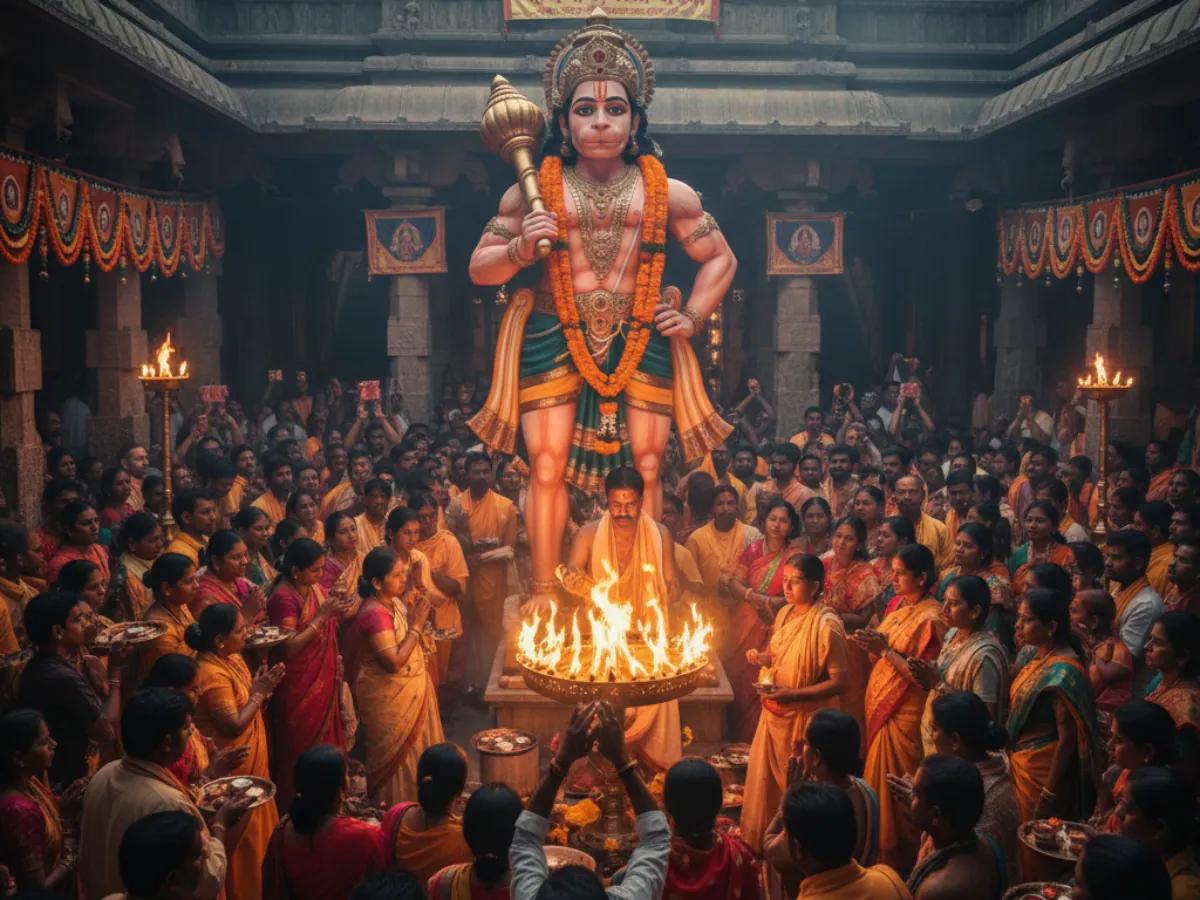
Those who have been to the morning Dussehra prayers at the temple, know what I mean when I say the air is different. People come quietly, some with flowers wrapped in newspaper, others with prayers that need no packaging. The bells ring, but softer and slower.
The Meaning Behind Dussehra and Vijayadashami
Dussehra embodies not being boastful about winning something. It is about difficult losses that may pay off down the road. For a pilgrim, Dussehra is a milestone in a long journey. It serves as a reminder that a journey is more important than the destination.
Etymology: Two Names, One Celebration
Dussehra and Vijayadashami are synonyms that celebrate the same events and tell the same stories. Both celebrate the death of Ravana and the shortening of the journey of the Ramayana by killing the ten headed demon.
Dussehra comes from the Sanskrit dasha and hara, referring to the death of Ravana, the demon king of the Ramayana. Vijayadashami literally means the celebration of winning. With Dussehra, there is a negative connotation and with Vijayadashami, it is positive. Secular and religious meanings of Dussehra are both important.
The Symbolism of Ravana’s Ten Heads
In truth, Ravana is no demon. Yes, Ravana is a demon king, an epitome of evil and a mythological character in the Ramayana. The ten heads are supposed to showcase evil from all walks of life:
- Anger and ego
- Greed and lust
- Jealousy and pride
- Fear and attachment
- Delusion
The burning of Ravana is an implicit acknowledgement of all the positive traits that overcome these negatives. We must remember that we have some negative qualities that we should try to change.
Self aware people do not need to be preached. The fire speaks for itself.
Why is Dussehra Celebrated in India?
Everyone knows that Dussehra is a widely celebrated festival in India. Dussehra is a festival that is celebrated to appreciate triumph over evil. Dussehra is of different lengths depending on the location and culture of the people who are celebrating it.
Dussehra Celebrations and Lord Rama’s Victory
The main personality in these celebrations is the one who is the epitome of all that is good and righteous Lord Rama. Every year, a large number of people participate in the Ramlila celebrations. These are theatrical performances that narrate the story of the good Lord Rama, who is pitted against the evil of the demon king Ravana. But these performances are not only for the entertainment of the audience. Through the story, the performances impart to the audience, regardless of their age, the importance of good and virtue in the society.
Ramlila performances are very special for the people of Ayodhya, as this city is Lord Rama’s place of birth and holds great historical value.
The Triumph of Goddess Durga
In the Indian Subcontinent’s Eastern Region, they observe the triumph of the Goddess Durga and the slaying of the demon king Mahishasura. Dussehra is a festival that is paradoxical in nature, as it encompasses the concept of the divine retreating and leaving a void, yet filling that void with a sense of purposeful strength, along with the promise that the divine will return, and the injustice will be addressed.
Customs of the Dussehra Celebration
It is appropriate to start with customs. Dussehra is widely recognized as the most appropriate festival for making a fresh start. As such, Dussehra is a time for setting new beginnings, as well as the establishing of other, or additional, intentions.
The Ceremony of Ravana Dahan
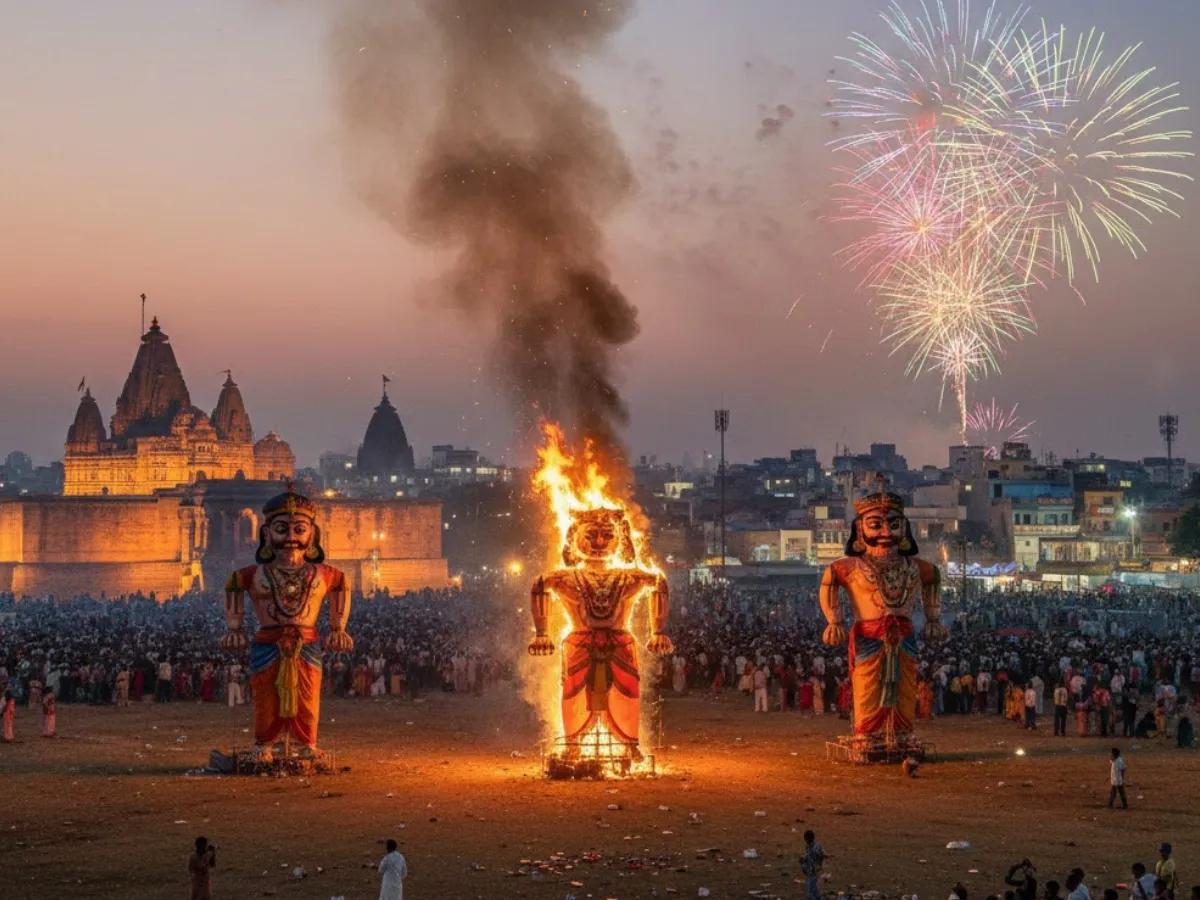
In the Ravana Dahan or the burning of the effigy of Ravana celebration, the exuberance and energy of the effigies, which is kissing the afternoon display of solemnity, is in the evening.
The crowds erupt with Ravana. Cheers like long held breaths that have just been freed. In that moment, the people will snap a picture with their phones as the effigy descends into the flames.
Everyone feels eyes on them. Children are carried on the shoulders of their guardians. People wait in long lines to buy food. An explosion of fireworks embarrasses some and delights others. Claps signal the start of a countdown, followed by a chant of eager excitement.
The event is entertaining and deeply meaningful.
Vijayadashami as an Auspicious Day
It is why the older generations choose to travel and start new businesses on this day. Gone are the struggles and complications of the past. Everything is free again.
Dussehra Celebrations in Various Parts of India
The geography and culture of India is diverse, and so are the celebrations of Dussehra across the country.
Dussehra in Northern India
In North India, the fires are lit, and the people celebrate with grand Ramlila performances and the burning of towering Ravana effigies. The celebrations are marked by vibrant processions and community gatherings.
Dussehra in Eastern India
In Bengal, the Goddess Durga is bid farewell on Vijayadashami. Women adorn themselves with sindoor, as farewell smiles accompany stifled tears. In some cases, to have faith, is to let go.
Dussehra and Travel
Some travel is most satisfying when it is done at the right time. Travel during Dussehra is one such instance.
Dussehra Travel Pilgrimages
Popular pilgrimage destinations during Dussehra include:
- Ram temples
- Shakti Peethas
- Ancient temples with Vijayadashami pujas
Such travel does not feel like tourism. Tirth.com fosters meaningful travel.
Dussehra’s Lessons in Modern Life
Dussehra doesn’t shout lessons. It whispers reminders:
- There are no shortcuts
- Everything catches up
- There’s no way around it: boring patience works
- Your internal battles are battles
How Families Celebrate Dussehra
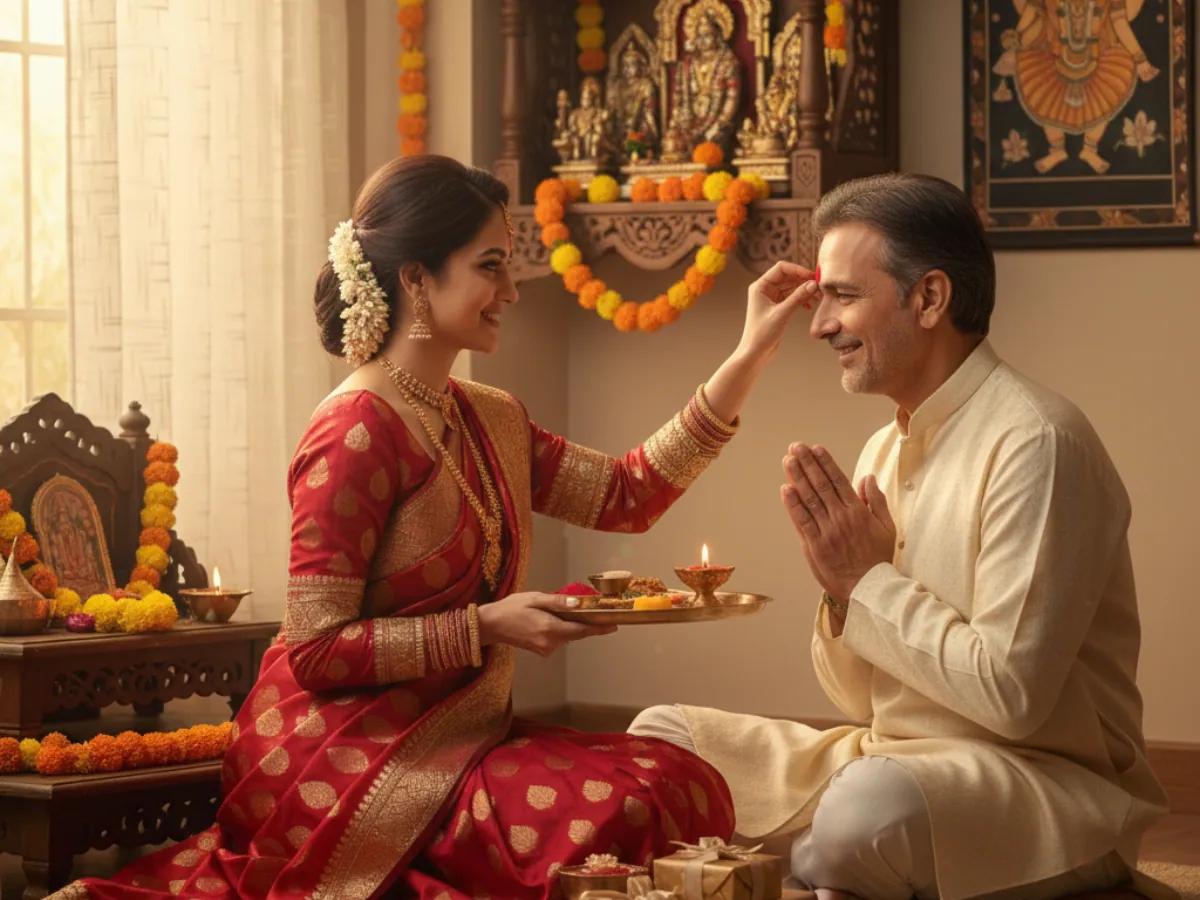
Dussehra is not always about the crowd. Some families just clean the house, light a lamp, recite a verse, and explain to the kids why Ravana had ten heads.
That is faith, and it survives in small places.
Best Time and Muhurat for Performing Dussehra Rituals
Rituals are best performed on the last day of the festival and at the zenith of the sun. The locals’ customs and other temples of the area serve as guides.
But devotion is what really counts.
Conclusion: A Festival of Meaningful Renewal
Dussehra doesn’t promise an easy life. Dussehra promises a meaningful life.
It reminds us that endings are not to be seen as failures. They are corrections. And Vijayadashami tells us to begin again.
With less ego.
With more faith.
And maybe, this time, with better intentions.
For background information on the significance of Dussehra, refer to Tirth.com.