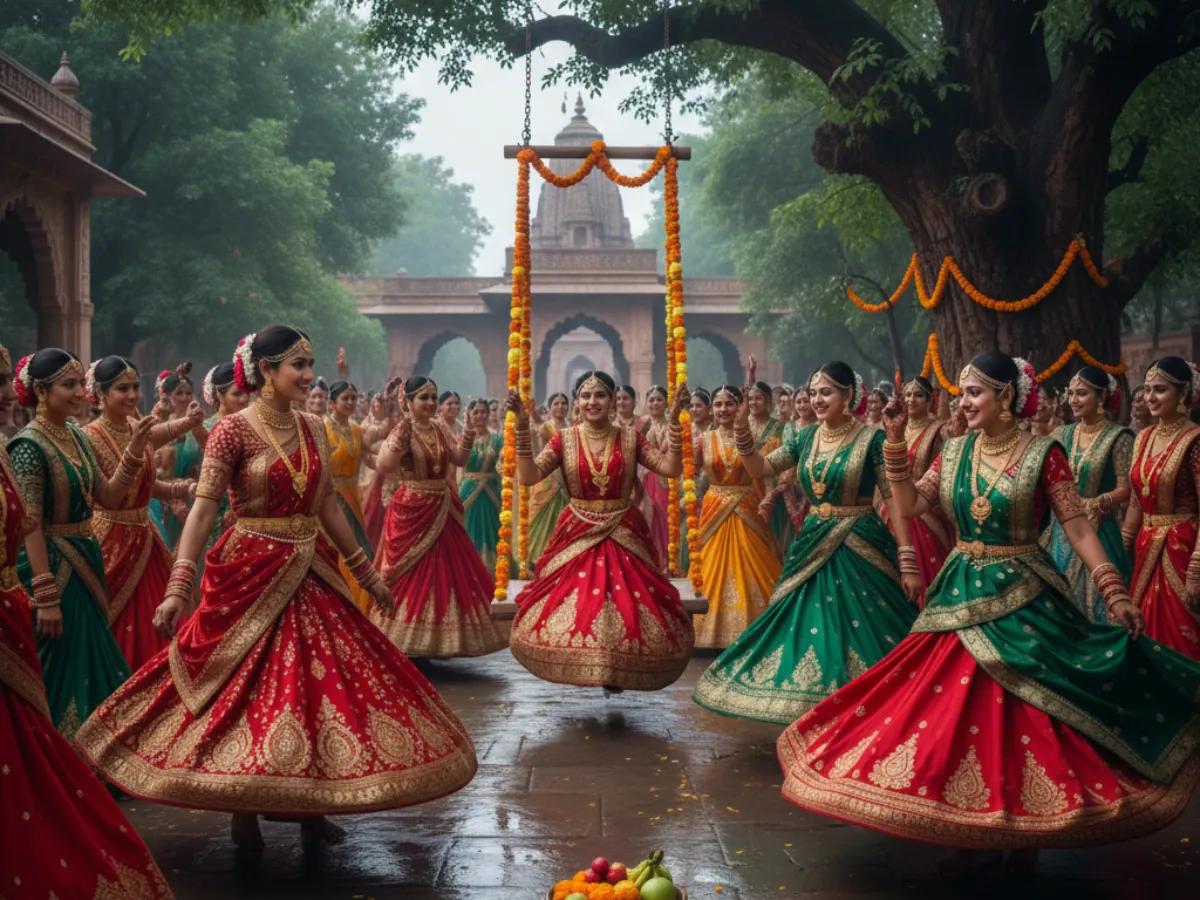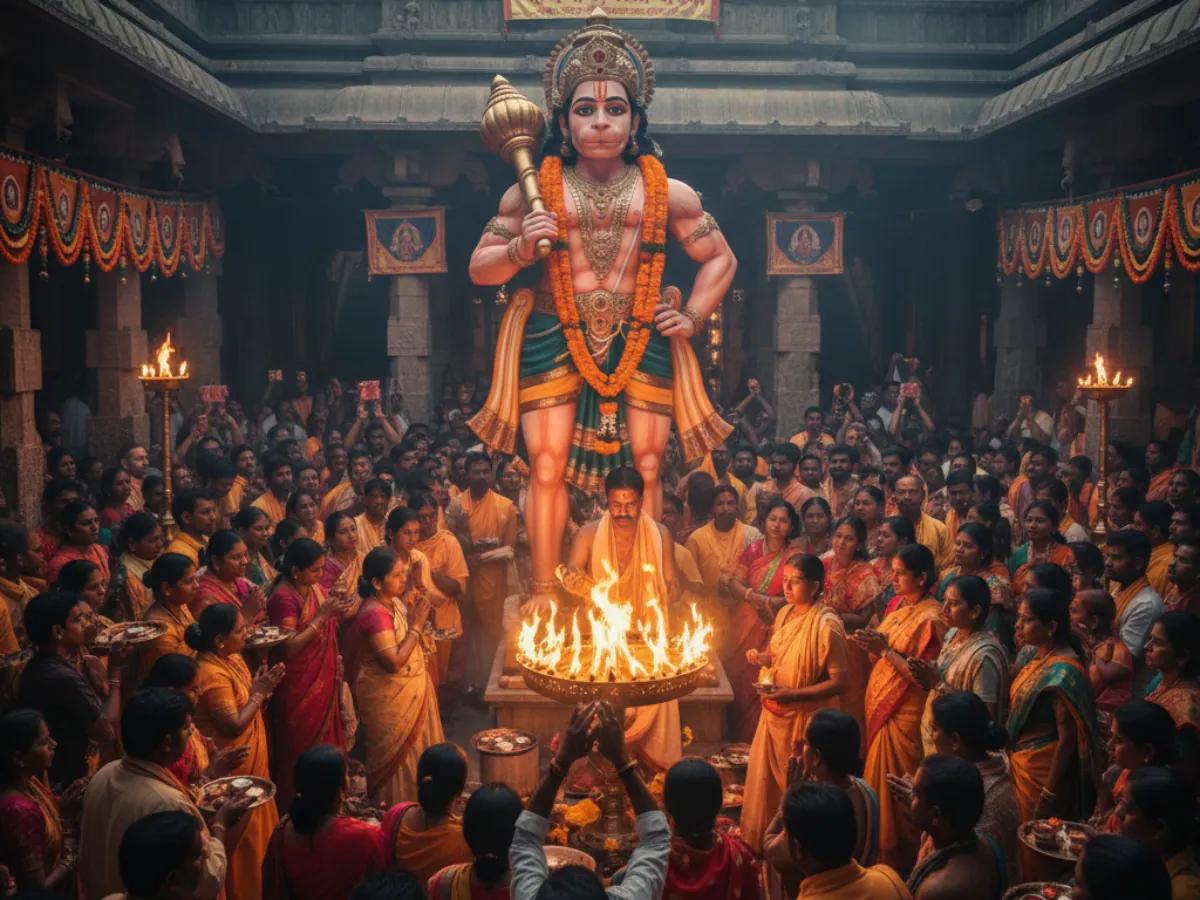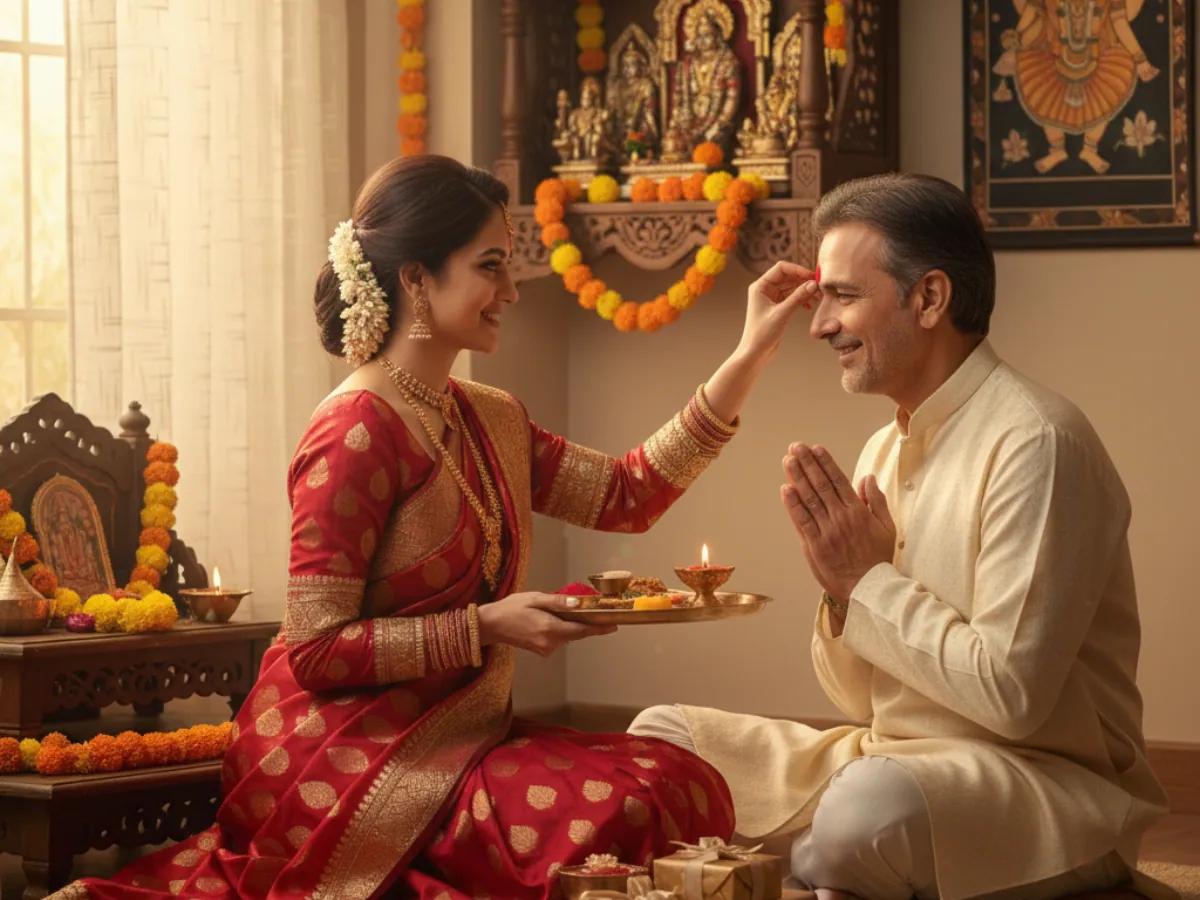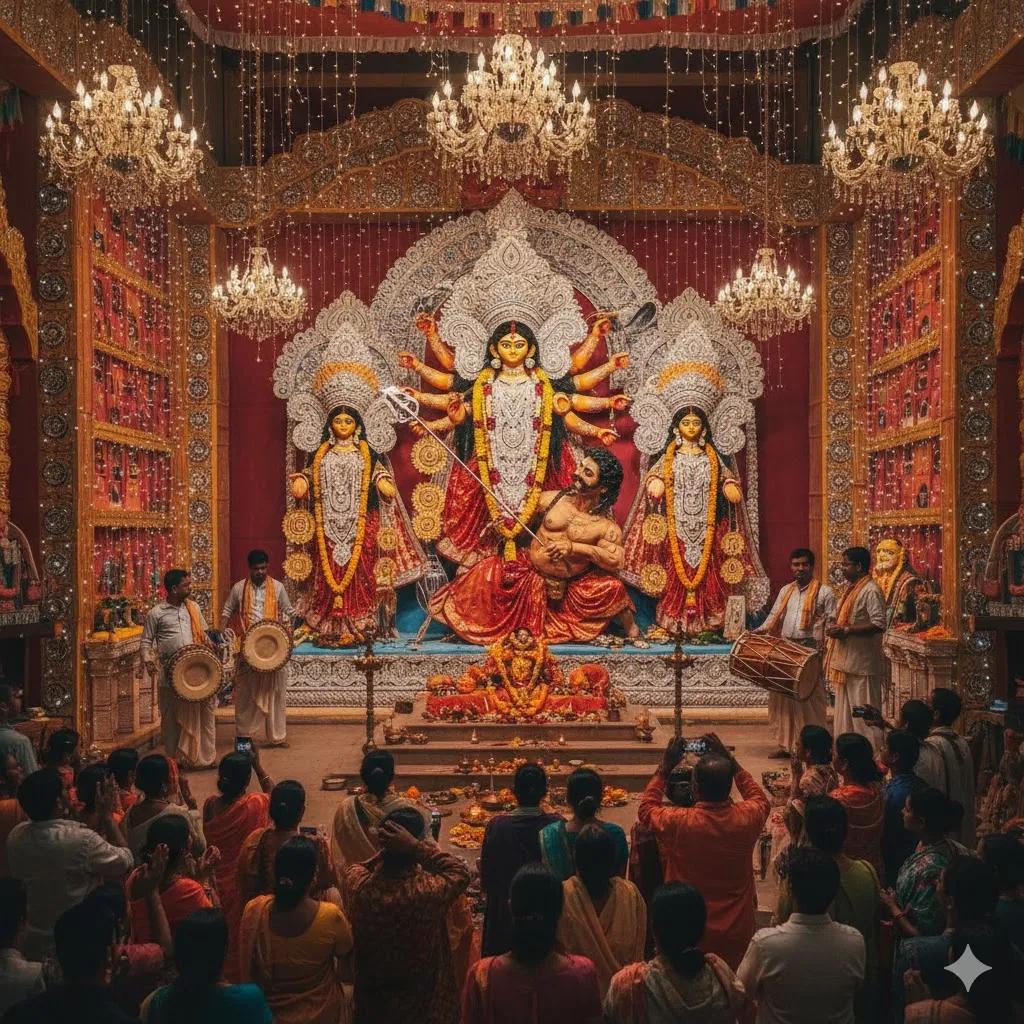
Meandering a neighborhood can visually cue the start of the objects and activities of puja preparation. Dhak and the aroma of puja paints signal the preparation. Paint and bamboo. Neighbors, garishly lit, sorted and themed. As if nothing is happening. Out of hand arguments sublimating the process, their discord hidden behind a collective focus on the object of the initiatory ritual, the puja.
Calendar less hints announcing the start of puja indicate the preparation’s first phase. Preparation for Durga puja is participation. It involves the tired excitement and emotional devotion, and at times overwhelming nostalgia.
For a brief moment, the divine walks beyond the door of the temple. The condition of divine walking is an ambition a devotee carries for the entire year.
Understanding Durga Puja: A Festival of Community and Strength
The puja involves activities suggesting engagement. It involves the active participation of the community around the temple. Purposefully constructed activities holding the community.
The puja is spiritually profound, and because of this, the activities surrounding the puja hold immense community significance. The puja and the activities surrounding the puja implicitly communicate the profound contradicting absence and presence of the divine. The absence of religious, political, and economic power, and the presence of moral power and strength.
The festival of Durga Puja also holds significance for pilgrims and spiritual tourists. It is not about the calm of individual contemplation, but the glow of communal belief. A cacophony of people, and yet, an orderly and wonderfully immersive experience.
What Does Durga Puja Mean?
The festival of Durga Puja personifies the victory of goddess Durga over the demon Mahishasura. The demon is a representation of disorder, hubris, and tyranny.
However, if you ask devotees, most of them would not cite religious texts when attempting to answer your question.
For example, answers are usually framed as:
- “This is a reminder to us to resist”
- “This provides us with confidence”
- “This is a homecoming”
And this is the reality.
For them, Durga Puja is not about defeating a foe. It is about the restoration of order, for the individual, and for society; and within one’s own family, and within one’s own self.
Durga Puja Celebration Within the Entire Nation
Durga Puja is deeply rooted within Bengal. However, Durga Puja embodies values that can go beyond borders.
Durga Puja and the Conquest of Shakti
The festival celebrates Shakti, i.e., the goddess of power, or the primordial feminine principle of creation and destruction, and the force that protects or restores the balance of order.
In Durga’s tale, Mahishasura is not vanquished so easily. The fight is laborious and exhaustive.
This is a reminder to the devotees that resilient success is not dependent on immediate results or triumph. It is about holding the fort, even if the battle continues for a longer duration.
The Different Aspects of Rituals and Traditions of Durga Puja
The Durga Puja rituals are multilayered. Some are performed in public while others are more personal.
Durga Puja Rituals in Temples
From Mahalaya to Dashami, the cycle of the day in most temples remain the same, something most devotees are able to pick up on.
Devotees arrive in the morning, and in the evening, the priests do the aarti. The priests are diligent in their work, while devotees mumble the mantras, be it in full or in part. They request the goddess for her blessings.
Completing Durga Puja Rituals: Pushpanjali
Pushpanjali is a Durga Puja ritual that is a sign of surrender. The ritual is a humbling experience for the devotee. To participate in the ritual, the devotee must be barefoot, and be in the temple with a handful of flowers, and must wait for their turn to arrive.
Durga Puja is a Time for Community and Togetherness
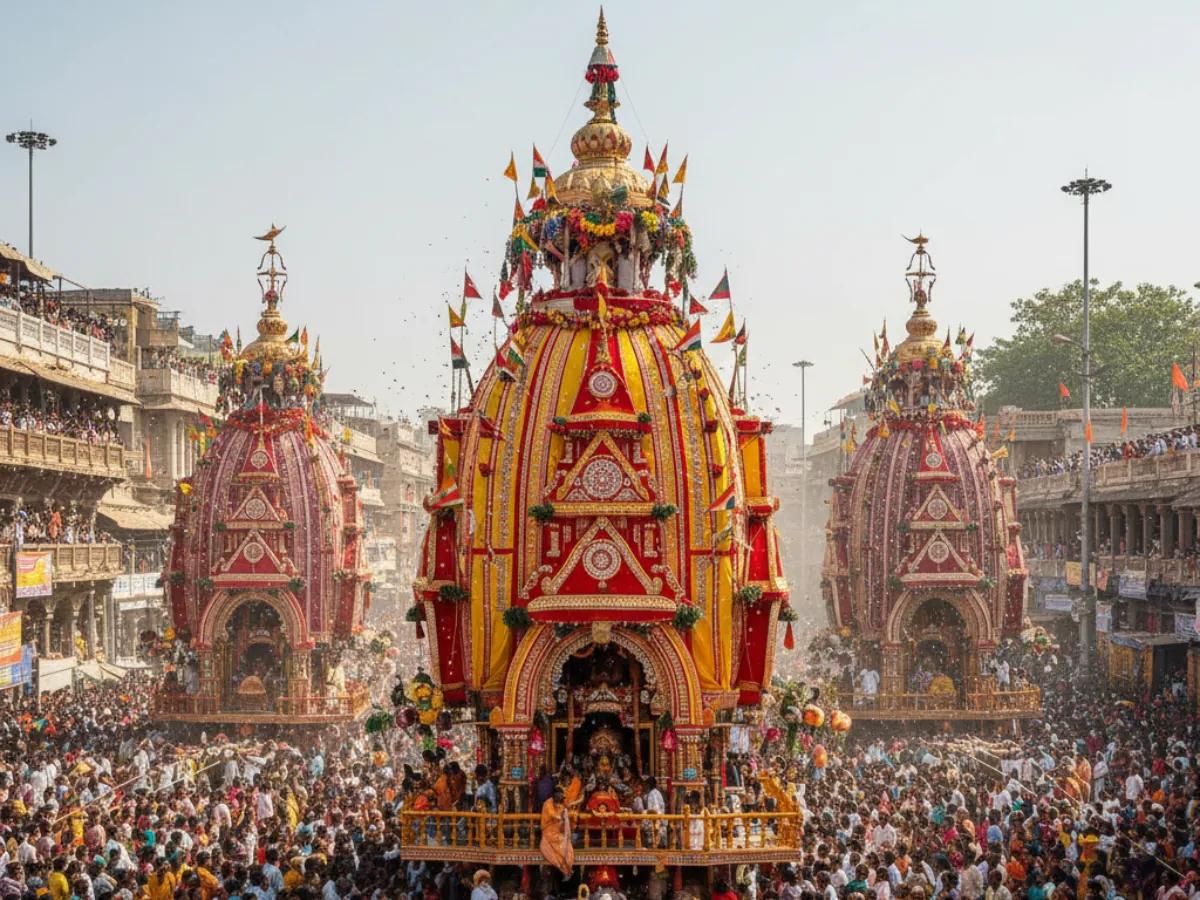
Durga Puja is the type of event that makes it seem like temporal boundaries have vanished. Pandal hopping is as communal as it gets. Pandal hopping is an observant event where onlookers can discuss, walk, and have a mutual understanding. Members of the public may experience and observe the event in the streets, creating a shared cultural experience.
Celebrations of Durga Puja in Different Areas of India
The festival adapts where it takes place.
Durga Puja in Eastern India
In West Bengal, when it comes to Durga Puja, it encompasses the entire time range of the festival, including the several days leading up to it, the days it is actively taking place, and the days after, when it is being concluded as the end of the festival.
It is an integration of many social, religious, and political aspects. Every individual pandal is a work of art. Be it a tribute to a well known myth, a retelling of a modern story, or a reflection of a social or political concern. Through art and architecture, they comment on contemporary issues or the anthropology of the place.
Celebrating Durga Puja in Other Areas
In India, each state or part of the country will have its own traditions and customs when it comes to celebrating and performing the rituals of the Durga Puja festival.
Less glamorous possibly, but no less devoted.
In the end, devotion to the goddess should not be measured by the grandeur of the puja or the scale of the celebration.
Durga Puja and Travel
For many people, the arrival of Durga Puja is the occasion for travel and making pilgrimages.
Durga Puja Pilgrimage Destinations
During Durga Puja, people travel for religious observances and visit:
- Shakti Peethas
- Ancient Durga mandirs
- Cities with strong historical traditions of celebrating Durga Puja
- Sacred sites with cultural significance
Durga Puja is not just about ticking boxes on a list. It is about the experience. It is about the moments that the festival will create for you, rest and rejuvenation.
It is about meaningful travel, and it is something that Tirth.com specializes in travel for a purpose and based on values, rather than simply getting from one point to another.
The Poignant Goodbye of Dashami and Durga
Sindoor khela, the playing with vermilion, and smudged redness, typically decorate the smiling faces as part of the celebration.
As Durga departs, she also leaves behind strength.
That is the promise.
Lessons Learned from Durga Puja
Durga Puja doesn’t preach. It teaches.
- That power and compassion can exist together
- That patience is itself a kind of courage
- That when it comes to battles, they are rarely easy, but worth the effort
- And that coming home, over and over, is not a sign of weakness. It is, in fact, a sign of renewal
How Families Celebrate Durga Puja at Home
Not everyone goes from one pandal to another.
Some families get up at dawn, light the diyas, prepare the bhog, sit together, and talk about the memories they made.
Children hear stories, grandparents reminisce, and faith moves through the generations.
That is also part of Durga Puja.
Conclusion: The Enduring Spirit of Durga Puja
Durga Puja is not over when the idols are immersed.
It stays.
In weary legs. You’ve crafted this with your heart. With calm certainty that comes with feeling accompanied not through avoiding challenges, but staying through.
Details about Dushera rituals, traditions, and observances are explained on Tirth.com.