Bhai Dooj 2026: Importance, Customs, Date, Mahurat & Timings
Bhai Dooj is a festival that signifies the bond of love between brothers and sisters. It is the second day of the lunar fortnight of Kartika’s month and signifies the end of the five days of the Diwali Festival. On this day, sisters do a puja of their brothers and pray for their prosperity and happiness.
Like other major Hindu festivals like Raksha Bandhan, Diwali, and Navratri, Bhai Dooj is a time for spiritual renewal, gratitude, and family gatherings. It is a time when the family comes together to celebrate.
For those interested in Indian festivals and their significance,
Tirth – Indian Festivals & Traditions
sheds light on the important celebrations in all the corners of India.
Bhai Dooj is not a festivity, it is a celebration of togetherness, the spirit of protection, and love that siblings share.
Bhai Dooj Date, Muhurat & Timings – 2026
Here are the key details for Bhai Dooj 2026:
| Event | Details |
|---|---|
| Festival Name | Bhai Dooj |
| Year | 2026 |
| Day | Wednesday |
| Gregorian Date | 11 November 2026 |
| Hindu Month | Kartik |
| Paksha | Shukla Paksha |
| Tithi | Dwitiya |
| Dwitiya Tithi Begins | 2:01 PM, Tuesday, 10 November 2026 |
| Dwitiya Tithi Ends | 3:54 PM, Wednesday, 11 November 2026 |
| Shubh Muhurat for Tilak | 1:09 PM to 3:19 PM on 11 November (Aparahna, New Delhi) |
The tilak ceremony is ideally performed during the daytime while Dwitiya Tithi prevails. Many families consult Tirth’s Hindu Calendar to confirm regional variations and exact timing.
Bhai Dooj Celebration Myth
In the Hindu belief system, there are many stories to explain the origins of Bhai Dooj. One of the stories is of Yamraj, the God of Death. Hindu mythology states that he visits his sister, Yamuna, on this day. Yamuna greets him and does a welcoming aarti and then puts a tilak on his forehead. From this story, it is believed that any brother that receives a tilak from his sister on this day, is granted the gift of a long life and great prosperity.
Another story explains the origins of this day with the great Lord Krishna. He had just come back from battle, victorious over the demon Narakasura. He, of course, had to stop to visit his sister, Subhadra. She made him a tilak and offered him sweets. This is believed to be the start of the tradition we see today.
- The importance of the above described stories, are the following:
- The importance of love, and the relationship of siblings
- The importance of family, and family relationships, and the bonds that hold a family together
- The importance of spiritual, and financial prosperity
Spiritual Significance of Bhai Dooj
Bhai Dooj is predominantly a day to celebrate the importance of the relationships in a family. The important things to focus on are:
- Getting along with siblings
- Prayer and gratitude.
- Keeping the family together.
The ceremony of the tilak is meant to show the family, the protection, and the blessings of God. There are many families that like to follow the traditional style of puja. You can follow the detailed steps in Tirth’s Puja & Ritual Guides to celebrate the day fully.
Traditions and Customs of Bhai Dooj
Tilak Ceremony
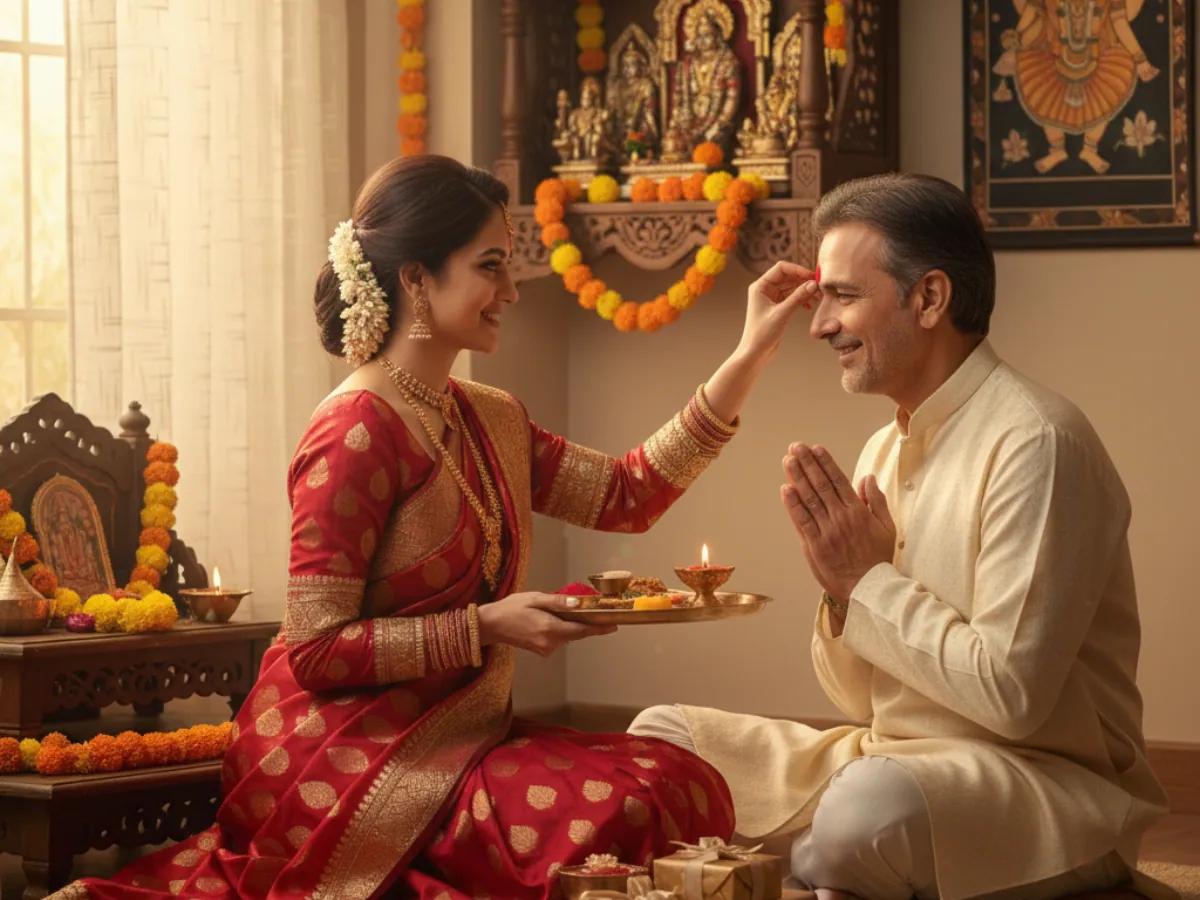
The main ritual consists of the sister getting a puja thali ready with:
- Roli
- Rice
- A diya
- Sweets
She does a tilak of her brother and does his aarti, and gives him her sweets. The brother, on his side, gives her a present and says he will protect her and will stand by her.
Meals and Family Time
There is a festive meal and the family can enjoy the fun and the laughter together. It is a day of bonding and sharing, and a lot of fun can be had together.
Prayers and Charity
Sisters will pray for their brothers at temples or riverbanks in some places. The meanings of the family-centered customs can be found in
Tirth’s Festival Culture & Beliefs
Regional Differences of Bhai Dooj
The Bhai Dooj customs have regional differences in the country. They are as follows:
- North India: It is called Bhai Dooj with tilak ceremony
- Maharashtra & Goa: It is called Bhau Beej
- West Bengal: It is called Bhai Phonta
- Nepal: It is called Bhai Tika as part of Tihar festival
Even with all the regional differences, the main essence is still the same. It is all about love, blessings and protection.
Observations of Bhai Dooj today
As time goes on, the ways we celebrate Bhai Dooj have changed once again offering fresh perspectives and allowing people to adjust their observations to their current lifestyles, once again offering fresh perspectives and allowing people to adjust their observations to their current lifestyles and preserve the.Be it as simple as keeping it as simple as keeping it as simple as keeping it as simple as keeping it as simple as keeping it, the emotional sense of the festival remains an integral part to all of its observations and coalesces all of the moments in time to make things even.
Bhai Dooj FAQs 2026
When is Bhai Dooj in 2026?
Bhai Dooj in 2026 is on Wednesday, 11 November.
What does Bhai Dooj celebrate?
Bhai Dooj celebrates the bond between siblings and also celebrates the longevity of that bond.
Is Bhai Dooj celebrated during Diwali?
Bhai Dooj is the last day of the 5 day long festival of Diwali.
What time is best for Bhai Dooj tilak?
The preferred time is the Aparahna (afternoon) muhurat while Dwitiya tithi prevails: 1:09 PM to 3:19 PM in New Delhi on 11 November 2026.
Is Bhai Dooj same as Raksha Bandhan?
Bhai Dooj and Raksha Bandhan both celebrate the bond of siblings and non-siblings. However, both have different rituals and different timelines.
What is given on Bhai Dooj?
Bhai Dooj is the Indian festival where brothers give their sisters gifts, new clothes, and also an appreciation token for their sister.
Bhai Dooj, a celebration of the love shared between siblings
Bhai Dooj is a celebration of the love shared between siblings and a reminder of how sacred family is. It also serves as a reminder of how closely knit a family is. When families come together as a unit to celebrate the observations, it expresses the emotional connection of siblings and the family. Together, the observations form the festival.
If you would like to learn more about India’s spiritual heritage at your own pace, you can use Tirth as a gentle and peaceful space to learn more about India’s festivals, holy calendars, and cultural practices.