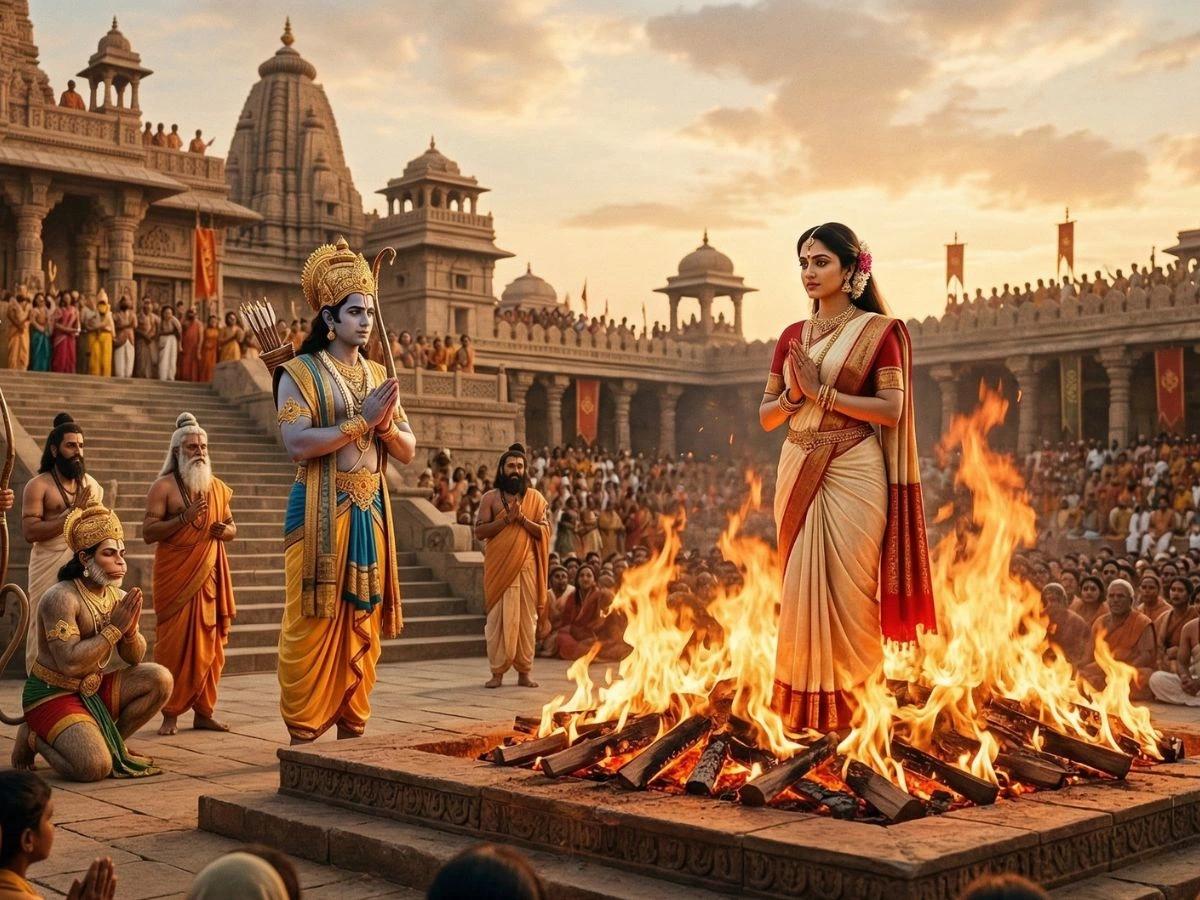
You don’t really arrive in Ayodhya the way you arrive in other cities.
You sort of… drift into it.
And somewhere between stepping down from the train or the bus, and figuring out which lane leads where, someone looks at you and says, very simply, “Ram Ram.”
Not loud. Not ceremonial. Just that.
That’s usually when people start wondering about the ram ram greeting meaning. Because it doesn’t sound like a slogan. It doesn’t feel like a chant. It feels personal. Almost gentle.
And that’s the thing. In Ayodhya, “Ram Ram” isn’t something you perform. It’s something you live with.
Ram Ram Greeting Meaning in Ayodhya’s Cultural Identity
Ayodhya isn’t just another pilgrimage stop on a map. Official tourism descriptions call it one of the most sacred cities in India and the birthplace of Lord Shri Ram. That identity isn’t limited to temples or ghats. It seeps into everyday behaviour.
The ram ram greeting meaning here is tied directly to how the city sees itself.
When someone says “Ram Ram,” they’re not just acknowledging you. They’re acknowledging where they are. It’s like saying, “We are in Ram’s space.” Before names. Before questions. Before business.
In a city built around Ram’s presence, invoking his name becomes the most natural way to begin any interaction. No drama. No explanation needed.
Ram Ram Ayodhya Culture and Everyday Social Practice
If you spend even a day walking around Ayodhya, you’ll notice something quickly.
“Ram Ram” isn’t reserved for holy moments.
You hear it in the bazaar. At chai stalls. From an elderly man passing by, from a shopkeeper handing you change. This is ram ram ayodhya culture in its most ordinary, everyday form.
Verified news reports describe “Ram Ram” as a spoken greeting across Ayodhya and the Hindi heartland. What stands out is its softness. It doesn’t interrupt. It doesn’t demand a response. It just… exists.
That quietness suits Ayodhya. Devotion here doesn’t shout much.
Traditional Greetings in Ayodhya and the Hindi Heartland
Long before social media greetings and modern pleasantries, the Hindi belt had its own way of acknowledging one another.
Publications like the Indian Express have documented how phrases such as “Ram Ram,” “Jai Ram ji ki,” and “Jai Siya Ram” functioned as everyday salutations. Not religious declarations. Just greetings with meaning baked in.
In traditional greetings in ayodhya, Ram’s name naturally takes centre stage because the city itself revolves around him.
It’s no different from coastal towns greeting the sea every morning. This is simply how Ayodhya speaks.
Ram Naam Greeting as a Form of Shared Respect
There’s something quietly equalising about a ram naam greeting.
When someone says “Ram Ram,” they’re not placing themselves above you. Or below you. They’re placing Ram between both of you. That’s important.
It levels the space.
That’s why you’ll see saints, shopkeepers, political leaders, volunteers, and pilgrims all using the same greeting in Ayodhya. News reports from public events show this clearly. “Ram Ram” functions as a respectful salutation, not a rallying cry.
It keeps the ego out of the room. Or at least tries to.
Hindu Spiritual Greetings and Their Role in Devotional Cities
Across India, greetings often mirror the spiritual tone of a place.
In some towns, “namaste” is enough. In others, you’ll hear the name of a local deity slip naturally into conversation. These hindu spiritual greetings aren’t instructions. They’re reflections.
Cultural research explains how a deity’s name can become part of daily language in a devotional city. Ayodhya is perhaps the clearest example of this.
Here, saying “Ram Ram” doesn’t feel extra. It feels appropriate. Like wearing modest clothes near a temple. You don’t do it because someone told you to. You do it because the place asks for it.
Ram Bhakti Expression Without Loud Devotion
What’s striking about “Ram Ram” is what it isn’t.
- It isn’t loud.
- It isn’t aggressive.
- It isn’t meant to prove anything.
During major Ayodhya events, news coverage notes that while chants and slogans filled the air, “Ram Ram” continued quietly in daily interactions. As a ram bhakti expression, it stays personal.
It’s remembrance without performance. Faith without amplification.
And for many pilgrims, that quietness is exactly what makes it powerful.
Ayodhya Culture Practices Reflected in Speech
Cultural research papers that study Ayodhya talk about how Ram’s name is tied to the city’s geography, memory, and imagination.
That explains a lot.
When a name lives in your streets, your stories, your landmarks, it eventually enters your mouth. Ayodhya culture practices reflect this through speech as much as through ritual.
Even businesses linked to Ayodhya have been reported choosing “Ram Ram” as part of their identity. Not for marketing flair. Because it instantly tells people where they come from.
Meaning of Ram Ram Beyond Literal Translation
If you try to translate the meaning of ram ram word for word, you’ll miss it.
It isn’t repetition for emphasis. It’s layering.
- A greeting.
- A remembrance.
- A gentle blessing.
- A shared cultural nod.
When someone says “Ram Ram,” they’re not asking you to chant back. They’re opening a door. You can step in, nod, smile, or simply understand.
That flexibility is why the phrase has survived so long without becoming rigid or forced.
Ram Ram Greeting Meaning for Pilgrims Visiting Ayodhya
For pilgrims, understanding the ram ram greeting meaning changes how Ayodhya feels.
You stop seeing it as a habit and start seeing it as hospitality.
No one expects visitors to use the greeting perfectly. Or even at all. But recognising its intention helps you move through the city with more ease, more sensitivity.
Ayodhya isn’t a place that demands devotion. It offers it, quietly.
Ram Ram and the Ramayana Circuit Experience
The Ministry of Tourism officially recognises the Ramayana Circuit under the Swadesh Darshan scheme, with Ayodhya at its heart.
Along this route, Ram’s name travels with pilgrims. It appears in temples, conversations, pauses, greetings. “Ram Ram” becomes part of the shared language of the journey.
For those walking the Ramayana Circuit, hearing the greeting feels like a confirmation. Yes, you are in Ram’s landscape now.
Practical Travel Note for Pilgrims in Ayodhya
The Shri Ram Janmbhoomi Teerth Kshetra trust publishes clear darshan timings, and pilgrims often interact with volunteers, guides, shopkeepers, and locals while navigating the city.
Hearing “Ram Ram” during these moments is common.
You don’t need to rehearse a reply. A smile, a nod, a soft “Ram Ram” back if it feels natural, that’s enough. The exchange isn’t about correctness. It’s about warmth.
Conclusion: Why Ram Ram Still Lives in Ayodhya
So why does “Ram Ram” endure?
- Probably because it doesn’t demand belief. It invites connection.
- Because it carries humility instead of volume.
- Because it belongs to everyday life, not just sacred moments.
The ram ram greeting meaning isn’t locked in a dictionary. It’s carried by people who live in Ram’s city, day after day, without making a show of it.
And maybe that’s why, long after you leave Ayodhya, that quiet greeting is what stays with you the longest. Not the noise. Not the crowds. Just a simple “Ram Ram,” said like it has always been said.
Explore the spiritual mornings of Ayodhya and the rituals that shape the city’s serene start to the day. Tirth.com