Somewhere before sunrise. That is usually when Ayodhya is already awake.
Not awake in the way cities wake up. No horns. No rush. Just movement. Soft footsteps. A few lamps glowing where the sky is still unsure whether it wants to be dark or light.
This is what daily life in Ayodhya looks like when you stop thinking of it as a destination and start seeing it as a rhythm. A long, unbroken rhythm that runs from the first aarti of the day to the silence that settles in at night.
If you follow that rhythm, instead of fighting it, the city opens up in ways most people miss.
Daily Life in Ayodhya at Dawn: The First Aarti Sets the Rhythm
Before most pilgrims check their phones. Before the tea stalls heat up. Before the city even looks like a city.
The day begins with the Mangal Aarti at 04:30 AM, as listed by the Shri Ram Janmbhoomi Teerth Kshetra trust.
This moment does not feel like an event. It feels like discipline.
Priests arrive quietly. Lamps are lit. The temple breathes itself awake. People who come at this hour usually do not talk much. They stand. They wait. Some close their eyes. Some do not. Nobody rushes.
A little later, the Shringar Aarti at 06:30 AM brings colour and movement into the morning. Outside, Ayodhya starts stretching itself. Tea appears. Voices return. The night releases its grip.
Ayodhya Spiritual Routine Through Morning Darshan Hours
By 07:00 AM, free darshan slots begin, and the ayodhya spiritual routine becomes visible to everyone.
Queues form, but they move with patience. Volunteers guide people with quiet gestures more than loud instructions. The structure is clear. The pace is steady.
What stands out is not the crowd. It is the order.
Morning darshan in Ayodhya feels purposeful. People are not here to linger endlessly. They come, they bow, they move on. The city respects time, and time respects the city back.
Morning to Night Ayodhya: The City Moves With Devotion
If you stay long enough, you realise morning to night Ayodhya does not operate on urgency.
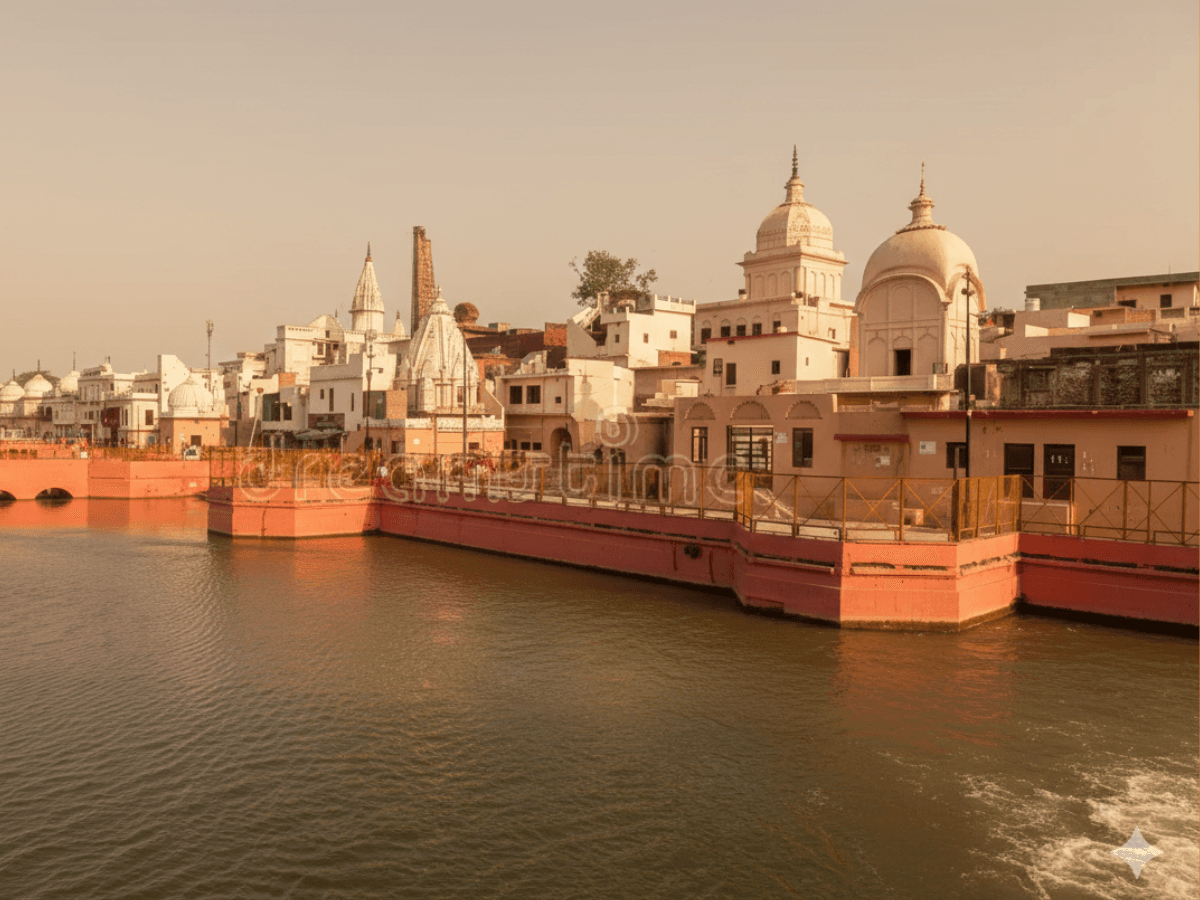
Late morning flows into the Sarayu. Pilgrims walk towards the river, sit by the ghats, watch the water move. Government tourism descriptions always place Ayodhya alongside the Sarayu for a reason. The river sets the tempo when temples pause.
By midday, the city softens again. Darshan continues, but quieter. Locals retreat indoors. Pilgrims rest. Heat slows everything down.
Nothing shuts. Nothing rushes. Ayodhya simply breathes.
Devotional Daily Life and the Food Discipline of Ayodhya
Food tells you a lot about a place.
In Ayodhya, devotional daily life is reflected very clearly in what is served and what is not. Verified news reports confirm restrictions on non vegetarian food delivery within the temple zone.
On the ground, this feels natural.
Meals are simple. Vegetarian. Satvik. Thalis that fill you without weighing you down. This suits the day. Heavy food would feel out of place here.
Pilgrims eat, rest, and move on. The body stays light. The mind stays calm. It is not forced. It just works.
Ayodhya Religious Lifestyle in the Afternoon Hours
Afternoons reveal the ayodhya religious lifestyle in its quietest form.
Temples remain open. Bells ring less frequently. The streets feel lived in rather than ceremonial. This is when you see Ayodhya as a town, not just a pilgrimage centre.
Some people sit under trees. Some walk slowly along parikrama paths. Some do nothing at all.
And that, oddly, feels right.
Spiritual Rhythm Ayodhya Builds Toward Evening
As the sun begins to tilt, the spiritual rhythm ayodhya gathers itself again.
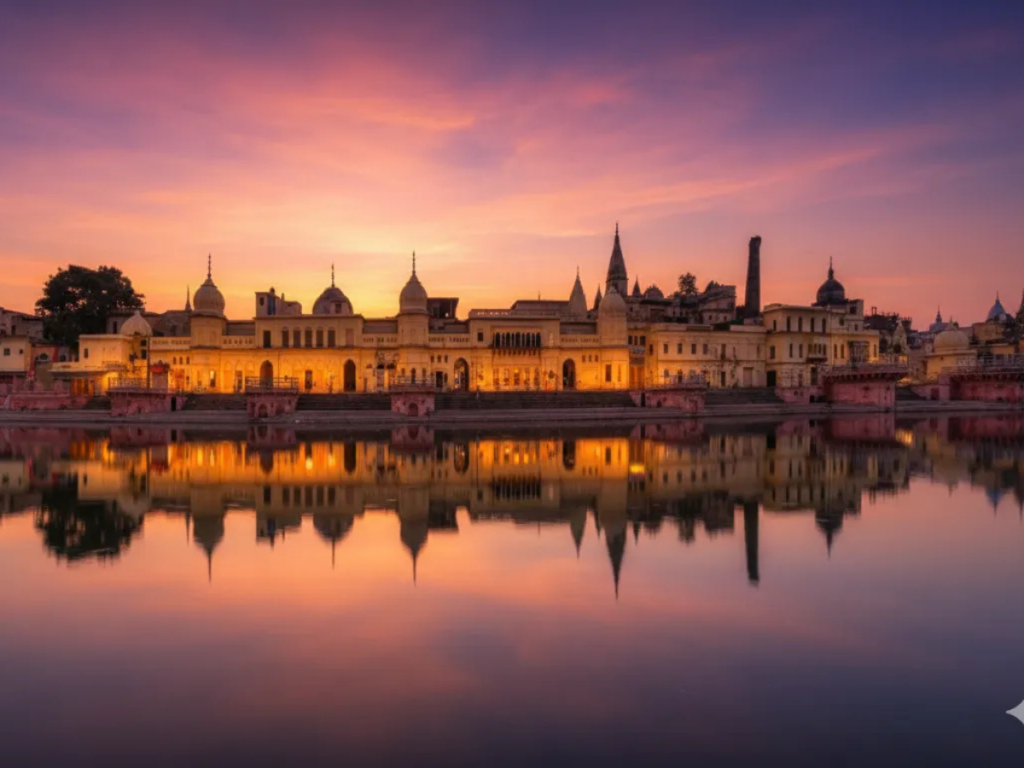
By around 06:30 PM, people drift towards the Sarayu. Government itineraries and PIB releases consistently mention the evening river aarti as a key moment.
Ram Ki Paidi fills gradually. Lamps appear. The water reflects small flames. Infrastructure upgrades documented in verified reports have made the ghats easier to access, but the mood remains unchanged.
People sit. They watch. They fold hands. Some whisper prayers. Some simply stare at the river.
Life of Devotees Ayodhya During Evening Gatherings
Evenings are when the life of devotees ayodhya becomes most visible.
Not dramatic. Not loud. Just present.
During festivals like Deepotsav, the scale becomes enormous. Millions of diyas. Records broken. Cameras everywhere. But even on ordinary days, the feeling remains the same.
The city pauses together.
That shared stillness is not accidental. It is practised. Daily.
Ayodhya Culture in Public Spaces After Sunset
After sunset, ayodhya culture shifts again.
Lighting remains functional, not flashy. Digital installations appear during festivals, as documented in verified reports, but on regular nights, simplicity returns.
Sound reduces. Loudspeakers are restricted. Long standing administrative measures have aimed to preserve peace at night, and it shows.
The absence of noise does not feel empty. It feels intentional.
Daily Life in Ayodhya at Night: When Silence Takes Over
By the time Shayan Aarti at around 09:30 PM concludes, the day gently closes.
Shops shut early. Streets thin out. Pilgrims return to where they are staying. The river grows dark again.
This is the final movement in daily life in ayodhya. Night is not for activity. It is for rest.
Ayodhya sleeps early. And deeply.
Where Pilgrims Stay and How That Shapes the Day
Verified reports show that Uttar Pradesh Tourism has been promoting homestays and B and B accommodations in Ayodhya.
This matters.
Staying close to temples and ghats allows pilgrims to experience the full arc of the day. Early aarti. Midday rest. Evening river time. Night silence.
Distance breaks rhythm. Proximity preserves it.
Why Understanding Daily Life in Ayodhya Matters for Pilgrims
Many visitors come with a list.
Darshan done. Photo clicked. Move on.
But daily life in ayodhya is not meant to be consumed in pieces. It is meant to be followed. Slowly.
Temple schedules, district administration practices, tourism portals, verified news reports all point to the same truth. Ayodhya values discipline over display.
When pilgrims align with that rhythm, something shifts. The city stops feeling crowded. It starts feeling calm.
Conclusion: Living a Full Day in Ayodhya
A full day in Ayodhya does not overwhelm you.
It teaches you patience. It teaches you restraint. It teaches you how silence can be devotional too.
From the first aarti before dawn to the quiet that settles after nightfall, the city moves with intention. This is not accidental. It is cultivated.
Understanding daily life in ayodhya is less about knowing schedules and more about respecting pace.
If you let the city lead, Ayodhya shows you how to slow down. And sometimes, that is the deepest form of Ayodhya darshan.
Experience the tranquil essence of evening bhakti and cultural practices in Ayodhya Tirth.com