It’s usually not planned.
You wake up early in Ayodhya not because you set an alarm, but because something outside stirs you. A distant bell. A footstep. The faint clink of metal as someone opens a temple gate. And suddenly you’re awake, even though the sky is still undecided.
This is where the ayodhya morning spiritual experience begins. Not when the sun rises. Much before that. When the city is half asleep and half praying.
People often say mornings here feel different. Calmer. Lighter. As if the air itself hasn’t been disturbed yet. And honestly, they’re not imagining it.
Ayodhya Morning Spiritual Experience Begins Before Sunrise
Before Ayodhya looks awake, it already is.
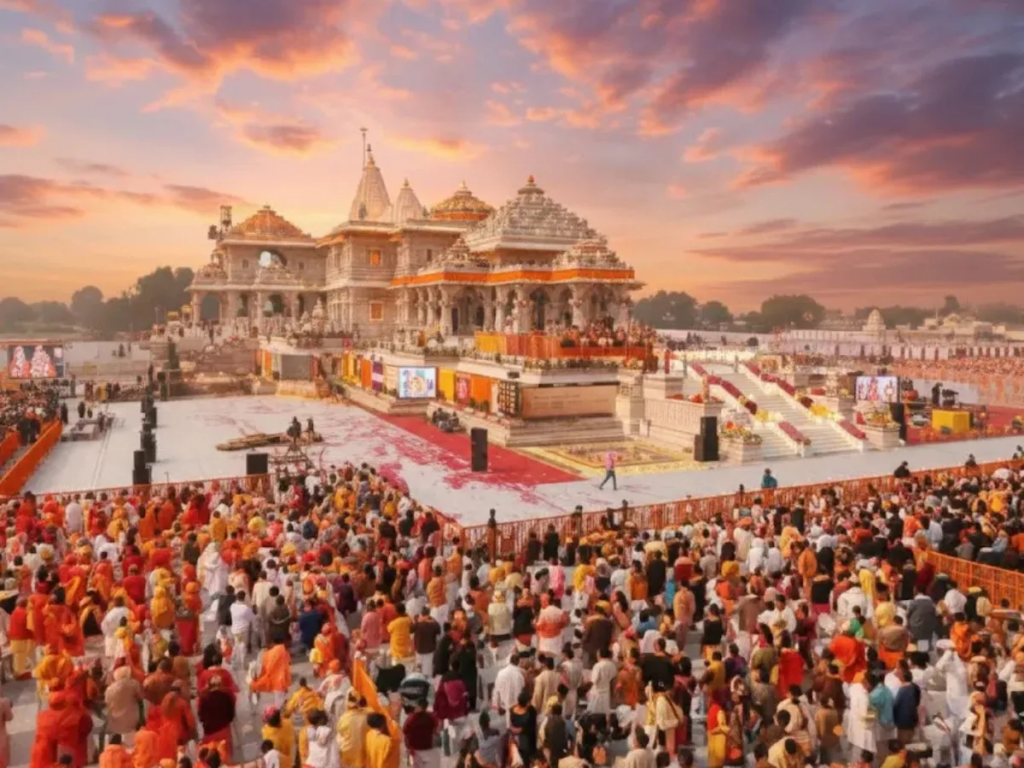
The Shri Ram Janmbhoomi Teerth Kshetra lists Mangal Aarti at 04:30 AM, and that timing sets the tone for everything that follows. This is not a flexible ritual. It happens the same way, every day.
At this hour, there’s no crowd energy. No urgency. Just discipline. Priests move quietly. Lamps glow softly. Pilgrims who come this early usually know why they’re here. They’re not sightseeing. They’re settling something inside themselves.
By 06:30 AM, Shringar Aarti arrives, and the city gently shifts gears. The light changes. Tea stalls appear. You hear a few more voices. But the calm holds. It doesn’t break.
Spiritual Mornings Ayodhya and the Role of Brahma Muhurta
The feeling of spiritual mornings ayodhya is closely tied to something older than the city’s current form. Brahma Muhurta.
Cultural research preserved by government institutions describes Brahma Muhurta as the time roughly one and a half hours before sunrise, traditionally meant for prayer and discipline. In many places, this idea exists only in books. In Ayodhya, it’s lived.
The city’s geography supports it. Temples open early. Ghats are accessible. The Sarayu waits quietly. There’s no resistance to early rising here. Everything seems arranged for it.
That alignment matters more than people realise.
Brahma Muhurta Ayodhya and River Rituals
The brahma muhurta ayodhya experience isn’t limited to temple halls.
Government tourism sources speak of a belief that a pre sunrise dip at Ram Ki Paidi carries spiritual merit. You can see this belief play out every morning.
A few figures at the ghats. Some stepping into the water. Others standing silently, palms joined, eyes fixed on the river. No instructions. No announcements.
The Sarayu flows steadily, indifferent to time, but somehow perfectly in sync with it.
Morning Bhakti Culture Reflected in Temple Timings
One thing that shapes the morning bhakti culture here is structure.
Free darshan at the Ram Mandir begins around 07:00 AM, after the most sacred early rituals are complete. That order matters.
Prayer comes first. Access comes later.
This sequencing ensures that the earliest hours remain devotional rather than crowded. Pilgrims who arrive before sunrise experience a different Ayodhya. One that hasn’t started managing footfall yet.
You feel it immediately. The pace is slower. The attention is inward.
Peaceful Mornings Ayodhya and the Soundscape
Ask anyone what stands out most during peaceful mornings ayodhya, and many will say the same thing. The quiet.
Verified reports mention a court ordered ban on loudspeakers in Ayodhya. While the report itself is old, its impact is ongoing. Especially in the morning.
There’s no competing noise. No amplified calls. Bells ring, yes, but softly. Announcements are minimal. Silence isn’t treated as absence. It’s treated as space.
And that space allows prayer to stay personal.
Here you can explore more Ayodhya Dham .
Early Morning Spirituality and Food Discipline
Early morning spirituality in Ayodhya isn’t only about rituals. It’s supported by lifestyle choices.
Verified news reports confirm restrictions on non vegetarian food delivery within a defined radius of the Ram temple zone. In the mornings, this shows up as simplicity.
Tea. Light snacks. Plain breakfasts. Satvik food that doesn’t demand attention.
For pilgrims, this makes fasting, prayer, and movement easier. The body doesn’t feel heavy. The mind doesn’t scatter.
It’s a quiet kind of support, but it works.
Ayodhya Devotional Atmosphere Built Into the City
Government tourism portals describe Ayodhya as a pilgrimage city shaped by Lord Ram and the Sarayu. That description isn’t poetic. It’s practical.
The ayodhya devotional atmosphere is maintained through planning, regulation, and habit. District administration pages talk about cultural heritage and Ram as an ideal figure. That thinking filters into decisions about sound, food, movement, and timing.
The city protects its mornings deliberately.
Morning Prayers Culture and Crowd Flow Management
Even modern systems are designed to respect the morning prayers culture.
Movement stays smooth. Footfall is monitored without disruption. Prayer remains the focus, not logistics.
Technology, here, stays in the background. As it should.
Why Ayodhya Mornings Feel Different to Pilgrims
When pilgrims talk about the ayodhya morning spiritual experience, they usually struggle to explain it in one sentence.
It’s not just one thing. It’s many small things working together.
- The early aarti timings.
- The Brahma Muhurta discipline.
- The river rituals.
- The quiet soundscape.
- The food rules.
- The controlled movement.
Nothing stands out alone. Together, they create a morning that feels held. Protected.
Planning for Spiritual Mornings Ayodhya as a Traveller
Uttar Pradesh Tourism recommends October to March as the best time to visit Ayodhya, partly because mornings are comfortable during these months.
The Divya Ayodhya app, promoted by UP Tourism, helps travellers navigate temples and ghats, even in early hours. For pilgrims unfamiliar with the city, this support matters.
Staying close to the temple or Sarayu allows you to experience mornings without rushing. Distance, here, breaks rhythm. Proximity keeps it intact.
Ayodhya Morning Spiritual Experience Compared to Later Hours
As the day progresses, Ayodhya changes.
Crowds increase. Sounds return. Schedules tighten. None of this is bad. It’s just different.
Mornings belong to prayer. Afternoons to movement. Evenings to gathering.
Those who arrive early get something extra. Not access. Atmosphere.
Why Tirth Encourages Early Morning Experiences
At Tirth.com, pilgrimage isn’t about ticking locations off a list.
The ayodhya morning spiritual experience is where the city reveals itself most honestly. Before performance. Before pressure.
We encourage pilgrims to experience Ayodhya early because that’s when devotion leads and logistics follow.
That order matters.
Conclusion: The Quiet Power of Ayodhya Mornings
Early mornings in Ayodhya don’t announce themselves.
They don’t ask for attention. They don’t try to impress.
They simply exist.
From the first aarti before sunrise to the slow movement along the Sarayu, the city offers a clarity that fades as the day grows louder.
Understanding the ayodhya morning spiritual experience is about respecting that clarity. About waking up early enough to meet the city before it becomes busy.
Sometimes, the deepest darshan happens before the world fully wakes up.
Explore the spiritual mornings of Ayodhya and the rituals that shape the city’s serene start to the day. Tirth.com