Panchkosi Parikrama Ayodhya

Ayodhya, Uttar Pradesh
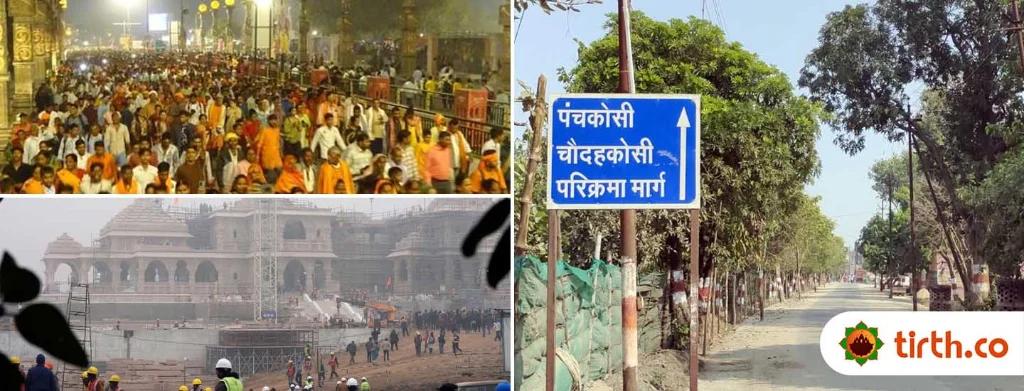
Yes, this *padyatra* is for those who wish to walk with faith in the footsteps of countless devotees, not just on roads but through the living memory of Ayodhya’s holy soil. Before most of the city wakes, long before sunrise, the narrow lanes fill with the quiet steps of pilgrims, some wrapped in shawls, others tying dhotis or safas, ready to begin the Panchkosi Parikrama. The smell of burning incense and the distant sound of conch shells mix with the early winter fog, while groups old and young gather at the banks of Saryu River, waiting for the signal to start. The walk is about fifteen kilometers, but time loses its meaning here. People move in large groups—mothers holding children close, elders walking slow but with determination, young men leading chants of ‘Jai Sri Ram’. Some walk barefoot as a mark of humility, hands carrying tulsi garlands or brass water pots, others pausing to offer prasad at small roadside shrines. Along the route, local residents and sadhus serve warm tea, jaggery, and roasted peanuts, sometimes blessing yatris with a kind word or a sprinkle of holy water. Every turn brings a new scene—children singing bhajans, elderly women counting mala beads, drumbeats echoing from a small temple hidden among banyan trees. The parikrama is never silent; chants of ‘Ram Naam Satya Hai’ and songs of devotion weave through the crisp November air. At Saryu Ghat, you find pilgrims taking a quick bath, the water biting and pure, faces shining with devotion and hope. Those who cannot bathe simply sprinkle the water over their heads, prayers whispered with eyes closed. The walk cuts through Ayodhya’s living heart—passing small ashrams, ancient gates covered in marigold flowers, and humble homes whose doors remain open for tired yatris seeking water or a seat to rest. There are frequent halts for darshan at temples, bows before sacred trees, and a brief moment to light a diya for ancestors. Each step feels guided by something higher—the discipline of keeping pace, the patience in the long line for aarti, the comfort of neighbours and strangers sharing warmth and shelter when needed. The Panchkosi Parikrama Ayodhya, open to elders and youth, women and men, city dwellers and villagers, is a test not of physical strength but of devotion, humility, and togetherness. It is the feeling of being part of a much larger story, one that began in the age of Ram and continues with every faithful pilgrim walking through Ayodhya’s sacred dawn.
Details
Special Note:
- Elaborate arrangements are made by the Ayodhya administration, with refreshment stalls, first-aid, and security volunteers along the route.
- Most pilgrims begin the parikrama in the early hours, dressed in simple cotton and carrying only basic offerings.
- Carry water and light snacks; November mornings can be cold, but later hours bring warmth, so plan clothing in layers.
- Stay with your group and follow the marked paths set by the local authorities, especially during festive crowds.
Destinations near Panchkosi Parikrama Ayodhya
Famous religious places close to Panchkosi Parikrama Ayodhya
Frequently Asked Questions
FAQ stands for frequently asked questions. It's a page on a website that provides quick answers to common questions from customers and other visitors.