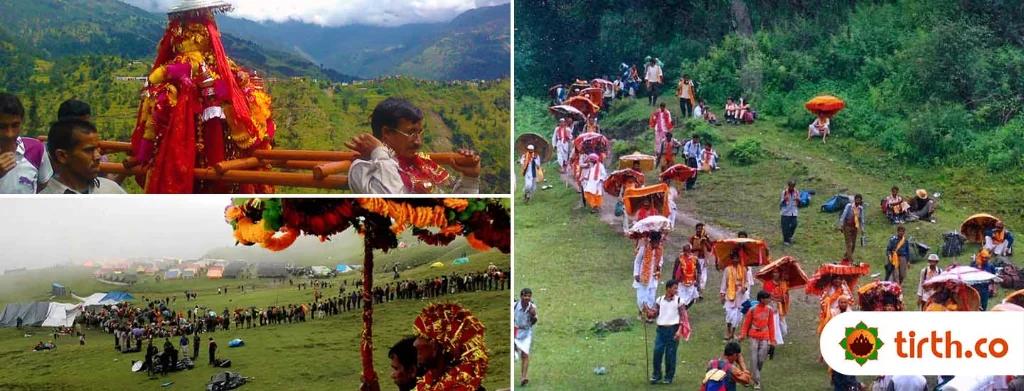
Nanda Devi Raj Jat Yatra

Nauti Village, Karanprayag, Chamoli District, Uttarakhand
Yes, this *yatra* is for those who wish to walk not with pride, but with humility—as children walking with their Mother. Before dawn in Nauti Village, you hear conch shells and temple bells, villagers quietly tying cloth bundles and touching Nanda Devi’s idol for blessings. Every 12 years, the valley comes alive with local songs, steady drums, and the sense that all of Garhwal and Kumaon have gathered for one purpose: to accompany the Goddess on her spiritual journey back to Kailash. Some pilgrims arrive days in advance, preparing their hearts with fasting, simple living, and quiet prayers near small lamps before the main shrine. The yatra’s start is marked by the Chausingha Khadu—the four-horned ram, garlanded and painted, standing solemnly before the procession. Priests recite ancient mantras as women sing folk songs for Nanda Devi—her “vidaai” from her parental village is both a joyful festivity and sorrowful farewell. As the line of devotees stretches out, elders, youth, and children all walk together—many barefoot despite the sharp stones and muddy fields, some with only simple shawls and rain-worn dhotis. Local villagers and visiting yatris offer prasad, rest under peepal and birch trees, and share handfuls of fruit and dried snacks at trail halts. The journey climbs from lush valleys through pine woods, over rushing rivers, and onto high alpine meadows bright with wildflowers. Every day’s trek brings rain, sun, and the sharp chill of mountain air. People walk in song—drums, flutes, and folk music echo across valleys, calling out Nanda’s names; children run beside the ram, while elders chant or sing softly with trembling voices. Camps are made on open grass or under tarpaulins, where groups huddle close, telling stories, sharing warmth, and honoring both the hardship and grace of walking together. Ritual is woven into every step—pausing at ancient shrines, tying red and yellow threads on branches, offering lamps at unknown forest temples, and bathing feet in icy creeks believed to carry Nanda Devi’s blessing. Heavy rain and sudden cold are common—as the heavens themselves seem to share in the goddess’s parting sorrow, with villagers whispering, “These are Nanda’s own tears, falling on the land she leaves behind.” By each evening, at each rest in sacred meadows like Bedni Bugyal or at the frosty edge of Homkund, the soul feels quiet and light—the pain of walking met by joy of faith, and the rare sense of belonging to thousands of years of living tradition.
Details
Special Note:
- This yatra is organized only once in 12 years—plan and prepare well ahead, honoring the rare chance for darshan.
- The Chausingha Khadu (four-horned ram) leads the entire yatra procession, symbolizing Goddess Nanda Devi herself; its care and proper veneration are central to the journey.
- Many devotees walk the entire route barefoot, a sign of deep faith and surrender—carry foot care supplies and move gently through all weather.
- The route covers challenging mountain terrain and altitudes; travel in a group, acclimatize at every major camp, and carry enough woolens, medicines, and rain protection for sudden weather changes.
Frequently Asked Questions
FAQ stands for frequently asked questions. It's a page on a website that provides quick answers to common questions from customers and other visitors.