Kuari Pass Trek

Dhak Village, Joshimath, Chamoli District, Uttarakhand
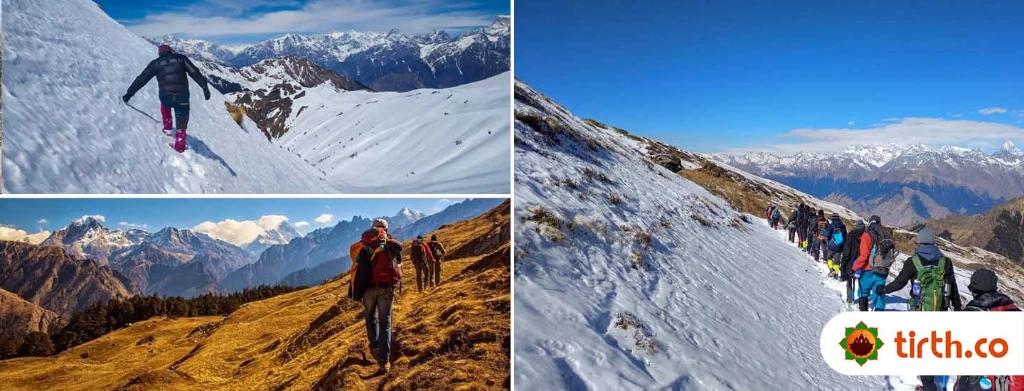
Yes, this *padyatra* is for those who want to walk not to conquer a peak, but to meet the Divine in each step, silence, and friendly exchange. Before sunrise in Rishikesh or Joshimath, you see groups of yatris and trekkers tying up their boots, warming hands with chai, checking backpacks, and bowing their heads in quiet prayer. The journey begins not in a hurry, but with a calm resolve—each person is aware this trek is a test of patience, faith, and surrender. As the group drives and then walks to Dhak Village, the air fills with the sound of temple bells, hill streams, and the simple greetings of local children waving from terrace fields. The route climbs through tiny villages hugged by pine and rhododendron, where old women bless walkers as Parvati’s own children. Many pause at shrines, offering a small flower or lighting a lamp before continuing. The rhythm of the trek soon feels like a kind of *japa*—step, breath, humble greeting, sharing nuts or sweets, and repeating a quiet prayer for safe passage. At every halt—Gulling, Khullara, Tali—the earth itself feels holy. Pilgrims and trekkers gather to share food, shake off the cold, swap stories under a starry sky, or watch locals tending yaks and sheep. Evenings are practical: setting up tents, drinking hot soup, massaging tired feet, and helping elders with extra woolens for the night. Yet there is a deep sense of presence—listening to the wind howl, gazing at snowy ridges glowing blue in the moonlight, and hearing the faint call of distant Himalayan birds. The pass itself—reached with gentle but steady effort—is more than a destination. Stories say it is where Parvati did her penance, where her discipline so moved Shiva that he chose her as his wife. Some quietly circle a rock, others sit, letting the vastness of Nanda Devi and Kamet transform inner worries into gratitude. Even those who feel tired or breathless take the last steps as an act of devotion—a letting go, a prayer sent high on the chilly winds, a peace that enters with the mountain silence. Descending, walkers speak softly, acknowledging that each encounter—with villagers, with snow, with the sky—was a blessing. When the yatra ends in Rishikesh once again, many say: I have not only crossed Kuari Pass, but found a new doorway of faith inside myself.
Details
Special Note:
- Ensure you are equipped with proper winter trekking gear and insulated clothing, as temperatures drop below zero during winters—especially at Khullara and Kuari camps.
- Follow your trek leader’s instructions closely. Walking in a group, maintaining discipline, and supporting fellow walkers ensures a safe and enjoyable journey for all.
- Allow your body time to acclimatize at every camp, especially for those not used to high altitude—take it slow, rest often, and hydrate well.
- Weather in the Himalayas can change very quickly; carry extra layers, rain protection, gloves, and keep a cap or muffler handy for sudden winds.
Frequently Asked Questions
FAQ stands for frequently asked questions. It's a page on a website that provides quick answers to common questions from customers and other visitors.